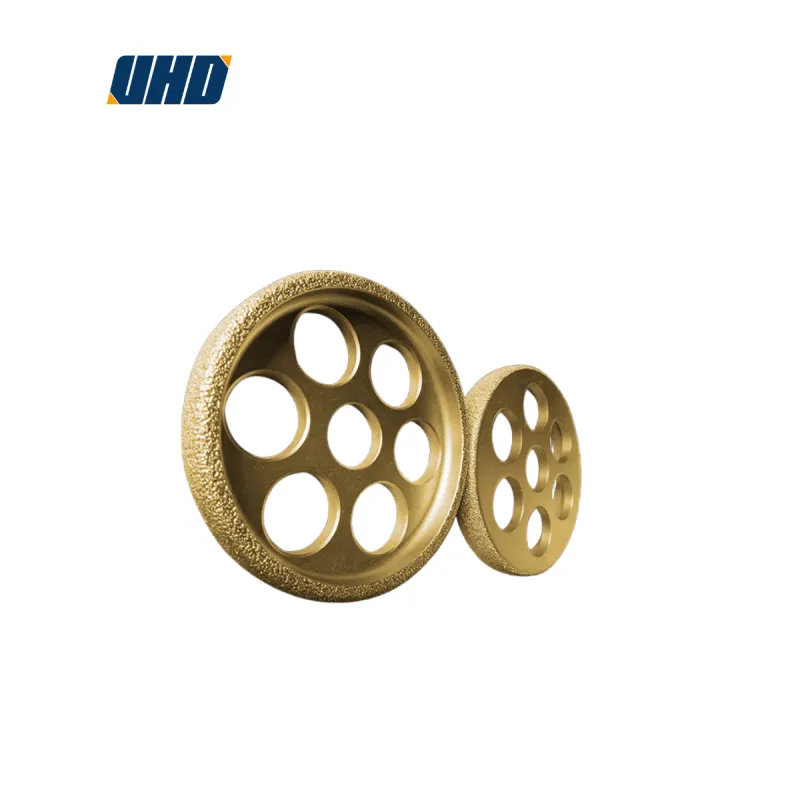
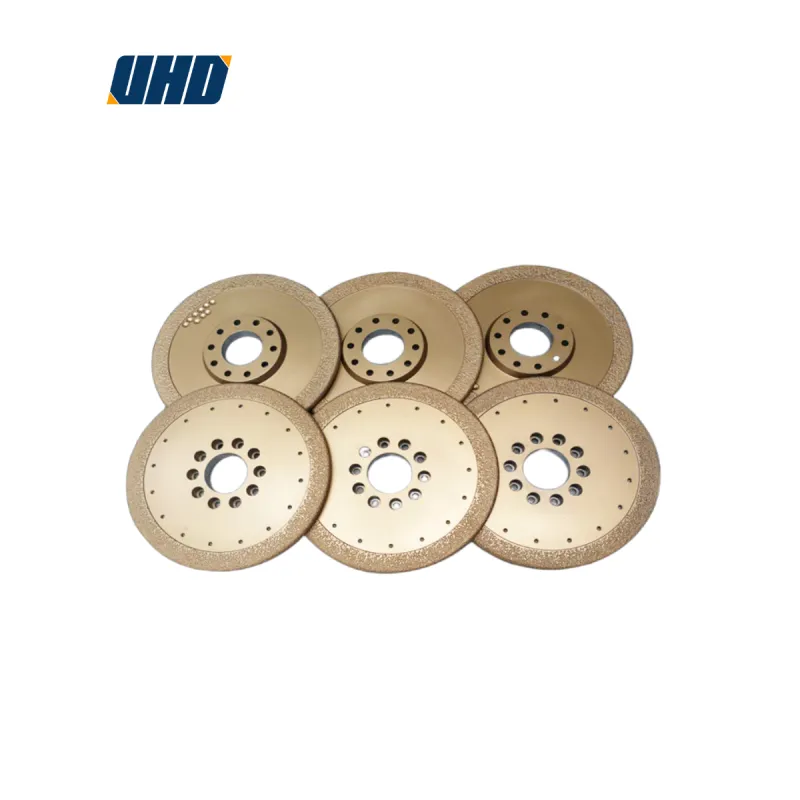
Upgrading a stainless-steel grinding process is a decision best made with measurable, comparable data. This page provides a practical evaluation framework for UHD Ultrahard Tools Co., Ltd’s Brazed Diamond Grinding 100—an 180mm brazed diamond grinding wheel designed for stainless-steel grinding—so process engineers and procurement teams can compare efficiency, wheel wear, surface quality, and total cost per finished part under controlled trial conditions, without assuming performance gains in advance.
Evaluation principle: Compare options under comparable conditions (same machine class, similar workpiece geometry and allowance, consistent operator method, and consistent measurement rules). Record results as per-part metrics and convert them into cost per finished part.
Brazed structure, steel body rigidity, and diamond grit holding behavior can influence stability, wear pattern, changeover intervals, and heat behavior—but the actual outcome depends on your machine setup, workpiece form, and target finish. A small-batch trial with defined metrics is the most reliable way to decide.
Choose a current wheel/process as baseline and freeze the key variables: same machine, comparable stainless grade and geometry, similar stock removal, same operator method where possible, and the same measurement rules.
Run a small-batch test sized to capture meaningful wear and changeover behavior (not just the first few parts). Record results per part and per wheel, then normalize to cost per finished part.
| Metric | How to record (practical) | Why it matters for total cost |
|---|---|---|
| Cycle time per part | Time the grinding operation from start to pass criteria (exclude unrelated handling; define start/stop points). | Drives labor and machine time cost; also highlights stability of the grinding method. |
| Wheel wear rate | Track wheel condition across parts (visual wear pattern; if feasible, record diameter/height change or mass change by your site method). | Determines consumable cost per part and helps forecast purchasing cadence. |
| Changeover frequency | Count wheel changes and dressing/maintenance events; record downtime minutes per event. | Downtime and setup losses often outweigh wheel price differences. |
| Surface quality outcome | Use consistent acceptance criteria: visual reference, surface finish method (if used), burr/edge condition, and any post-process requirement. | Affects rework, scrap, and downstream polishing time. |
| Grinding temperature rise | Record observable discoloration/burning risk; if your site uses tools, log temperature or thermal indicators consistently. | Heat can drive defects, distortion, and extra finishing—impacting total cost. |
| Overall cost per finished part | Convert above into a per-part cost model (wheel consumption, downtime, labor/machine time, and rework). | Provides a procurement-ready comparison that supports approval decisions. |
Note: Record methods vary by factory. The key is consistency—use the same approach for baseline and the UHD 180mm brazed diamond grinding wheel trial.
| Cost driver | What you fill in | Output |
|---|---|---|
| Consumable (wheel) | Wheel purchase price + parts produced per wheel (from wear/change data) | Wheel cost per part |
| Time (labor/machine) | Cycle time per part × your internal hourly rate basis | Time cost per part |
| Downtime (changeover) | Changeover events × minutes × downtime cost basis | Downtime cost per part |
| Quality loss (rework/scrap) | Rework minutes + scrap rate (if any) under the same acceptance criteria | Quality cost per part |
Decision-ready view: A wheel with higher unit price can still reduce total cost if it lowers changeover downtime, stabilizes cycle time, or reduces rework—your worksheet makes that trade-off visible.
UHD Ultrahard Tools Co., Ltd focuses on R&D, manufacturing, and sales of superhard material tools, including diamond tools, abrasives, and custom brazed diamond abrasives. The Brazed Diamond Grinding 100 is positioned for stainless-steel grinding where stable structure and wear behavior are key evaluation points.
To help you run a controlled trial, UHD can align on the evaluation items above—compatibility, target surface quality, and small-batch test setup—and provide responsive after-sales coordination during the verification period.
With a consistent test plan and the metrics above, the UHD 180mm brazed diamond grinding wheel can be evaluated transparently for both process efficiency and total cost of grinding—supporting a data-based decision for stainless-steel fabrication.
 226
|
 UHD Ultrahard Tools ultrahard material tools diamond tools abrasives and grinding tools vacuum brazed diamond abrasive
88
|
UHD Ultrahard Tools Co., Ltd vacuum brazed diamond cutting abrasives ultrahard material tools metal processing cutting tools stone processing abrasives
122
|
UHD Ultrahard Tools Co., Ltd vacuum brazed diamond grinding wheel ductile iron machining tool diamond grinding wheel brazed diamond abrasive
109
|
UHD Ultrahard Tools Co., Ltd superhard material tools vacuum brazed diamond tools diamond cutting abrasives metal and stone processing
413
|
UHD Ultrahard Tools Co., Ltd brazed diamond grinding wheel 180mm stainless steel grinding disc diamond grinding wheel high wear resistance diamond grinding disc for metal processing