Home > News > How to Choose Diamond Tools for Industrial Processing: A Complete Evaluation Guide | UHD Ultrahard Tools Co., Ltd

Diamond Tool Selection for Industrial Buyers: From Material Type to Process Parameters

UHD Ultrahard Tools Co., Ltd
2026-08-12
Industry Guide
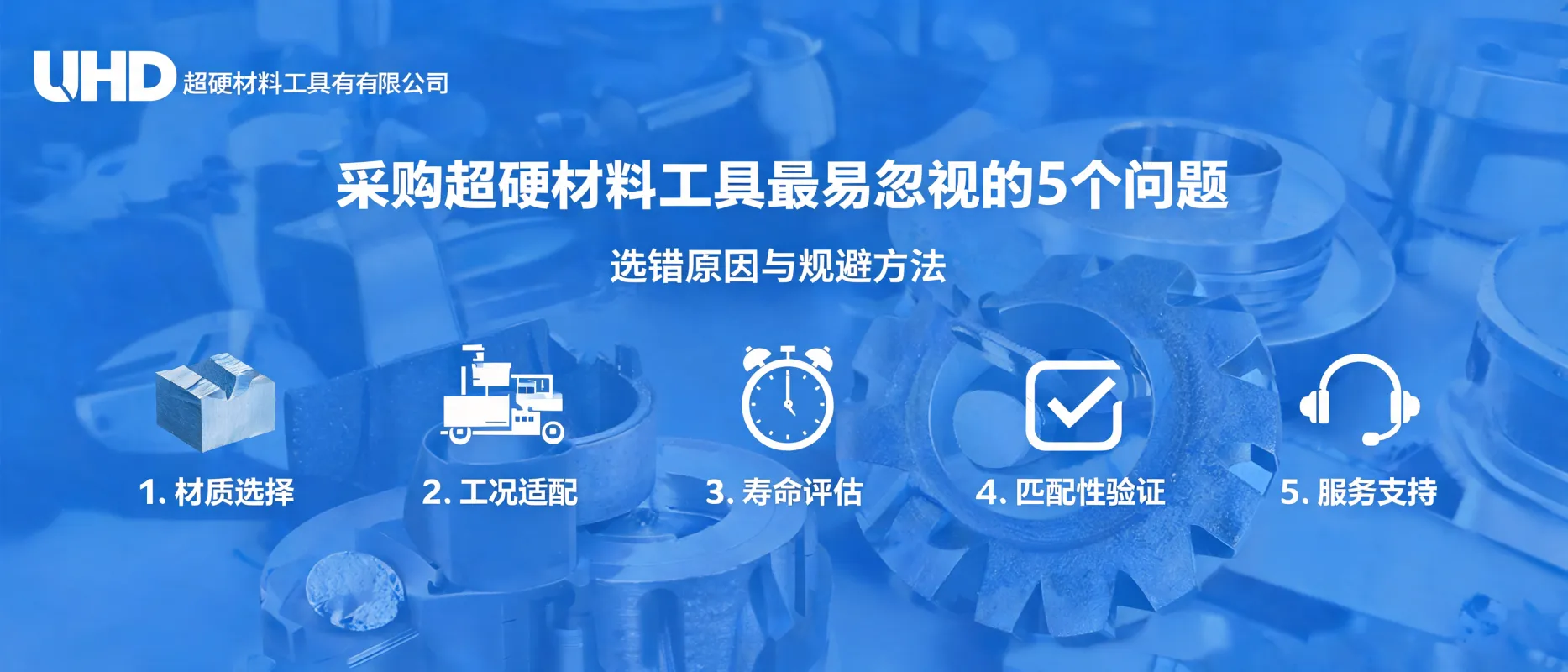
This guide from UHD Ultrahard Tools Co., Ltd helps industrial buyers evaluate diamond tool selection based on workpiece material, machining method, equipment conditions, process parameters, cutting/grinding requirements, tool life expectations, and supplier technical support for metal and stone processing.
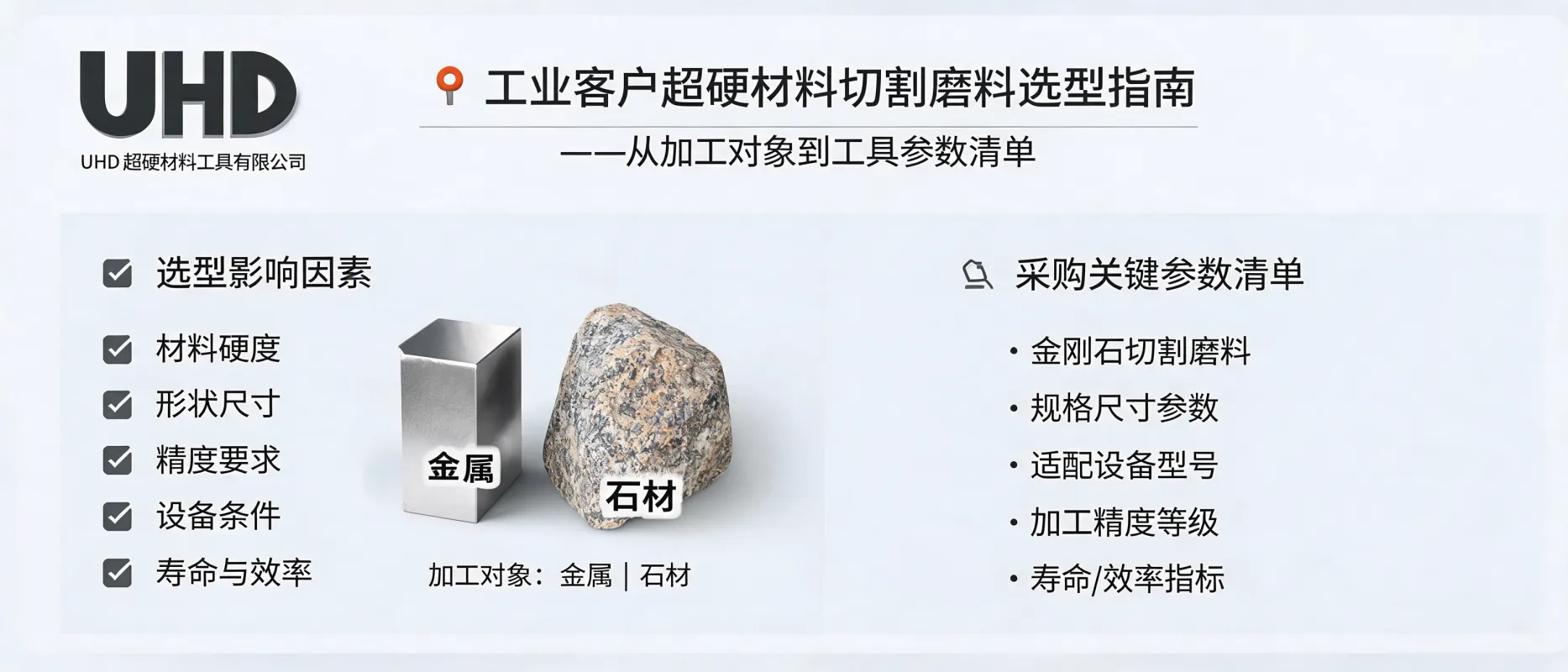
Industrial engineer reviewing diamond tool selection factors including material type, cutting and grinding parameters, and equipment conditions

Industrial diamond tools are not “one-size-fits-all.” In metal processing and stone processing, selection should be based on the workpiece, the machining method (cutting or grinding), the equipment condition, and the process parameters that control heat, load, and stability.

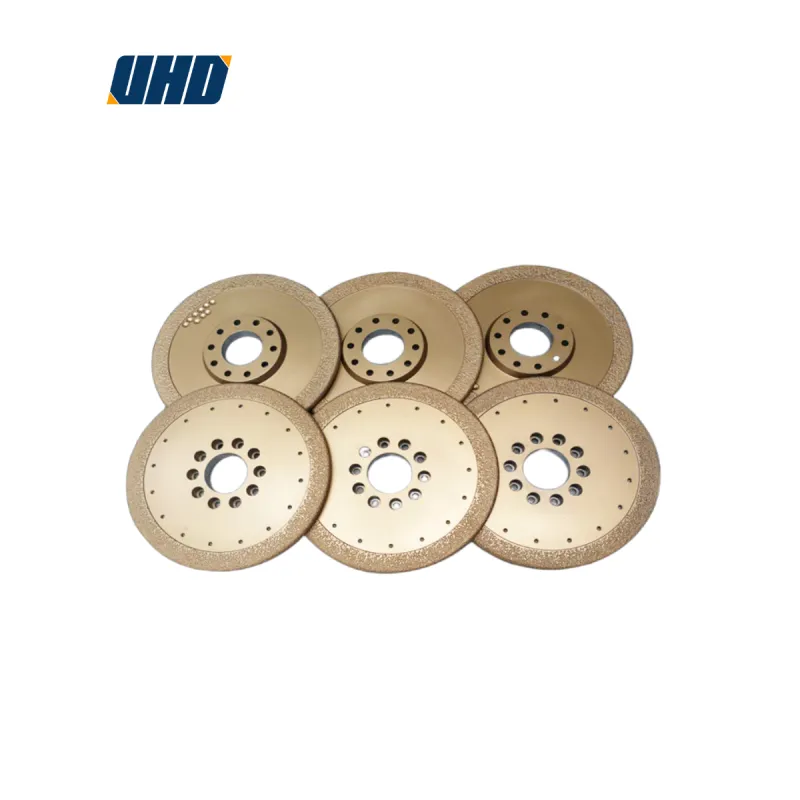
This evaluation guide is provided by UHD Ultrahard Tools Co., Ltd (UHD), a B2B manufacturer focused on ultrahard material tools, diamond tools, abrasives, and customized vacuum-brazed diamond abrasives—helping industrial buyers reduce mismatch risk and improve overall cost-efficiency through fit-for-process selection.

1) Start with the workpiece material (what you are actually machining)

The workpiece material determines the dominant wear mechanism and the type of cutting/grinding action you can sustain. Before comparing tool models, define the material category and the condition of the surface you will contact.

  • Material family: metal vs. stone (and their sub-types in your process).
  • Hardness / abrasiveness tendency: influences diamond exposure and wear rate.
  • Surface condition: scale, coatings, unevenness, or previous machining marks can change initial tool loading.
  • Geometry & contact area: edge contact, full-face grinding, slotting, or profiling changes heat and pressure distribution.

Buyer note: If the workpiece includes mixed materials (e.g., reinforced structures or composite assemblies), evaluate the tool for the most tool-aggressive layer and the most critical quality requirement.

2) Confirm the machining method: cutting vs. grinding (and why it matters)

Cutting and grinding impose different chip formation, heat generation, and stability demands. Clarify your process role before selecting diamond concentration, bonding approach, and tool structure.

Cutting-focused evaluation

  • Kerf / edge integrity: required edge quality and allowable chipping.
  • Thermal control: risk of burn marks, glazing, or accelerated wear.
  • Feed stability: sensitivity to vibration and runout.

Grinding-focused evaluation

  • Surface finish target: roughing vs. finishing requirements.
  • Material removal rate (MRR): productivity expectations and heat balance.
  • Loading & clogging behavior: especially in sticky materials or fine finishing.

3) Evaluate equipment conditions (tool performance depends on the system)

Diamond tool performance is strongly influenced by the machine-tool system. Even a well-chosen tool can underperform if spindle, fixture, or cooling constraints are not considered during selection.

Equipment factor What to check Why it affects selection
Spindle power & RPM range Available speed window, torque under load Defines feasible cutting speed and stability margin
Runout & rigidity Measured runout, vibration tendency Impacts edge chipping, uneven wear, tool life stability
Fixturing & clamping Part support, deflection risk Controls chatter and maintains consistent contact pressure
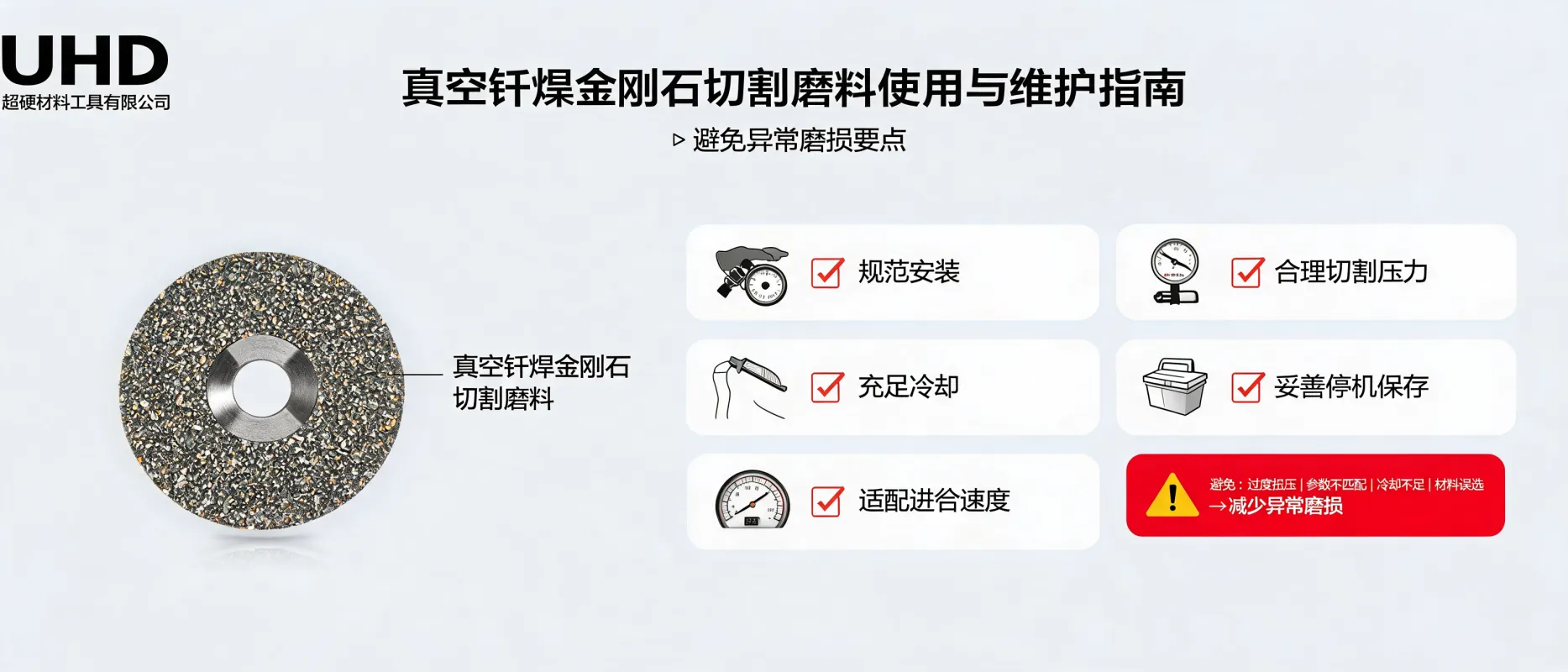
Coolant / dust control Wet vs. dry, flow capacity, extraction Affects heat removal, loading risk, and process safety
For industrial procurement, documenting machine capability (RPM, power, rigidity, coolant setup) is one of the fastest ways to narrow down diamond tool options before trials.

4) Define key process parameters (the controllable levers)

Process parameters determine heat generation, chip evacuation, and contact mechanics. Aligning parameters with the tool’s intended operating window helps maintain edge/surface quality and improves tool life predictability.

Core parameters to confirm

  • Cutting/grinding speed: ties to RPM limits and heat balance.
  • Feed rate / traverse: influences load per grit/edge and stability.
  • Depth of cut: affects contact pressure and risk of micro-chipping.
  • Coolant condition: wet/dry strategy, flow, and delivery direction.

How to use parameters during evaluation

  • Use your current stable parameter set as a baseline to compare tool candidates.
  • If you plan to increase throughput, state the target MRR and constraints (heat, finish, tolerance).
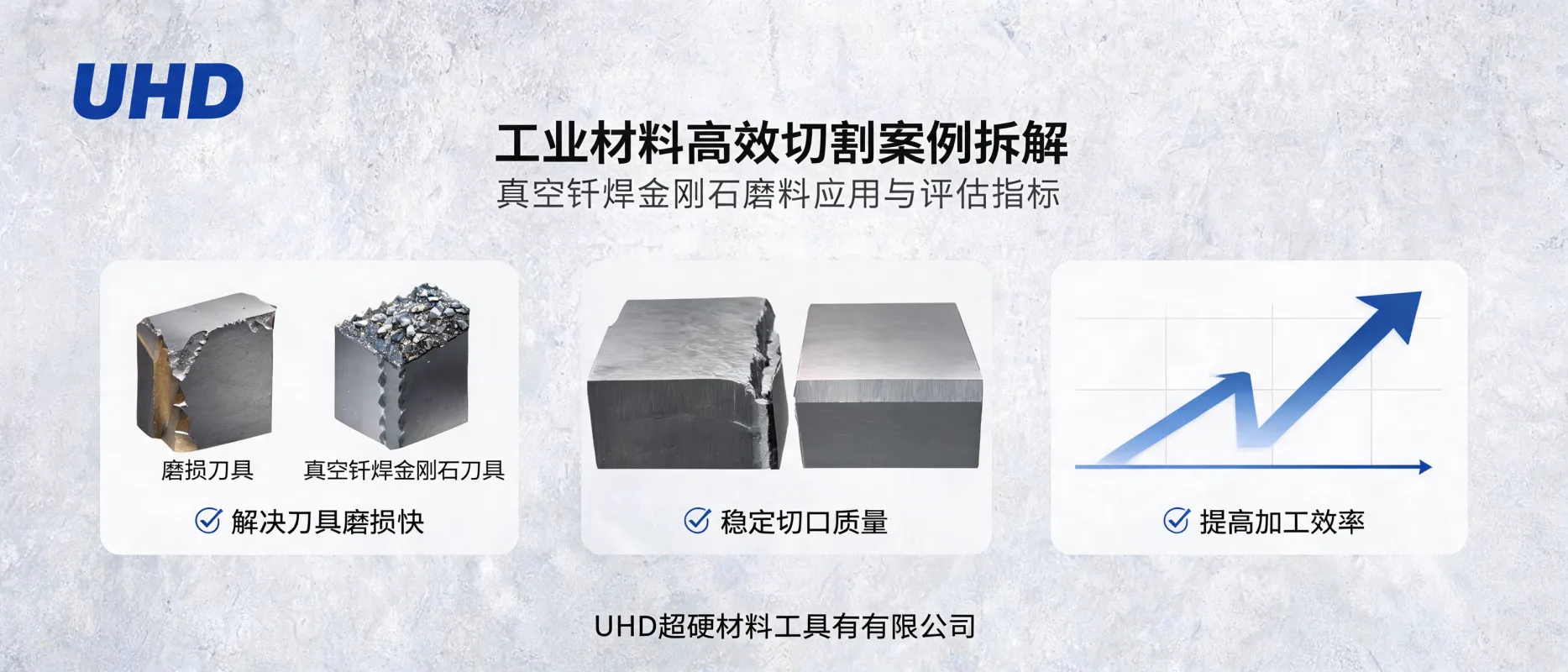
  • Record failure mode (rapid wear, glazing, chipping, loading) to guide tool structure and support.

5) Translate quality requirements into tool selection criteria

To avoid “looks fine” ambiguity, define acceptance criteria that can be checked on the shop floor. This keeps selection aligned with inspection and downstream assembly needs.

  • Surface/edge quality: allowable chipping, burn marks, scratches, or waviness.
  • Dimensional stability: tolerance sensitivity to tool wear and heat.
  • Consistency: variation across batches, operators, and shifts.
  • Rework threshold: when to dress/replace the tool to protect quality.

6) Set realistic tool life expectations (and how to compare fairly)

Tool life varies with material, parameters, cooling, and machine stability. For fair comparison between suppliers or tool types, evaluate life together with throughput and quality—not as an isolated number.

Recommended comparison method

  1. Define the same workpiece material, machining method, and baseline parameters.
  2. Agree on end-of-life criteria (quality drift, burn, chipping, dimensional loss, or unacceptable MRR).
  3. Track cost-per-part and stability indicators (scrap/rework, interruptions) alongside wear.

7) Assess supplier technical support (a selection factor, not an afterthought)

Industrial diamond tool procurement often needs iteration. Supplier technical support helps shorten trials, clarify parameter windows, and identify root causes when tool wear or quality problems appear.

What to expect from support

  • Application-oriented selection suggestions tied to your material and method.
  • Parameter guidance for cutting/grinding stability and heat control.
  • Feedback loop based on observed failure modes.

UHD capability context

UHD Ultrahard Tools Co., Ltd focuses on R&D and manufacturing of ultrahard material tools and maintains cooperation with academic research platforms. For B2B buyers, this supports clearer technical communication around tool selection for metal processing and stone processing, including customized vacuum-brazed diamond abrasive solutions where applicable.

A practical checklist for industrial diamond tool selection

  • Workpiece material: metal/stone type, condition, geometry, mixed layers (if any).
  • Machining method: cutting or grinding; roughing vs finishing target.
  • Equipment conditions: RPM/power, rigidity, runout, fixture, coolant or dust extraction.
  • Process parameters: speed, feed, depth, coolant strategy; current baseline and target throughput.
  • Quality requirements: edge/surface acceptance criteria; tolerance sensitivity; rework limit.
  • Tool life expectation: agreed end-of-life criteria and cost-per-part comparison method.
  • Supplier technical support: responsiveness, application guidance, iteration capability.

Talk to UHD about your process inputs (for a fit-for-application recommendation)

If you want UHD to support your diamond tool evaluation, prepare the essentials: workpiece material details, cutting or grinding method, machine RPM/power range, coolant/dust control condition, baseline parameters, and the quality/tool life acceptance criteria you use on-site.

With clear inputs, industrial buyers can compare options more efficiently and select diamond tools that align with process stability, required finish, and cost-efficiency—without relying on trial-and-error alone.

Name *
Email *
Message*

Recommended Products

Related Reading

Vacuum Brazed Diamond Cutting Abrasives: Structure, Advantages, and How to Choose

2026-08-09 | https://shmuker.oss-accelerate.aliyuncs.com/tmp/temporary/60ec5bd7f8d5a86c84ef79f2/60ec5bdcf8d5a86c84ef7a9a/20240305161110/eye.png 162 | https://shmuker.oss-accelerate.aliyuncs.com/tmp/temporary/60ec5bd7f8d5a86c84ef79f2/60ec5bdcf8d5a86c84ef7a9a/20240305160636/lable.png UHD Ultrahard Tools Co., Ltd vacuum brazed diamond diamond cutting abrasives cutting efficiency abrasive selection guide

Vacuum Brazed Diamond Cutting Abrasives: Definition, Structure, and Industrial Applications

2026-06-23 | https://shmuker.oss-accelerate.aliyuncs.com/tmp/temporary/60ec5bd7f8d5a86c84ef79f2/60ec5bdcf8d5a86c84ef7a9a/20240305161110/eye.png 390 | https://shmuker.oss-accelerate.aliyuncs.com/tmp/temporary/60ec5bd7f8d5a86c84ef79f2/60ec5bdcf8d5a86c84ef7a9a/20240305160636/lable.png UHD Ultrahard Tools Co., Ltd vacuum brazed diamond cutting abrasive superhard tools industrial cutting metal and stone processing

A Custom Ultrahard Tooling Solution Case: From Process Pain Points to Verified Delivery

2026-06-19 | https://shmuker.oss-accelerate.aliyuncs.com/tmp/temporary/60ec5bd7f8d5a86c84ef79f2/60ec5bdcf8d5a86c84ef7a9a/20240305161110/eye.png 375 | https://shmuker.oss-accelerate.aliyuncs.com/tmp/temporary/60ec5bd7f8d5a86c84ef79f2/60ec5bdcf8d5a86c84ef7a9a/20240305160636/lable.png UHD Ultrahard Tools Co., Ltd custom ultrahard tooling solution brazed diamond abrasive tools process pain points project delivery and validation

Performance Drivers of Vacuum Brazed Diamond Cutting Tools: Abrasive, Brazing, and Tool Body Design

2026-07-25 | https://shmuker.oss-accelerate.aliyuncs.com/tmp/temporary/60ec5bd7f8d5a86c84ef79f2/60ec5bdcf8d5a86c84ef7a9a/20240305161110/eye.png 156 | https://shmuker.oss-accelerate.aliyuncs.com/tmp/temporary/60ec5bd7f8d5a86c84ef79f2/60ec5bdcf8d5a86c84ef7a9a/20240305160636/lable.png UHD Ultrahard Tools Co., Ltd vacuum brazed diamond cutting tools diamond grit size and concentration brazing bond strength tool body design

Superhard Material Tools Explained: Diamond Tools, Abrasives, and Vacuum Brazed Differences

2026-06-24 | https://shmuker.oss-accelerate.aliyuncs.com/tmp/temporary/60ec5bd7f8d5a86c84ef79f2/60ec5bdcf8d5a86c84ef7a9a/20240305161110/eye.png 100 | https://shmuker.oss-accelerate.aliyuncs.com/tmp/temporary/60ec5bd7f8d5a86c84ef79f2/60ec5bdcf8d5a86c84ef7a9a/20240305160636/lable.png UHD Ultrahard Tools Co., Ltd superhard material tools diamond tools abrasives and grinding tools vacuum brazed diamond
Popular articles
文章配图_1784863904012.jpg
文章配图_1784430107944.jpg
文章配图_1784077908484.jpg
文章配图_1786068118701.jpg
文章配图_1785985982997.jpg
Recommended Reading
Contact us
Contact us
https://shmuker.oss-accelerate.aliyuncs.com/tmp/temporary/60ec5bd7f8d5a86c84ef79f2/60ec5bdcf8d5a86c84ef7a9a/thumb-prev.png