
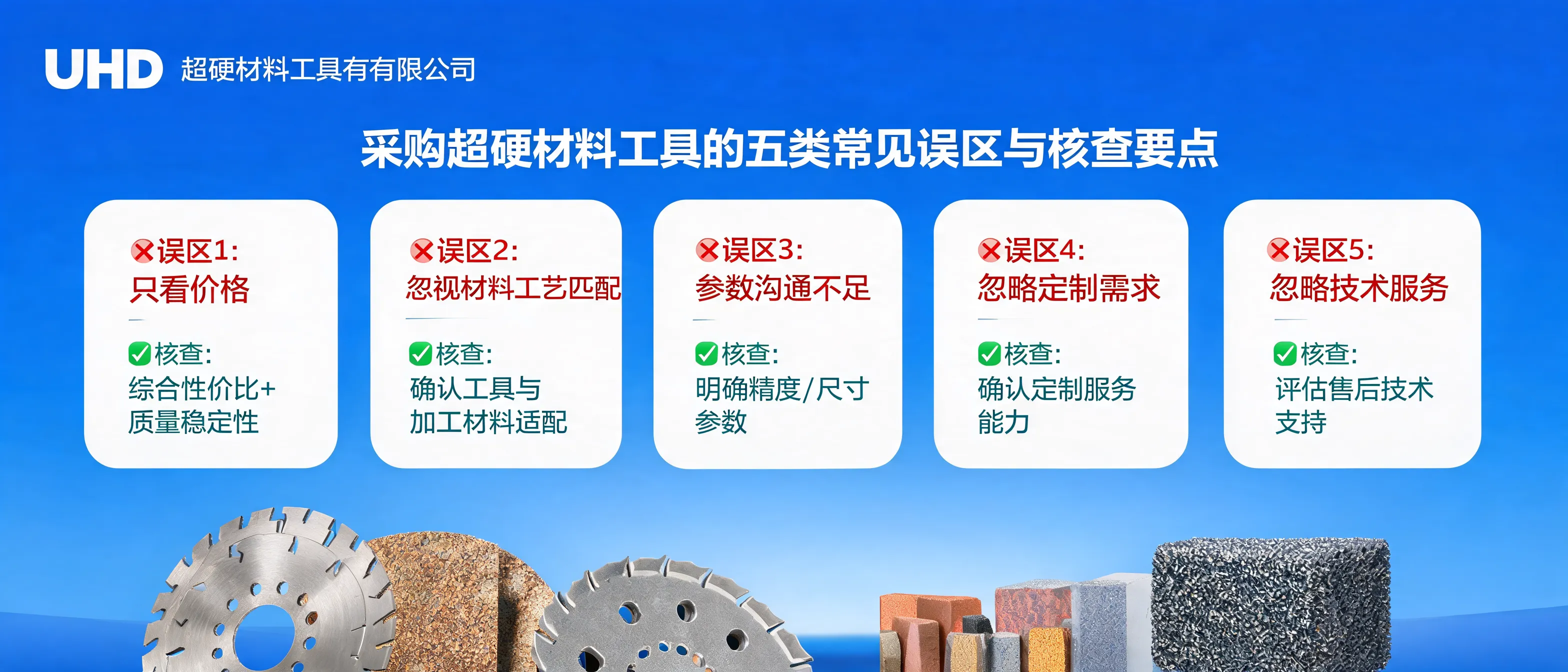
Buying ultrahard tools (diamond tools, abrasives, and vacuum-brazed diamond cutting abrasives) is rarely a “like-for-like” comparison. In B2B procurement, the same category name can hide critical differences in workpiece material, process parameters, and tool structure.
This page, prepared by UHD Ultrahard Tools Co., Ltd, summarizes five frequent purchasing mistakes and provides practical checkpoints to verify process matching and supplier suitability before you place an order.
Price-only comparisons often ignore differences in tool design, diamond/abrasive specification, and manufacturing process (including vacuum-brazed structures where applicable). This can lead to higher total cost due to unstable performance, more rework, or longer cycle time.
Verification checkpoints
“Metal” and “stone” are not single materials; even within one category, hardness, abrasiveness, porosity, and thermal behavior vary widely. A tool that performs well on one substrate may wear rapidly, glaze, or chip on another.
Verification checkpoints
Ultrahard tools are sensitive to speed, feed, depth of cut, coolant/dry mode, and machine rigidity. Without parameter context, a supplier can only provide a generic recommendation—raising the risk of vibration, burn marks, excessive burrs, or inconsistent surface quality.
Tip: If you cannot disclose full parameters, share ranges and constraints (e.g., maximum RPM, dry-only requirement, limited power). This still enables a meaningful suitability check.
In ultrahard tooling, small changes—tool shape, grit structure, working layer geometry, or mounting interface—can significantly affect accessibility, heat, debris removal, and consistency. Treating a non-standard application as “standard” often results in slower processing or premature wear.
Verification checkpoints
Even a correctly selected diamond tool may require parameter tuning during initial trials. Without supplier technical service—application guidance, iteration on design, and clear communication—buyers can lose time diagnosing issues that are actually process-related.
Verification checkpoints
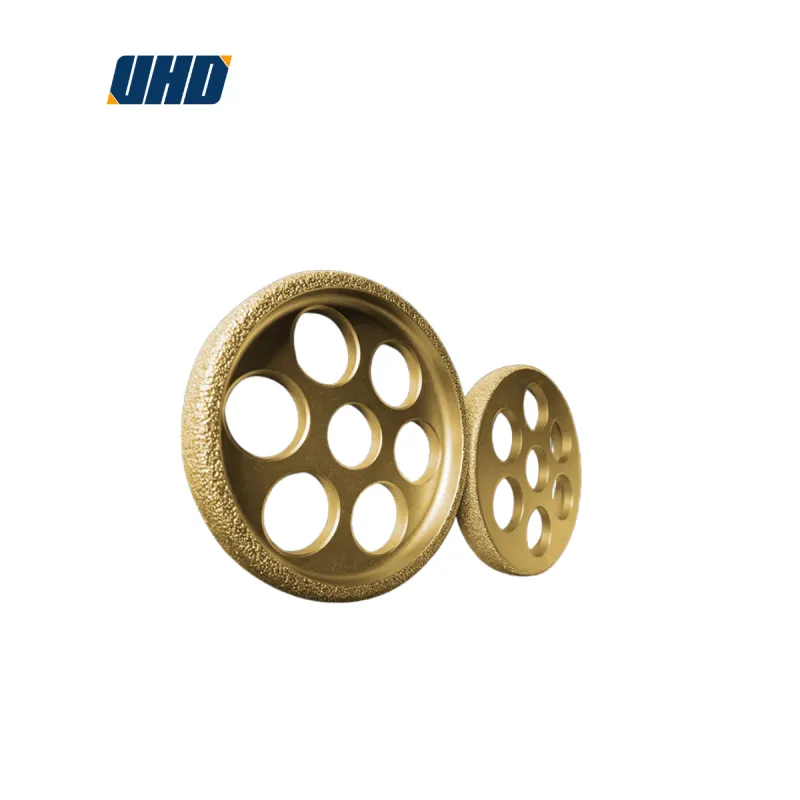
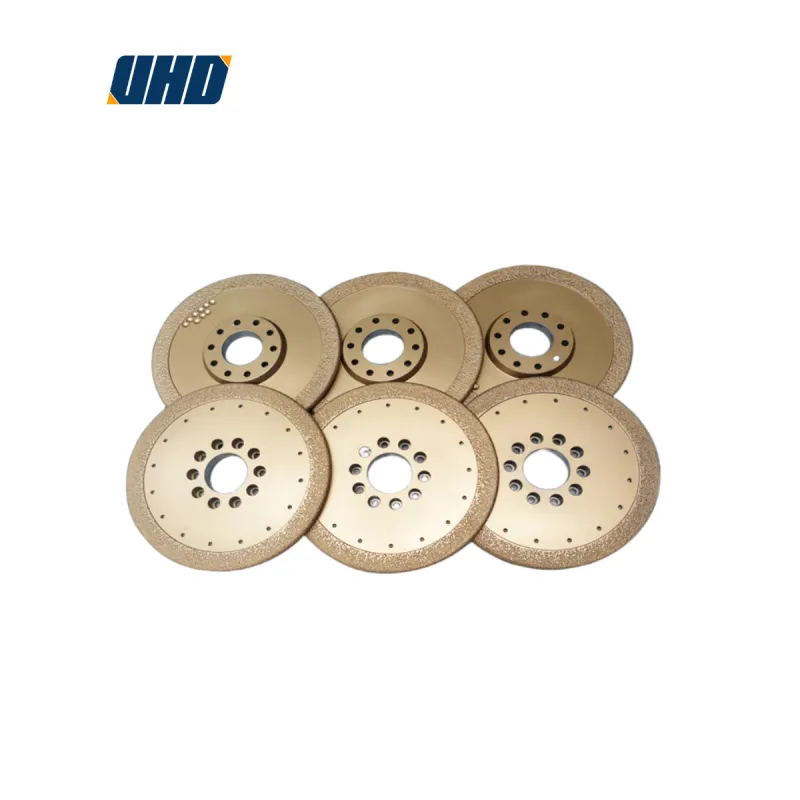
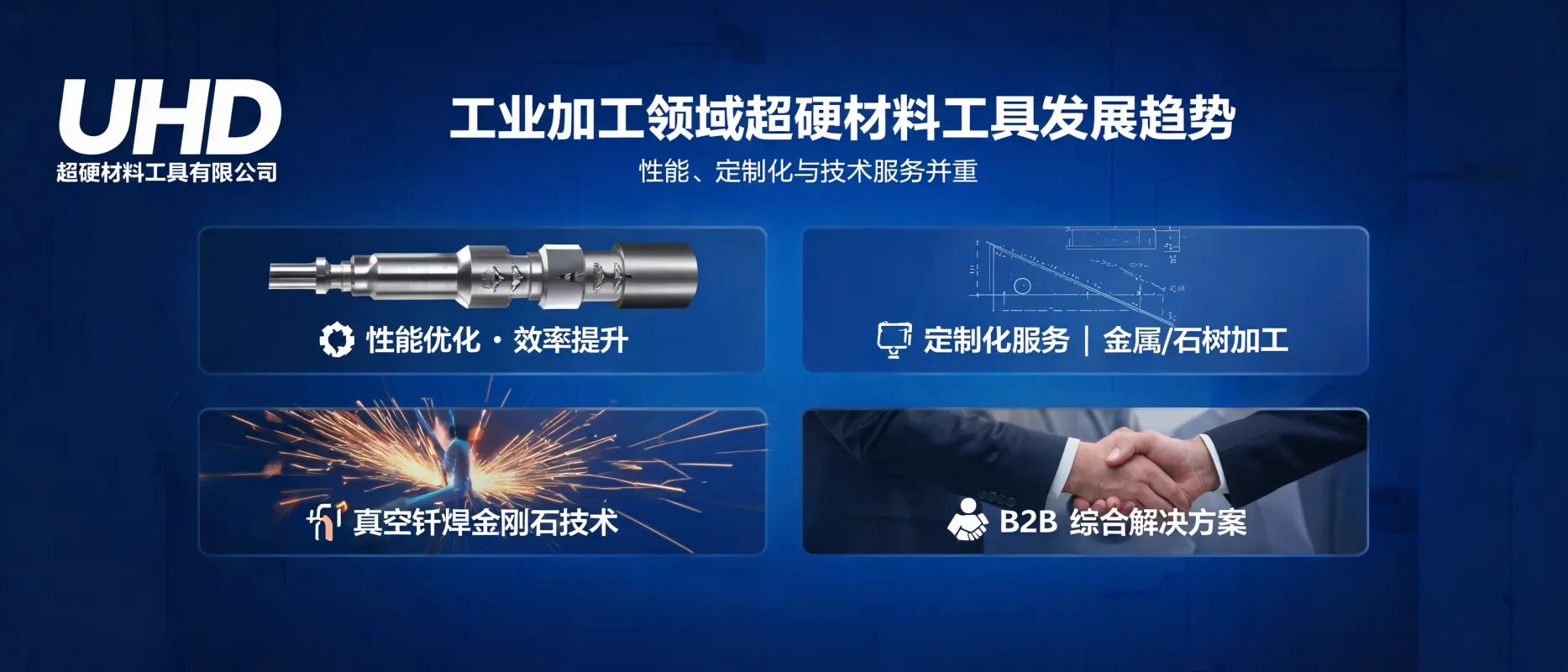
UHD Ultrahard Tools Co., Ltd focuses on the R&D, production, and sales of ultrahard material tools, including diamond tools, abrasives, and custom vacuum-brazed diamond cutting abrasives. We work with industrial buyers to clarify process conditions, confirm fit boundaries, and align product selection with real manufacturing constraints.
If you share your workpiece material, operation type, and current parameters (or constraints), UHD can help you verify process matching and propose practical evaluation checkpoints before ordering.
 502
|
502
|
 UHD Ultrahard Tools Co., Ltd
ultrahard material tool selection
diamond tools for metalworking
stone processing tool selection
vacuum brazed diamond abrasives
498
|
UHD Ultrahard Tools Co., Ltd
vacuum brazing process
vacuum brazed diamond tools
high-intensity working conditions
diamond grit bonding strength
203
|
UHD Ultrahard Tools Co., Ltd
scenario-based solutions
ultrahard tools
industrial tool procurement
tool specifications
378
|
UHD Ultrahard Tools Co., Ltd
vacuum brazed diamond abrasive
diamond cutting tools
superhard material tools
brazing bond layer
392
|
UHD Ultrahard Tools Co., Ltd
vacuum brazed diamond cutting abrasive
superhard tools
definition and applications
industrial tool selection
UHD Ultrahard Tools Co., Ltd
ultrahard material tool selection
diamond tools for metalworking
stone processing tool selection
vacuum brazed diamond abrasives
498
|
UHD Ultrahard Tools Co., Ltd
vacuum brazing process
vacuum brazed diamond tools
high-intensity working conditions
diamond grit bonding strength
203
|
UHD Ultrahard Tools Co., Ltd
scenario-based solutions
ultrahard tools
industrial tool procurement
tool specifications
378
|
UHD Ultrahard Tools Co., Ltd
vacuum brazed diamond abrasive
diamond cutting tools
superhard material tools
brazing bond layer
392
|
UHD Ultrahard Tools Co., Ltd
vacuum brazed diamond cutting abrasive
superhard tools
definition and applications
industrial tool selection





.png?x-oss-process=image/resize,h_100,m_lfit/format,webp)
.png?x-oss-process=image/resize,h_100,m_lfit/format,webp)
.png?x-oss-process=image/resize,h_100,m_lfit/format,webp)

.png?x-oss-process=image/resize,h_800,m_lfit/format,webp)