Gray Cast Iron Grinding Wheel Selection Guide: Key Parameters of Vacuum Brazed Diamond Wheels
UHD
2026-03-29
Technical knowledge
Selecting the wrong grinding wheel for gray cast iron often results in rapid wear, high dust generation, unstable surface finish, and inconsistent dimensional accuracy. This guide explains the selection logic behind vacuum brazed diamond grinding wheels, focusing on the parameters that most directly affect performance in real production: wheel diameter and machine compatibility, grit size versus stock removal and finish targets, form accuracy for repeatable profiles, and wear resistance for longer service life. It also outlines practical matching strategies for rough grinding versus finishing, and shows how low-dust operation and extended wheel life can reduce downtime, maintenance frequency, and overall operating burden in mechanical manufacturing and automotive component applications. For export-oriented projects, the article references common international safety and environmental compliance expectations (including CE-related considerations) to support documentation readiness and risk reduction. UHD engineers’ selection workflow and common pitfalls checklist help technical teams and buyers move from trial-and-error to a predictable, data-driven wheel choice.
Vacuum Brazed Diamond Grinding Wheels for Gray Cast Iron: A Practical Selection Guide for Engineers & Buyers
In gray cast iron (GCI) grinding, a “good enough” wheel often turns into frequent wheel changes, unstable surface finish, and dust that quickly becomes a safety and compliance headache. This guide breaks down the selection logic for vacuum brazed diamond grinding wheels—with the parameters that actually drive performance on the shop floor: diameter & fit, grit size, profile accuracy, and wear behavior.
Quick self-check: Are you seeing any of these? Wheel glazing, burning marks, chatter lines, heavy dust, or unpredictable dimensional drift between batches.
Why Gray Cast Iron Is “Easy to Cut” but Hard to Control
Gray cast iron contains graphite flakes that help chip formation, so removal can look easy—until consistency becomes the goal. The same microstructure that improves machinability can create abrasive, powder-like debris and a variable contact condition that punishes the wrong wheel bond or grit.
Typical pain points reported in GCI grinding lines
Short wheel life due to rapid dulling and micro-chipping in aggressive cycles
High dust load that strains extraction systems and increases housekeeping time
Surface inconsistency (smearing, chatter) under changing feed/speed or varying casting quality
Frequent dressing/maintenance and longer downtime windows
What Makes Vacuum Brazed Diamond Wheels Different (and When It Matters)
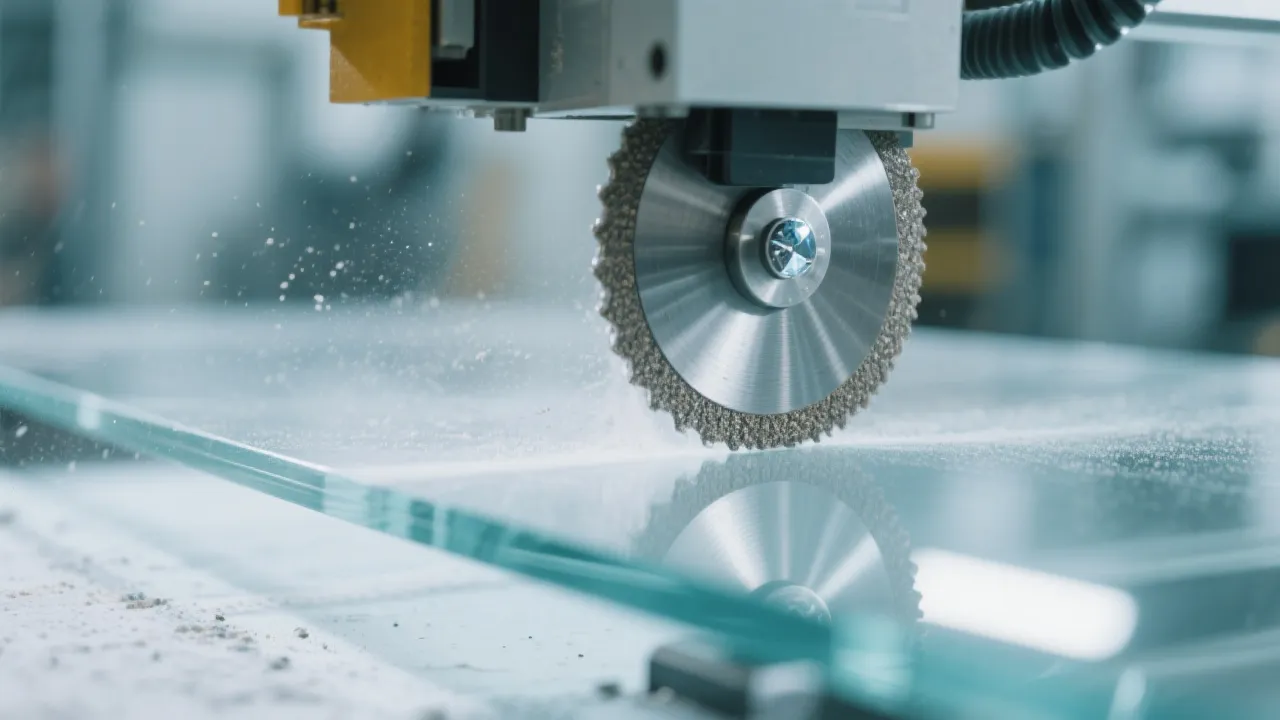
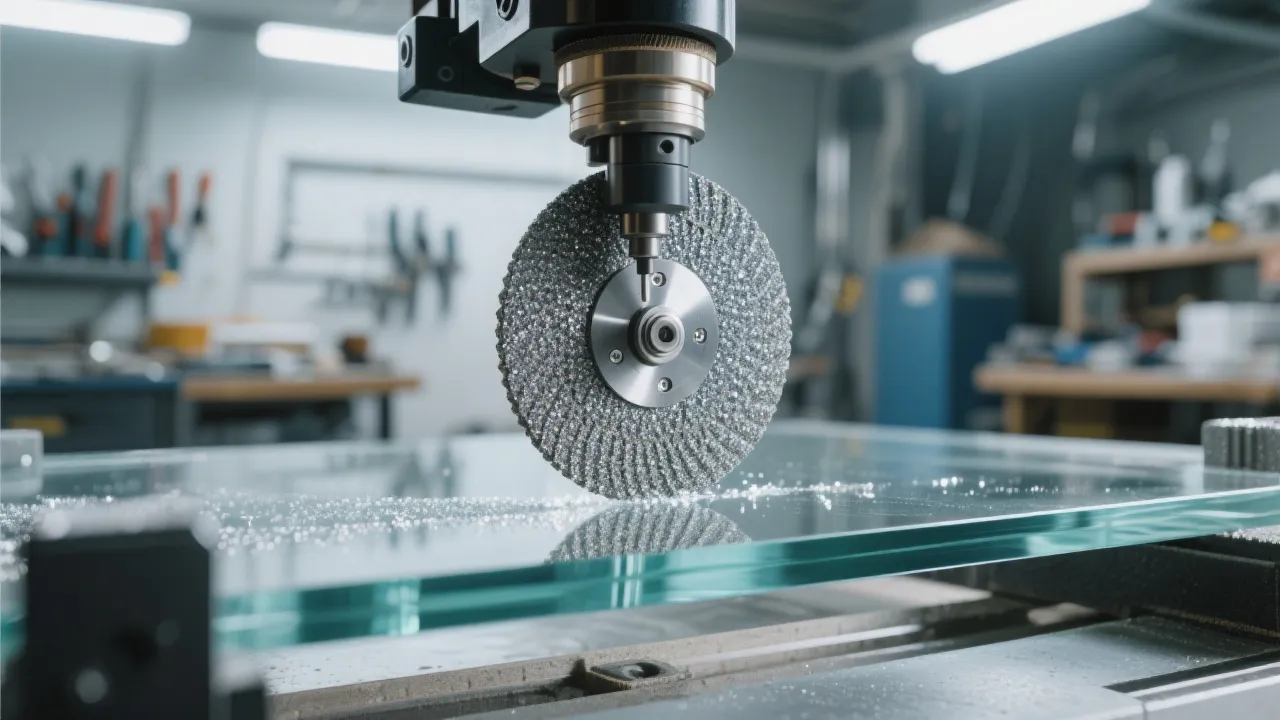
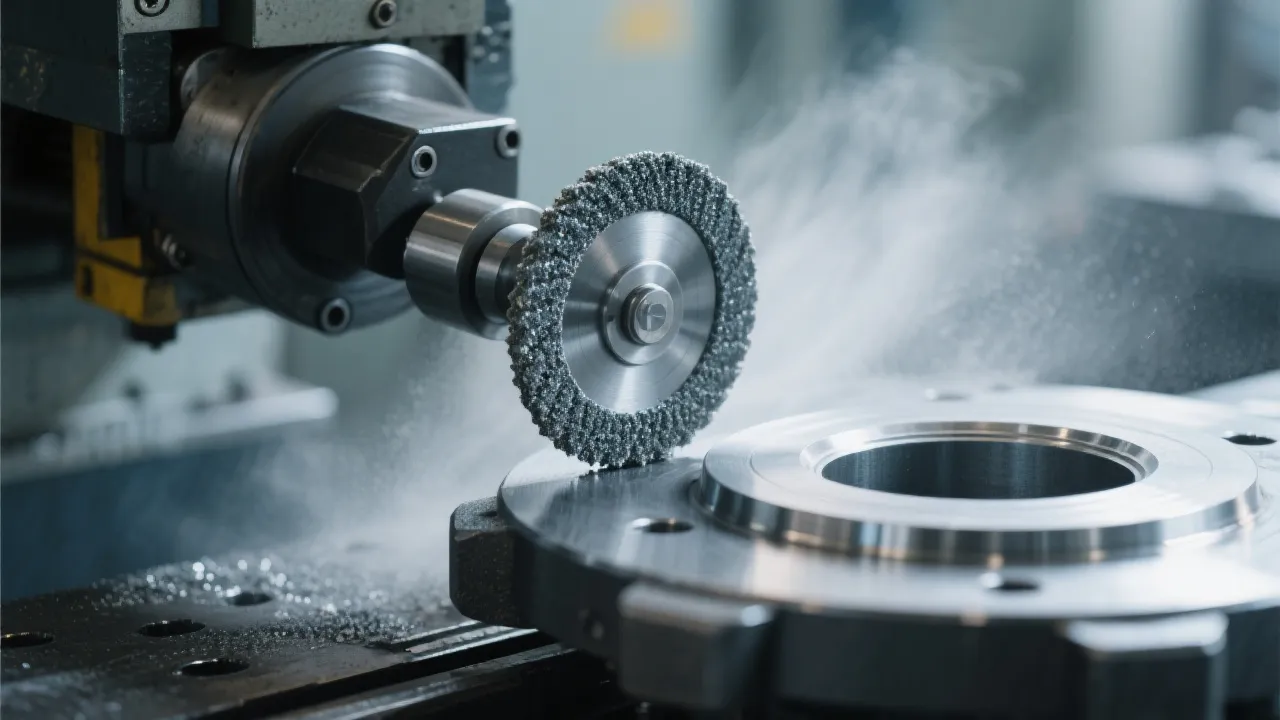
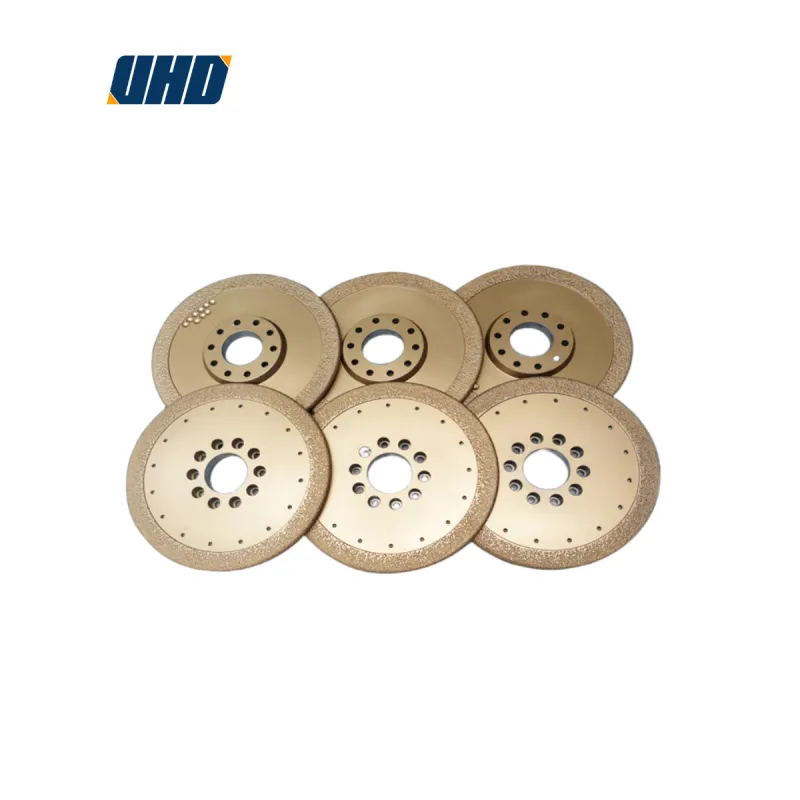
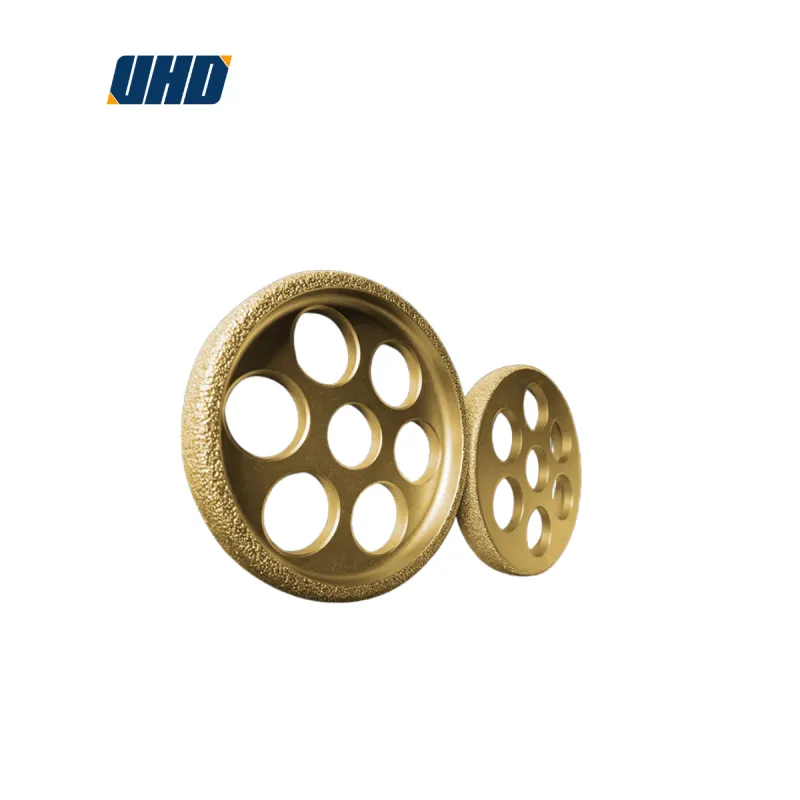
In vacuum brazing, diamond grits are metallurgically bonded to the wheel body. The practical result is a tool that tends to maintain cutting points longer under demanding conditions—often translating into more stable cutting action and reduced need for frequent dressing in certain gray cast iron applications.
The 4 Parameters That Decide Success
1) Diameter & size: compatibility first, then stability
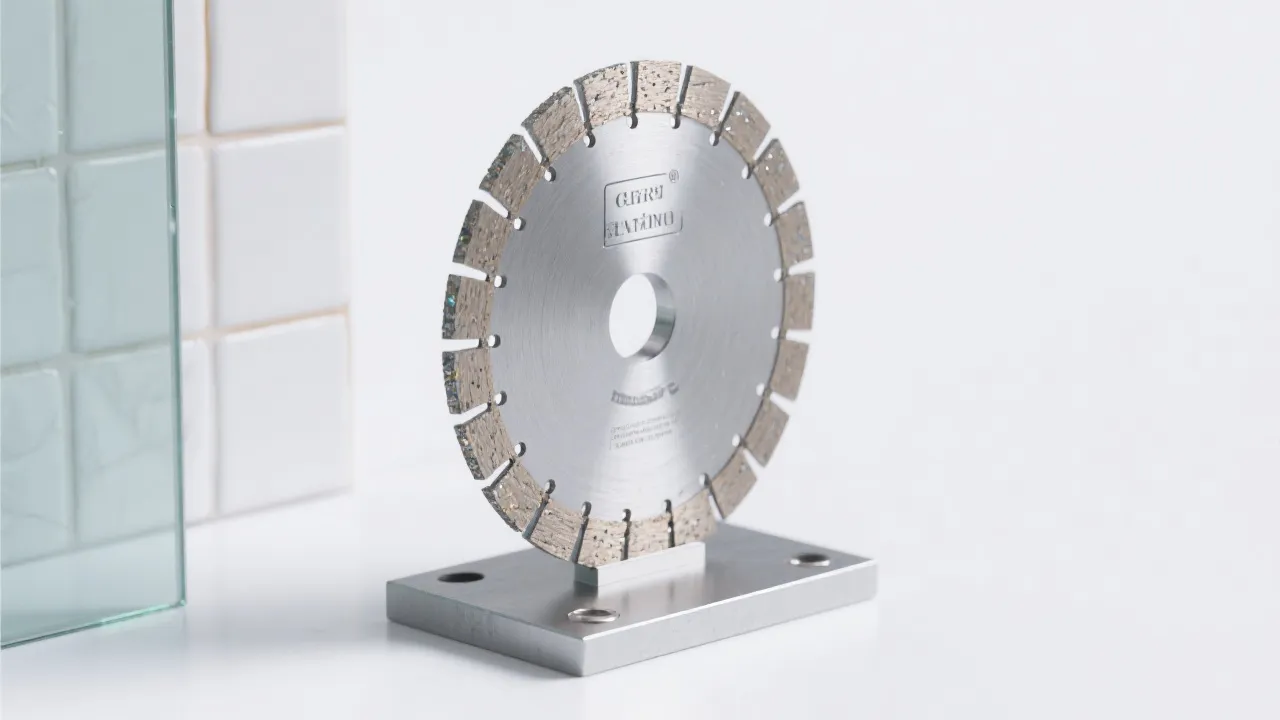
Diameter, bore size, and thickness are not just “fitment.” They influence rigidity, vibration tendency, and safe operating speed. A larger diameter can improve productivity by increasing peripheral speed at the same spindle RPM, but only if the machine guard, flange, and balance capability are designed for it.
Practical check: confirm max wheel OD, flange diameter, arbor/bore tolerance, and target surface speed. In many industrial grinding setups, peripheral speed commonly runs in the range of 20–35 m/s depending on operation and guarding—always follow machine and wheel safety limits.
2) Grit size: the most misunderstood “performance dial”
Grit size is not only about roughness. It controls chip thickness, wheel loading behavior, heat, and dust characteristics. On gray cast iron, overly fine grit may increase rubbing and generate more powder-like debris; overly coarse grit may leave deep scratches and require extra finishing passes.
Application goal
Suggested diamond grit range (mesh)
What you typically gain
Watch-outs
Fast stock removal / rough grinding
30/40 to 40/50
Higher MRR, less rubbing
Scratch depth, risk of chatter if rigidity is low
General-purpose grinding / stable finish
50/60 to 80/100
Balanced finish & efficiency
Requires correct coolant/airflow and extraction
Finishing / tight Ra targets
100/120 to 150/180
Lower scratch pattern, smoother surface
More sensitive to loading; avoid too light pressure
For many automotive and machinery components (e.g., housings, brake parts, pump bodies), buyers often target a stable finish window rather than “mirror” results; selecting 50/60–80/100 is frequently a productive starting point when process variation is high.
3) Profile/form accuracy: consistency is a hidden cost saver
If the wheel has a formed edge or a specific radius (common in contour grinding), profile accuracy determines whether you keep chasing the dimension with offsets—or run stable for longer. For high-mix production, form repeatability often matters more than theoretical best Ra.
Process hint: If your line relies on predictable offsets, ask for inspection records such as runout and profile tolerance per batch, and verify balancing practices. Reduced vibration is frequently tied to fewer surface defects and lower dust spread.
4) Wear behavior & durability: think “cost per part,” not “wheel price”
Buyers often evaluate wheels by initial cost, while production teams feel the real expense in downtime and scrap. In field comparisons (under similar fixtures and feeds), switching from conventional abrasive wheels to diamond solutions can reduce wheel change frequency by 3× to 10× in suitable operations—especially when the previous process required frequent dressing or suffered from fast glazing. Actual results depend on casting grade, coolant strategy, rigidity, and contact area.
Matching Strategy: Roughing vs. Finishing (and Everything in Between)
The “best wheel” is the one that matches your removal target, machine capability, and quality requirement. The matrix below is designed for quick decision-making during sourcing and trial planning.
Fine grit (100/120–150/180), precise forming, low runout
Better visual & functional finish, less polishing
Ra, waviness, visual defect rate
Interactive prompt: If you had to pick one bottleneck today, is it cycle time, dust & cleanup, or surface consistency? That answer usually determines grit range and profile requirements faster than any catalog page.
Dust, EHS, and Export Compliance: What Buyers Commonly Ask For
In international procurement, performance alone rarely closes the deal. Engineering teams want stability; purchasing teams want traceability; EHS wants documentation. For export-oriented manufacturers, aligning tool selection with commonly requested compliance documentation reduces friction during vendor approval.
Standards reference (for documentation alignment): For machinery and industrial tool supply chains, buyers frequently request CE-related documentation when applicable, plus chemical compliance such as REACH and RoHS declarations for components/materials. For dust management, facilities often benchmark against internal limits informed by regional workplace exposure frameworks (EU/UK/US). Always confirm the exact requirement with the importer and the end user’s EHS policy.
A lower-dust process is not just “cleaner”—it can reduce filter replacement frequency, cut housekeeping labor, and improve inspection accuracy. In many plants, even a 10–20% reduction in unplanned stoppages from wheel-related issues can be more valuable than incremental improvements in surface roughness.
A Simple, Repeatable Selection Workflow (Used by Practical Teams)
Define the operation: rough / semi-finish / finish; target Ra; stock removal per part; dry vs. wet
Choose grit by KPI: start with 50/60–80/100 if you need balanced results; adjust based on scratch vs. loading
Confirm profile requirements: form tolerance, runout control, balancing plan
Run a controlled trial: same batch of castings; track parts/wheel, Ra stability, downtime, dust handling effort
Common mistake to avoid: changing wheel spec and process parameters at the same time. If you adjust grit, keep feed/speed/coolant constant for the first comparison run, then tune systematically.
Where UHD Fits in Gray Cast Iron Grinding
UHD focuses on industrial grinding solutions where stability and durability matter in real production conditions. For buyers evaluating vacuum brazed diamond grinding wheels for gray cast iron, the most effective approach is typically a short, KPI-driven trial—matched to your machine and part geometry.
Get the spec right the first time
Send your part material grade, operation type, current wheel spec, and target finish. UHD engineers can recommend a parameter set (OD/bore, grit, profile) designed to improve consistency and reduce wheel-related downtime.


.png?x-oss-process=image/resize,h_100,m_lfit/format,webp)
.png?x-oss-process=image/resize,h_100,m_lfit/format,webp)
.png?x-oss-process=image/resize,h_100,m_lfit/format,webp)



.png?x-oss-process=image/resize,h_800,m_lfit/format,webp)