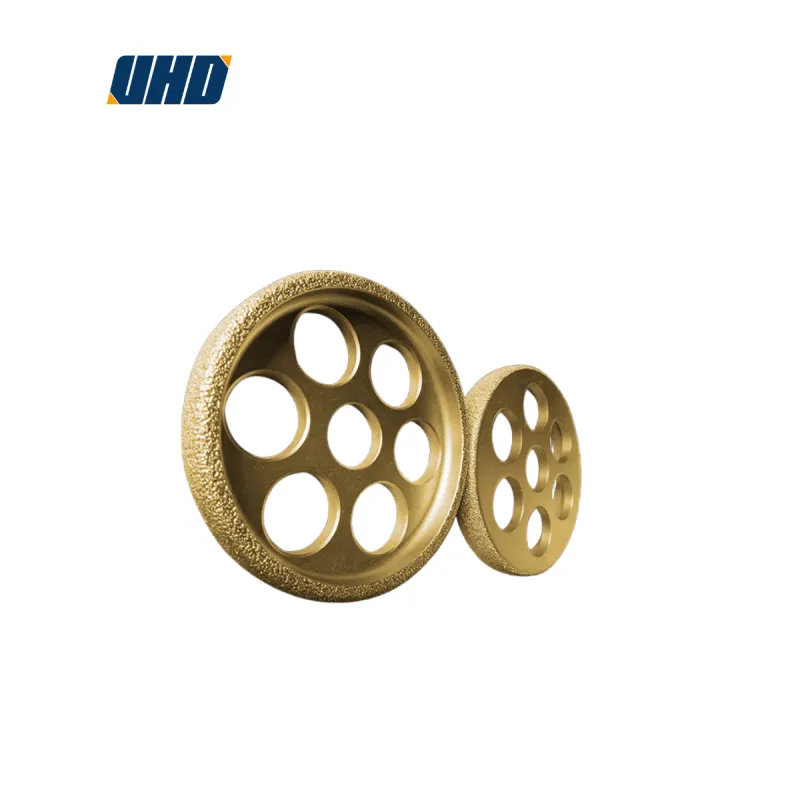
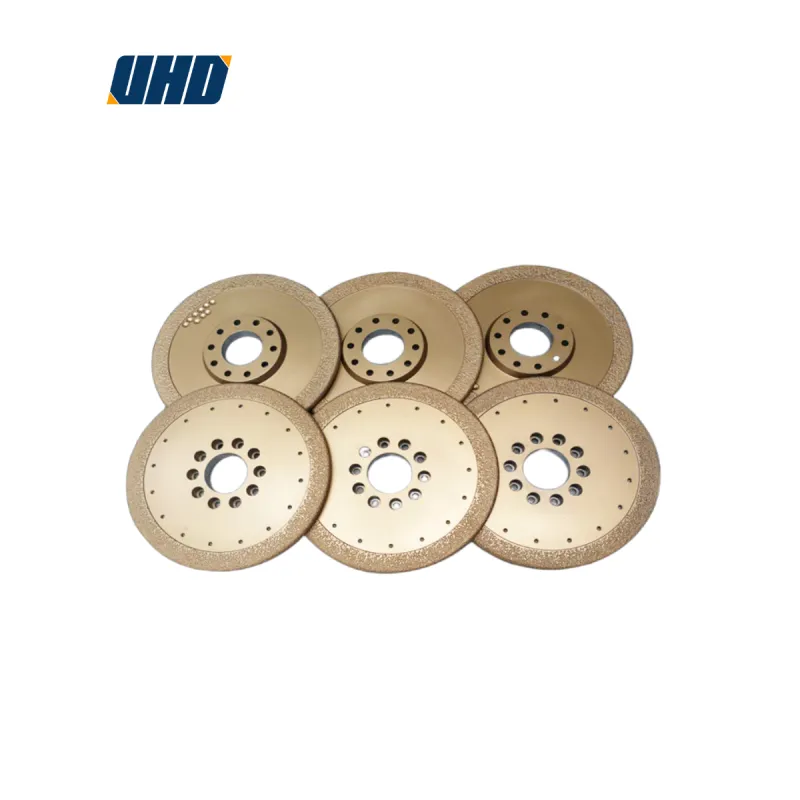
Stainless steel grinding often fails for predictable reasons: the wrong wheel structure for the job, mismatched size/geometry, unstable machine conditions, or unrealistic expectations about wear and surface finish. This page by UHD Ultrahard Tools Co., Ltd (UHD) provides a practical, shop-ready approach to selecting and using a brazed diamond grinding wheel for stainless steel—with a clear reference example: an 180mm high-wear-resistance brazed diamond grinding wheel built on a turned (machined) body with a brazed diamond layer.
Who it helps: Manufacturing engineers, process engineers, and operators evaluating wheel type, size (180mm), workload, and target surface finish.
What it covers: Selection logic, installation checks, pressure/contact control, abnormal wear identification, cleaning, and lifecycle cost evaluation.
Reference product: UHD 180mm high-wear-resistance brazed diamond grinding wheel for stainless steel processing.
A brazed diamond grinding wheel uses a brazing process to bond diamond abrasives onto a metal wheel body. In stainless steel applications, the practical significance is not “diamond vs. non-diamond” as a slogan—it’s how the wheel’s structure affects material removal rate, wear behavior, and surface finish stability under your machine and workload.
Use the following selection logic to align the grinding wheel with stainless steel workload, geometry, and quality targets. This helps reduce trial-and-error and makes performance easier to reproduce across shifts and lines.
| Decision factor | What to confirm on-site | Why it matters for stainless steel | How the 180mm brazed wheel fits |
|---|---|---|---|
| Part geometry | Contact area, edges, grooves, accessibility, risk of chatter | Geometry drives heat build-up and finish consistency | 180mm diameter offers a balanced contact footprint for many stainless workpieces |
| Process targets | Removal rate vs. surface finish priority; allowed burrs/marks | Stainless often punishes aggressive settings with heat discoloration and instability | Brazed diamond layer supports efficient grinding when parameters are well-controlled |
| Machine conditions | Spindle stability, guards, runout, rigidity, available power, coolant capability | Poor stability increases abnormal wear and surface defects | Turned body emphasizes structural strength and stable running |
| Workload & cycle time | Daily throughput, continuous vs. intermittent use, operator changes | High utilization amplifies lifecycle cost and consistency issues | Designed for high wear resistance to extend usable life under demanding schedules |
| Expected tool life | Replacement policy, tolerance for gradual performance decay | Tool life must be evaluated with stable parameters and realistic targets | High-wear-resistance design supports lifecycle cost control (no numeric claims) |
Selection tip: When comparing wheels, keep the evaluation basis consistent—same stainless material condition, similar contact geometry, and repeatable machine settings—otherwise “tool life” and “finish” feedback becomes misleading.
Safety note: Speed, feed, coolant, and safety limits must follow the product manual, machine specifications, and on-site safety procedures. If your facility has mandatory SOPs, use them as the governing rule set.
Repeatable stainless steel grinding depends not only on the wheel selection, but also on basic post-job discipline. For brazed diamond wheels, residue management and condition checks can help keep performance stable from job to job.
Instead of comparing wheels by purchase price alone, evaluate:
UHD’s reference wheel in this guide is a 180mm brazed diamond grinding wheel designed for stainless steel processing. It uses a turned body combined with a high-tech brazing process to support structural strength, grinding efficiency, and wear resistance in practical shop conditions.
If you are unsure whether 180mm is the best match, UHD can align recommendations with your part geometry, process targets, and machine conditions.
Share your material condition, part geometry, machine model, and target finish. UHD Ultrahard Tools will support a practical selection and usage discussion based on your operating context.
Prepare these details:
 364
|
 UHD Ultrahard Tools Co., Ltd ultrahard tools supplier process fit industrial customer service B2B technical service
490
|
UHD Ultrahard Tools Co., Ltd ultrahard tools vacuum brazed diamond tools diamond cutting abrasives metal and stone processing
118
|
UHD Ultrahard Tools Co., Ltd brazed diamond grinding wheel 180mm brazed diamond grinding disc stainless steel grinding tool high wear resistance diamond wheel
210
|
UHD Ultrahard Tools Co., Ltd vacuum brazed diamond cutting abrasive superhard tools diamond abrasive metalworking and stone processing
426
|
UHD Ultrahard Tools Co., Ltd ultrahard material tools diamond tools brazed diamond abrasives carbide product solutions for industrial processing