Superhard Materials and Vacuum Brazed Diamond Cutting Abrasives: Structure, Performance, and Industrial Uses
UHD Ultrahard Tools Co., Ltd
2026-09-04
Concept Explanation
UHD Ultrahard Tools Co., Ltd explains what superhard materials and vacuum brazed diamond cutting abrasives are—covering structure, performance factors, and typical industrial applications in metal and stone processing to support tooling selection and evaluation.

UHD Ultrahard Tools Co., Ltd (UHD) focuses on superhard materials tools, including vacuum brazed diamond cutting and grinding abrasives used in industrial metal processing and stone processing. This page explains the structure of vacuum brazed diamond abrasives, key performance factors, and how buyers can evaluate tooling for efficient, stable production.
Focus: Vacuum Brazed Diamond Abrasives
Use Cases: Cutting / Grinding
Industries: Metal & Stone Processing
What are superhard materials and vacuum brazed diamond abrasives?
Superhard materials tools typically use ultra-hard media such as diamond to deliver high wear resistance and effective material removal. In a vacuum brazed diamond abrasive, diamond grains are bonded to a metal substrate through a brazing alloy under controlled conditions. This bonding approach is designed to hold abrasive grains firmly and maintain cutting/grinding ability during demanding operations.
Typical structure (how a vacuum brazed diamond tool is built)
- Substrate / body: commonly a steel base designed for rigidity and stability during grinding or cutting.
- Brazing layer: bonding medium that anchors diamond grains to the substrate.
- Diamond abrasive layer: diamond grains that perform the actual cutting/grinding.
- Tool geometry: disc/wheel/segment layout affects contact area, heat dissipation, and chip removal.
Performance factors buyers should evaluate
Tool performance is influenced by both the vacuum brazing process and the characteristics of the diamond abrasive. For consistent results, evaluation should consider efficiency, wear resistance, service life, and stability under your specific workpiece and machine conditions.
| Factor |
Why it matters |
What to confirm in selection |
| Bonding strength |
Helps retain diamond grains during high-load grinding/cutting. |
Process stability and suitability for the target material and speed range. |
| Diamond grit & concentration |
Affects surface finish, removal rate, and tool feel. |
Desired finish vs. productivity, and whether the application is grinding or shaping. |
| Geometry & contact design |
Influences heat management, chip evacuation, and controllability. |
Wheel size, segment layout, and compatibility with your machine/spindle. |
| Wear resistance |
Drives service life and cost per part. |
Expected duty cycle, workpiece hardness/abrasiveness, and process stability. |
| Operational stability |
Reduces vibration and helps maintain consistent results. |
Balancing, runout control, and recommended RPM/feeding approach. |
Practical note for industrial procurement: define the workpiece (e.g., stainless steel vs. stone), required finish, machine type, and target throughput first—then match grit, geometry, and bonding design accordingly.
Typical industrial applications: metal and stone processing
Metal processing
- Grinding and finishing on metal components where stable removal and wear resistance are required.
- Stainless steel processing scenarios where tool rigidity and abrasive retention affect efficiency.
Stone processing
- Grinding/cutting tasks on stone materials where abrasion is high and tool life matters.
- Operations requiring consistent performance across varying material densities and surfaces.
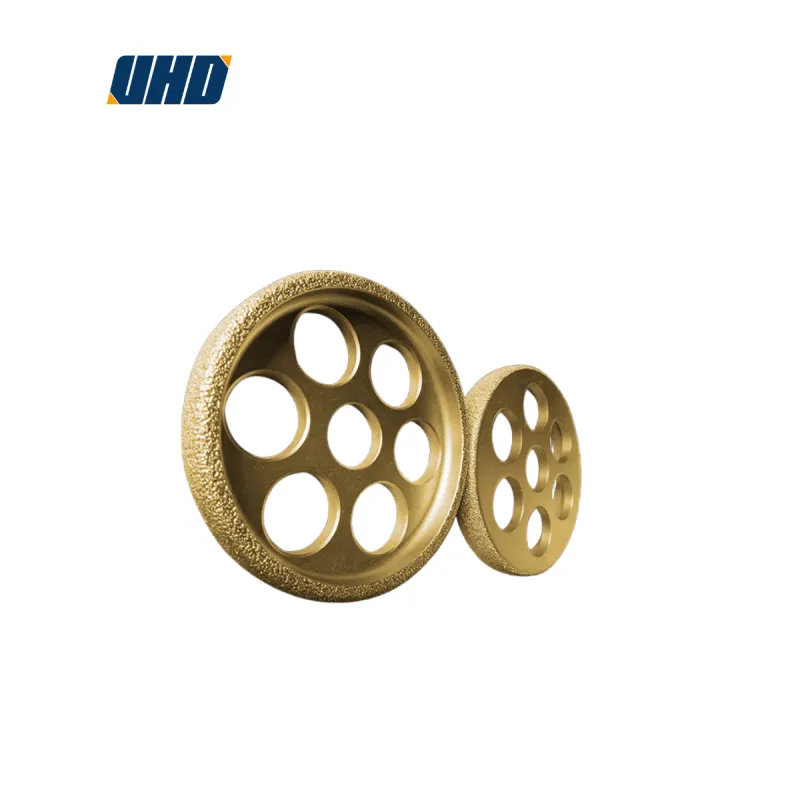
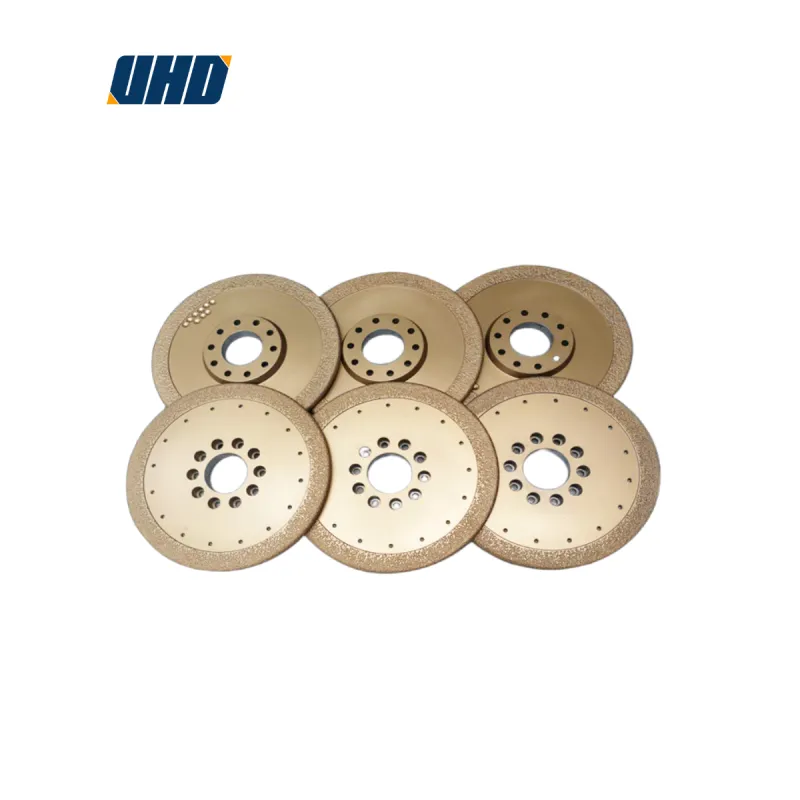
Featured product example: 180 mm vacuum brazed diamond grinding wheel for stainless steel
UHD’s 180 mm high-wear vacuum brazed diamond grinding wheel is designed as an option for stainless steel grinding. It uses a turned steel body combined with a high-tech brazing process to support structural strength and grinding stability.
- High-strength structure: turned substrate + brazed abrasive layer for robust operation.
- Grinding efficiency focus: supports faster completion of stainless steel grinding tasks (depending on setup and parameters).
- High wear resistance: designed to extend service life and help reduce tool replacement frequency.
- Compliance: the product is stated as having CE and other certifications (confirmation documents can be provided during sourcing).
- After-sales support: UHD provides technical and service support for application use.
Keyword: 180mm vacuum brazed diamond wheel
Keyword: high wear resistance
Keyword: stainless steel processing
For evaluation, share your workpiece material, target finish, machine type, and expected duty cycle—UHD can help align wheel design to your process requirements.
How UHD supports industrial buyers (B2B)
UHD is a high-tech manufacturer in China dedicated to R&D, production, and sales of superhard tools. With an industrial-market focus and a B2B trade service system, UHD supports buyers who need consistent specifications and clear technical communication across regions.
- Product positioning by process: tools are designed to meet specific machining and finishing requirements.
- R&D collaboration: UHD works with higher-education research partners (e.g., Henan University of Technology) to strengthen superhard tooling development.
- Global B2B communication: support for international sourcing workflows and documentation alignment where needed.
Selection checklist for vacuum brazed diamond grinding/cutting tools
- Define application: cutting or grinding; metal processing or stone processing.
- Confirm workpiece details: material grade (e.g., stainless steel type), geometry, and surface requirement.
- Match wheel/tool size and mounting to your machine setup.
- Align grit and design to removal rate vs. finish needs.
- Clarify operating conditions: RPM range, feed, cooling method, and duty cycle.
Talk to UHD about vacuum brazed diamond abrasive selection
If you are evaluating vacuum brazed diamond cutting abrasives or diamond grinding wheels for industrial production, UHD can support specification discussion, application matching, and after-sales service planning.
B2B Inquiry & Technical Discussion

 208
|
 UHD Ultrahard Tools Co., Ltd diamond tool selection industrial machining tools cutting tools grinding tools


