
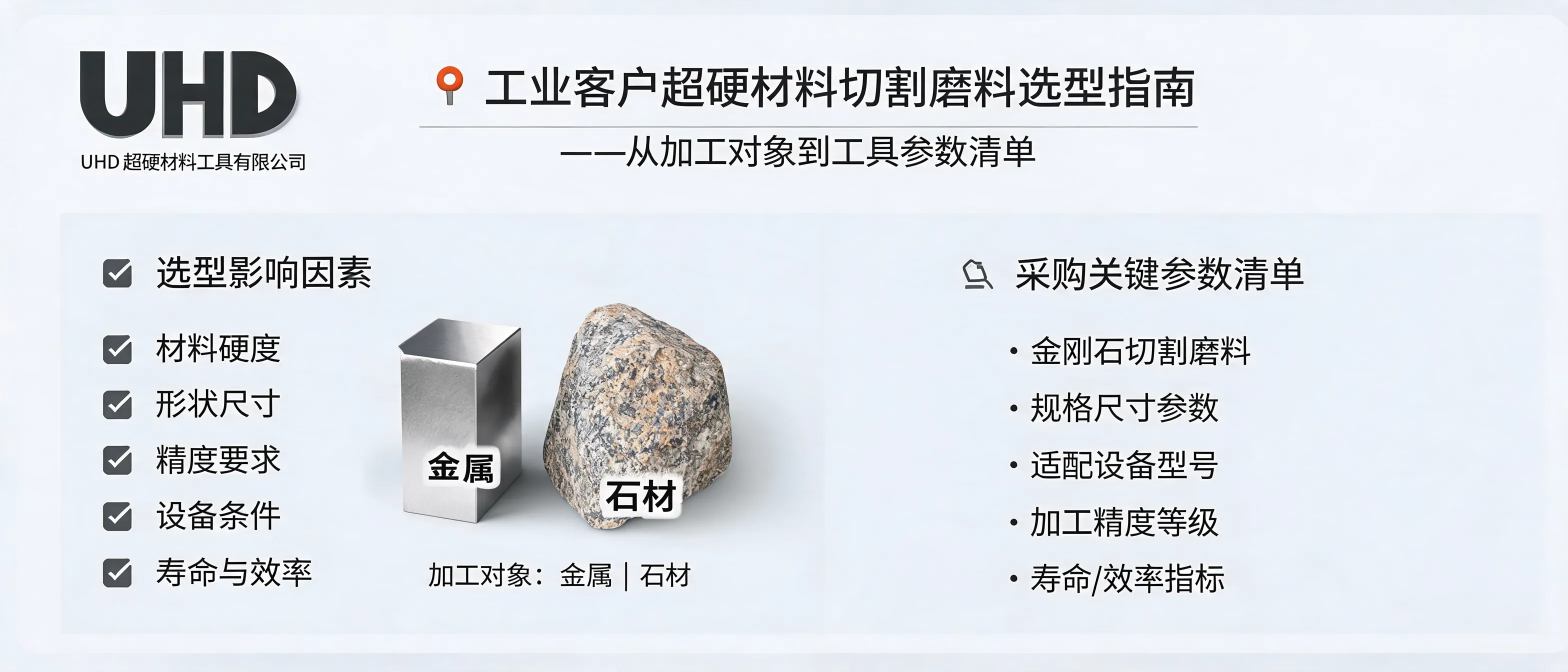
In industrial procurement, selecting the right ultrahard cutting abrasive is less about “one-size-fits-all” and more about matching workpiece material, process targets, and equipment conditions to tool parameters. This page provides a practical, purchase-ready checklist commonly used for metalworking and stone processing, helping buyers reduce trial cost and avoid specification mismatch.
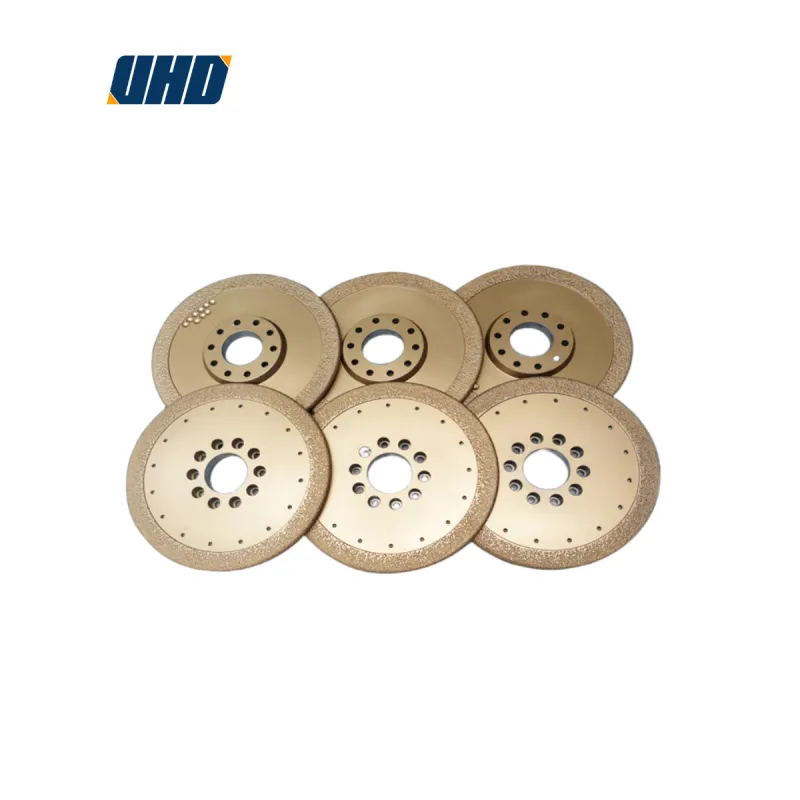
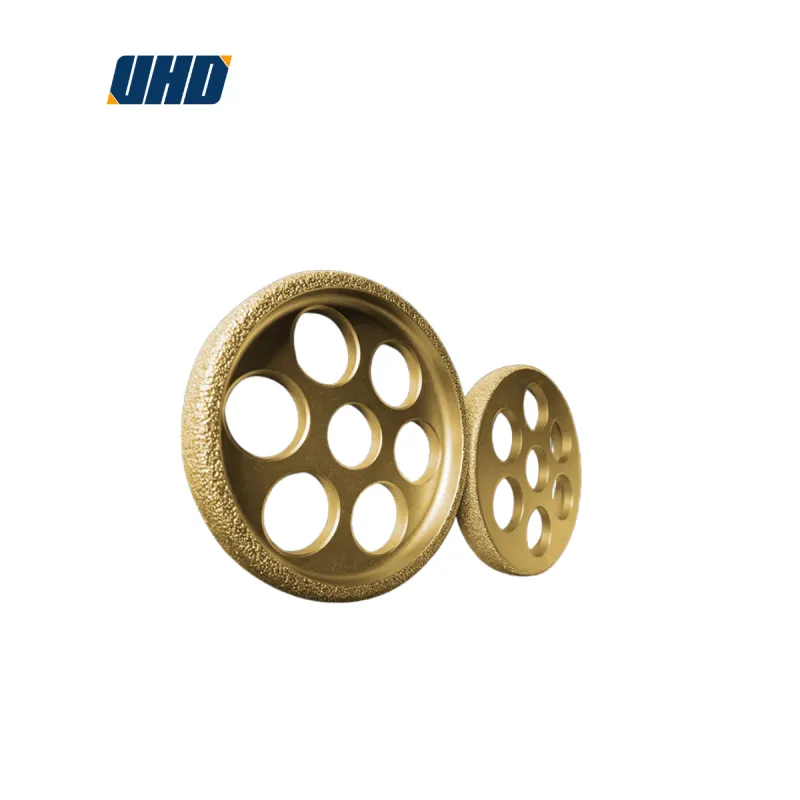
Provided by UHD Ultrahard Tools Co., Ltd (UHD), a B2B manufacturer focused on ultrahard material tools and solutions—including diamond cutting abrasives and vacuum brazed diamond products—serving industrial applications where process stability and parameter fit matter.
Before comparing abrasive models or prices, lock down the workpiece factors. For diamond cutting abrasives and other ultrahard cutting abrasives, these factors directly drive bond choice, grit, tool geometry, and heat management requirements.
Tip: If the priority is “fast cut” versus “best edge,” the optimal parameter set (grit, bond, and geometry) can differ significantly even for the same material.
Many mismatches come from ignoring machine limits. Ultrahard cutting abrasives must be compatible with the actual spindle power, speed range, rigidity, and cooling capability in your shop.
Use the list below to align supplier quotations and technical sheets. Even when product names look similar, these parameters determine real-world performance and stability.
| Parameter | What to Confirm | Why It Matters (Mismatch Risk) |
|---|---|---|
| Type & application | Cutting vs grinding; metalworking vs stone processing; wet vs dry | Wrong type leads to poor cut quality, heat issues, or rapid wear |
| Abrasive material | Diamond (and grade) or other ultrahard system per workpiece | Incompatible abrasive lowers efficiency and increases defect rate |
| Grit size | Coarse/medium/fine selection tied to finish & speed targets | Too coarse risks chipping; too fine may slow cutting and overheat |
| Bond / process route | For example, vacuum brazed diamond vs other bonding methods | Bond impacts grain retention, heat tolerance, and life stability |
| Tool geometry | Segment/edge design, rim type, thickness, and cut path suitability | Geometry mismatch increases vibration, kerf deviation, and burrs |
| Dimensions & mounting | OD/ID, arbor, flange, thread, and max allowed size | Incorrect mounting causes safety risk and poor runout control |
| Operating window | Recommended speed, feed, and cutting mode for your machine | Out-of-range operation leads to glazing, burn marks, or fast wear |
| Cooling requirement | Wet/dry compatibility; coolant delivery constraints | Cooling mismatch raises thermal damage and shortens tool life |
| Quality & inspection basis | Incoming checks: appearance, dimensions, labeling, batch traceability | Lack of verification increases inconsistency and procurement risk |
To speed up quotation and reduce back-and-forth, share the following checklist when sourcing ultrahard cutting abrasives. A complete set of answers helps confirm fit before sampling.
As a manufacturer specializing in ultrahard material tools, UHD Ultrahard Tools Co., Ltd supports industrial buyers with parameter alignment for ultrahard cutting abrasives used in metalworking and stone processing. Our approach emphasizes matching your workpiece and equipment realities to a clear parameter set—so sourcing decisions are based on controllable inputs.
If you’re evaluating a new abrasive specification, prepare the checklist in Section 5 and share it with your supplier. Clear inputs—material, accuracy target, and machine conditions—are the fastest route to a stable, repeatable cutting setup.
Next step for procurement: consolidate your workpiece + machine details, then request a parameter-based recommendation.
This reduces mismatch risk and makes quotations comparable across suppliers.
UHD Ultrahard Tools Co., Ltd
Ultrahard cutting abrasive selection support for metalworking & stone processing
.png?x-oss-process=image/resize,h_800,m_lfit/format,webp)
 117
|
117
|
 UHD Ultrahard Tools Co., Ltd
vacuum brazed diamond cutting abrasives
ultrahard material tools
applications in metalworking and stone processing
definition and application boundaries
63
|
UHD Ultrahard Tools Co., Ltd
vacuum brazed diamond cutting abrasive
ultrahard tools
cutting efficiency
industrial processing applications
374
|
UHD Ultrahard Tools Co., Ltd
custom ultrahard tooling solution
brazed diamond abrasive tools
process pain points
project delivery and validation
467
|
UHD Ultrahard Tools Co., Ltd
superhard material tools
diamond tools
abrasives and grinding tools
vacuum brazed diamond
435
|
UHD Ultrahard Tools Co., Ltd
stone processing application case
cutting efficiency improvement
machining consistency
ultrahard material tools
UHD Ultrahard Tools Co., Ltd
vacuum brazed diamond cutting abrasives
ultrahard material tools
applications in metalworking and stone processing
definition and application boundaries
63
|
UHD Ultrahard Tools Co., Ltd
vacuum brazed diamond cutting abrasive
ultrahard tools
cutting efficiency
industrial processing applications
374
|
UHD Ultrahard Tools Co., Ltd
custom ultrahard tooling solution
brazed diamond abrasive tools
process pain points
project delivery and validation
467
|
UHD Ultrahard Tools Co., Ltd
superhard material tools
diamond tools
abrasives and grinding tools
vacuum brazed diamond
435
|
UHD Ultrahard Tools Co., Ltd
stone processing application case
cutting efficiency improvement
machining consistency
ultrahard material tools



.png?x-oss-process=image/resize,h_100,m_lfit/format,webp)
.png?x-oss-process=image/resize,h_100,m_lfit/format,webp)
.png?x-oss-process=image/resize,h_100,m_lfit/format,webp)
