
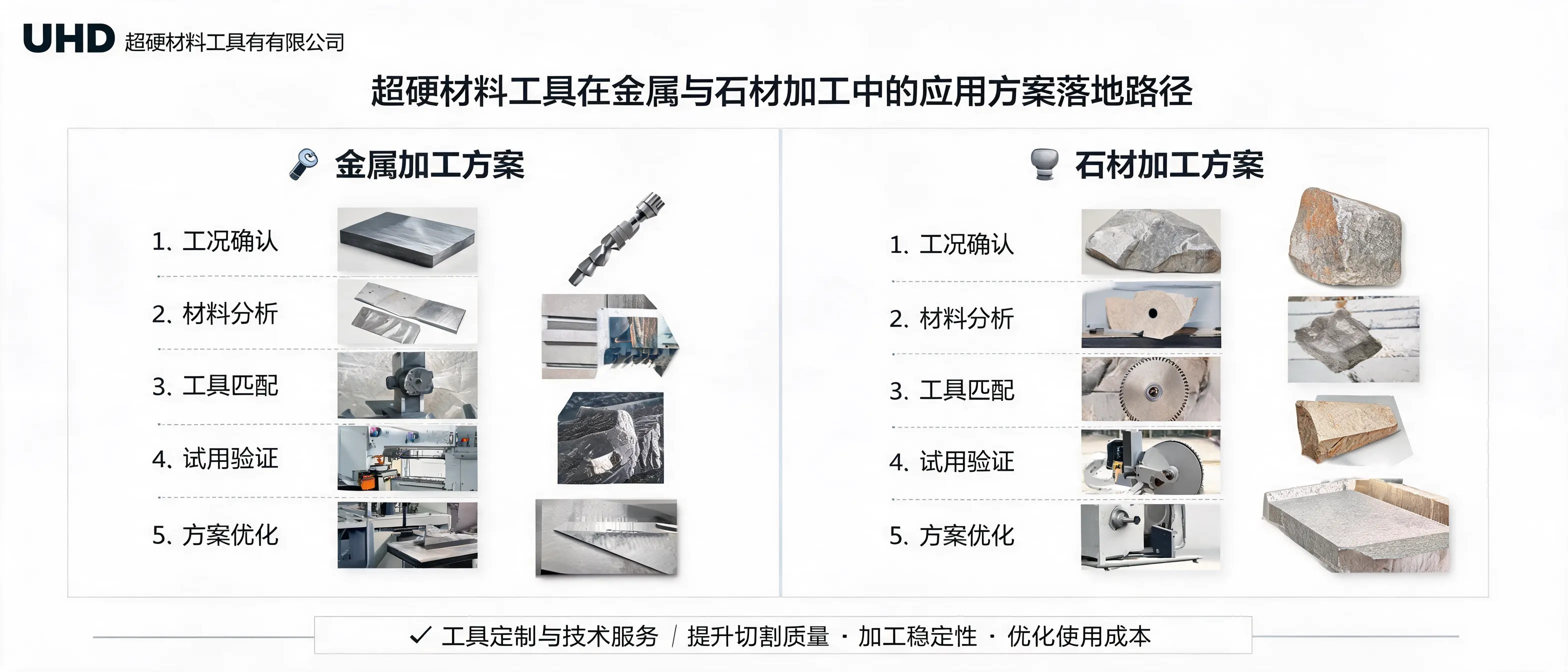
In industrial production, ultrahard material tools are not “one-size-fits-all”. Their performance depends on how well the tool specification matches the real working conditions, the workpiece material, and the required process stability. UHD Ultrahard Tools Co., Ltd (UHD) supports metal and stone processors with a practical implementation workflow—from condition confirmation and material analysis to tool matching, trial validation, and continuous optimization—so customers can improve cut quality, stability, and total cost of use without overpromising or guessing.
UHD’s implementation approach is designed for B2B industrial customers who need predictable results on the production line. The workflow below keeps each decision tied to measurable process requirements and practical constraints.
Define the real application environment before selecting a tool: machine type and power, spindle speed range, coolant or dry cutting, clamping rigidity, target throughput, and acceptable surface/edge quality.
Tool matching starts with material behavior. For metal processing and stone processing, UH-grade and ultrahard tooling decisions are guided by hardness/abrasiveness, microstructure, and the presence of inclusions or reinforcements.
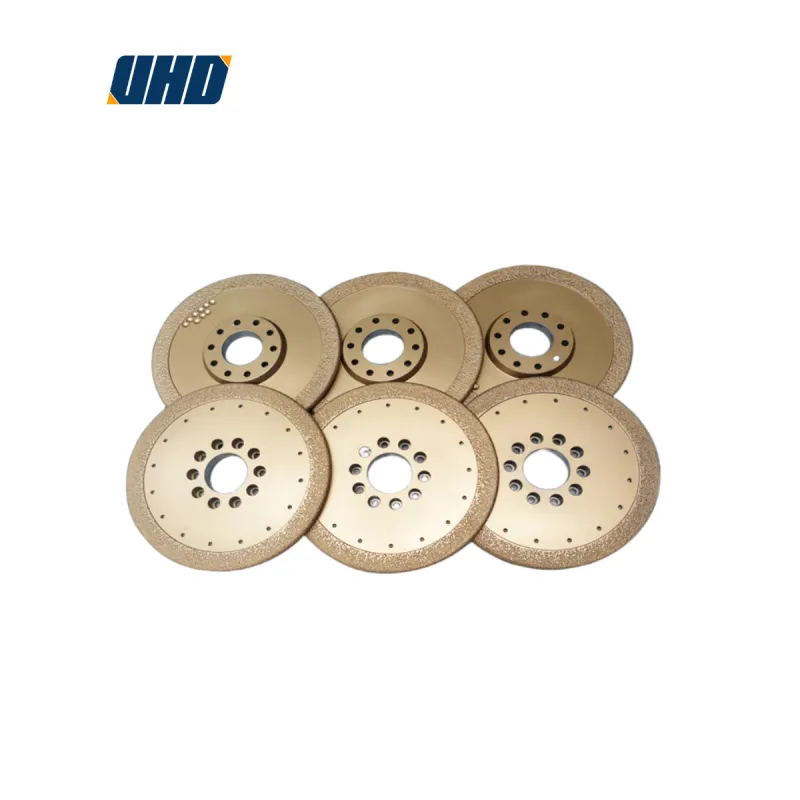
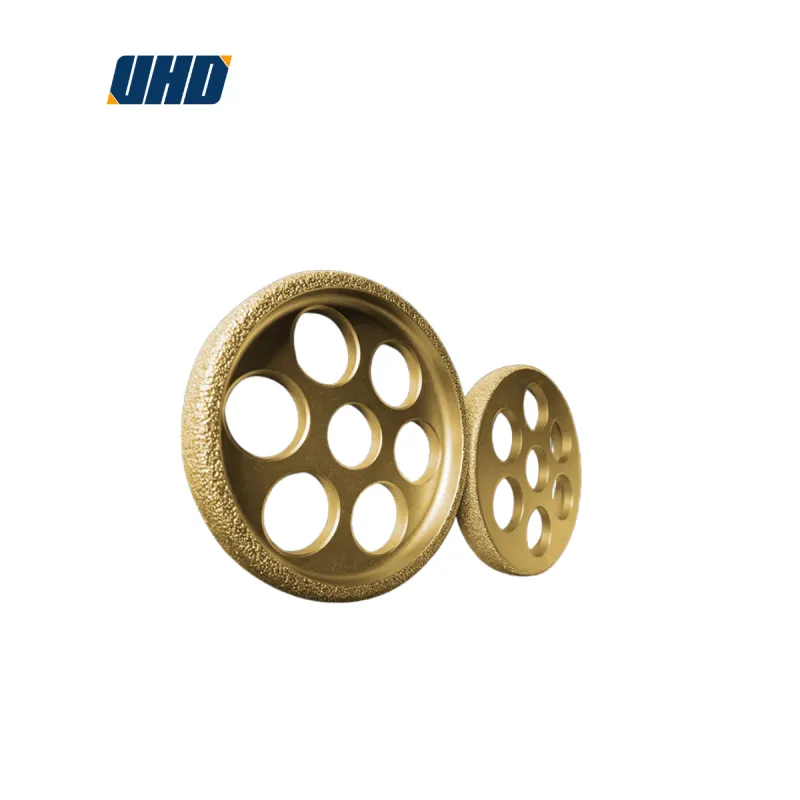
Based on conditions and material analysis, UHD recommends an appropriate ultrahard tool route and specification—prioritizing product positioning, application fit, and manufacturability. UHD’s portfolio includes diamond tools, abrasives, and custom vacuum-brazed diamond abrasives for targeted industrial use.
Note: Final configuration depends on application constraints and validation results; UHD focuses on practical selection rather than generic claims.
Trial runs are used to confirm that the tool and parameters deliver the intended outcome on the actual production setup. UHD supports customers in structuring trials so results can be compared fairly.
Optimization typically focuses on parameter tuning and specification refinement to achieve a stable process window. UHD’s technical service helps interpret observed issues and determine next adjustments.
Optimization outcomes depend on the customer’s equipment, materials, and production targets; UHD focuses on repeatable improvement steps and clear decision criteria.
Suitable for shops and factories seeking stable cutting/grinding results across batches, especially where tool wear, heat, and machine rigidity determine the usable parameter window. UHD helps align tool selection with your material condition and production rhythm.
Suitable for applications where edge chipping control, surface consistency, and predictable consumption matter. UHD supports matching tool configuration and trial validation to your stone type and processing route.
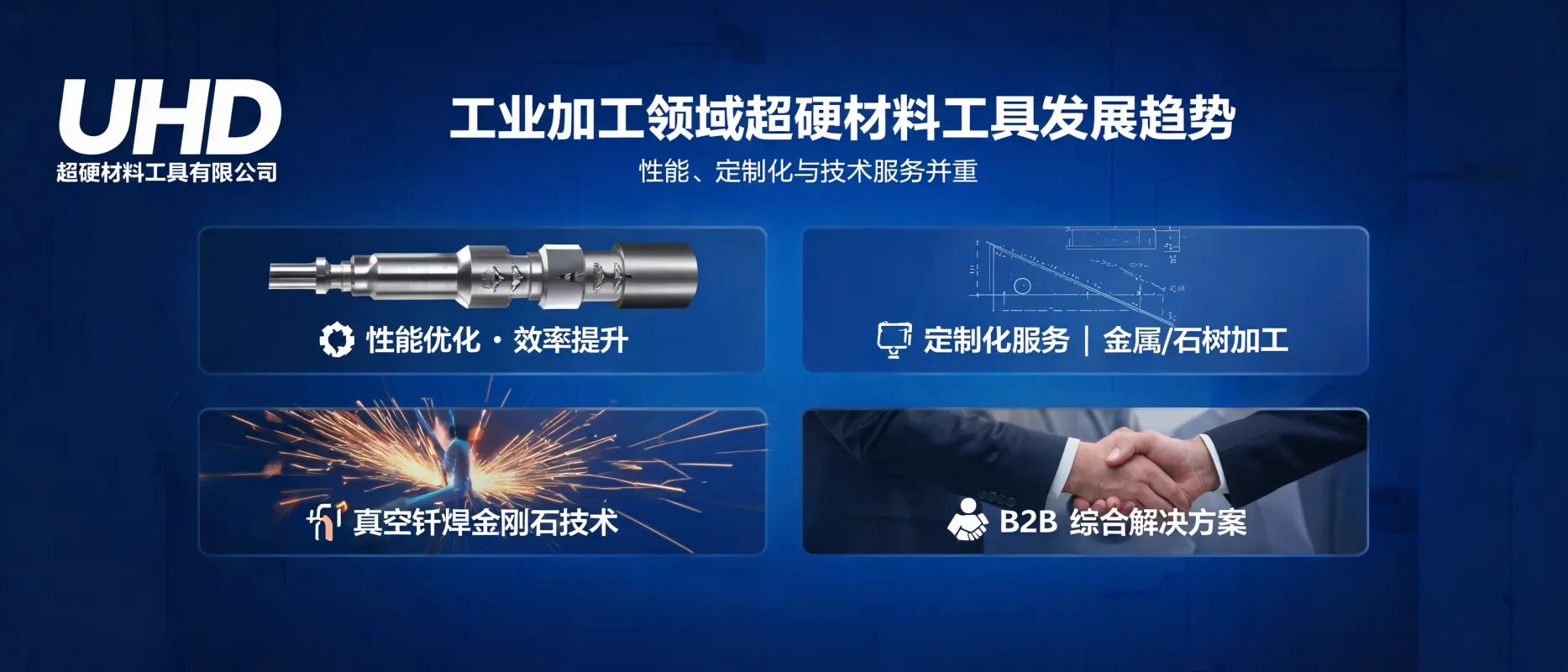
UHD is a high-tech enterprise focused on the R&D, manufacturing, and sales of ultrahard material tools. Backed by ongoing product development and industry-academic collaboration (e.g., with Henan University of Technology), UHD combines product positioning with technical service to help customers implement tools effectively.
Quality builds the brand. UHD’s approach emphasizes selecting the right ultrahard material tool for the right process—and then validating and optimizing it in real production conditions.
If you want UHD to help match or customize an ultrahard tooling solution for metal or stone processing, preparing the following information will speed up the initial evaluation:
UHD can support selection and deployment across different markets through its established B2B foreign trade service system and global communication channels.
.png?x-oss-process=image/resize,h_800,m_lfit/format,webp)
 203
|
203
|
 UHD Ultrahard Tools Co., Ltd
scenario-based solutions
ultrahard tools
industrial tool procurement
tool specifications
234
|
UHD Ultrahard Tools Co., Ltd
ultrahard material tools
diamond tools
vacuum brazed diamond abrasives
abrasives and grinding tools
498
|
UHD Ultrahard Tools Co., Ltd
vacuum brazing process
vacuum brazed diamond tools
high-intensity working conditions
diamond grit bonding strength
332
|
UHD Ultrahard Tools Co., Ltd
ultrahard tools purchasing
diamond tools procurement
supplier evaluation
process matching
433
|
UHD Ultrahard Tools Co., Ltd
vacuum brazed diamond abrasives
conventional abrasives comparison
bonding strength
cutting performance
UHD Ultrahard Tools Co., Ltd
scenario-based solutions
ultrahard tools
industrial tool procurement
tool specifications
234
|
UHD Ultrahard Tools Co., Ltd
ultrahard material tools
diamond tools
vacuum brazed diamond abrasives
abrasives and grinding tools
498
|
UHD Ultrahard Tools Co., Ltd
vacuum brazing process
vacuum brazed diamond tools
high-intensity working conditions
diamond grit bonding strength
332
|
UHD Ultrahard Tools Co., Ltd
ultrahard tools purchasing
diamond tools procurement
supplier evaluation
process matching
433
|
UHD Ultrahard Tools Co., Ltd
vacuum brazed diamond abrasives
conventional abrasives comparison
bonding strength
cutting performance






.png?x-oss-process=image/resize,h_100,m_lfit/format,webp)
.png?x-oss-process=image/resize,h_100,m_lfit/format,webp)
.png?x-oss-process=image/resize,h_100,m_lfit/format,webp)
