
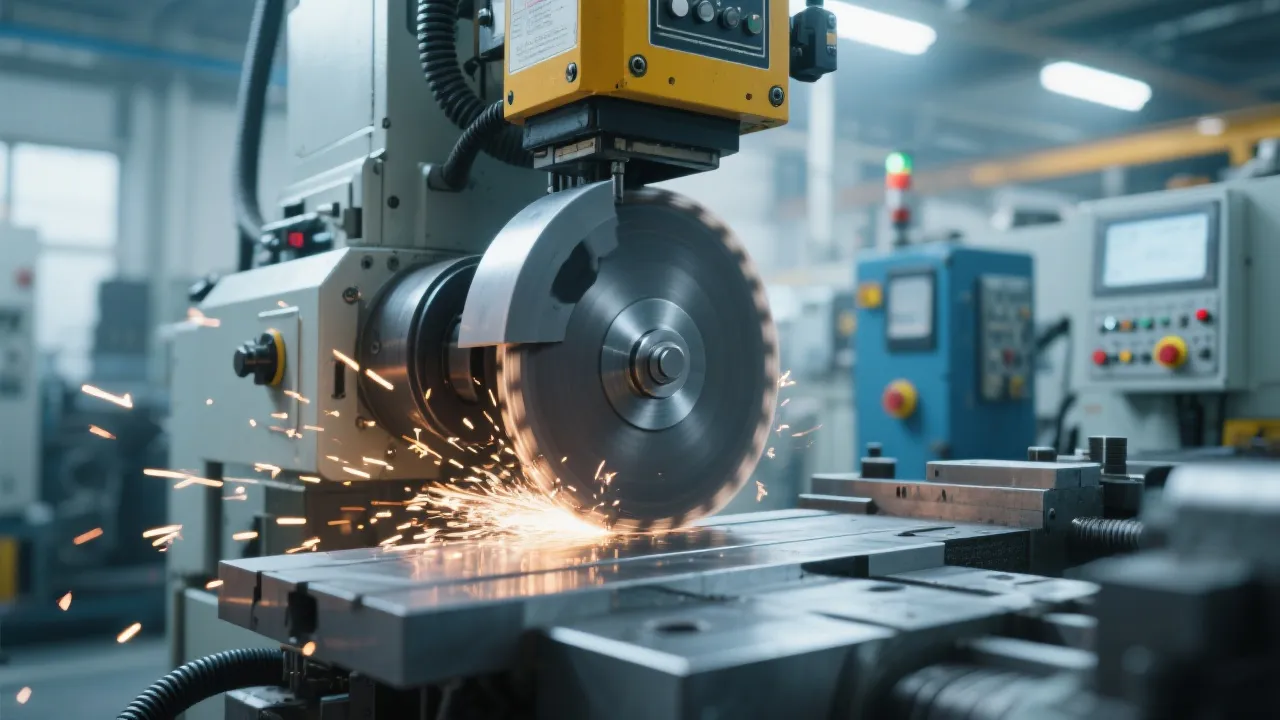
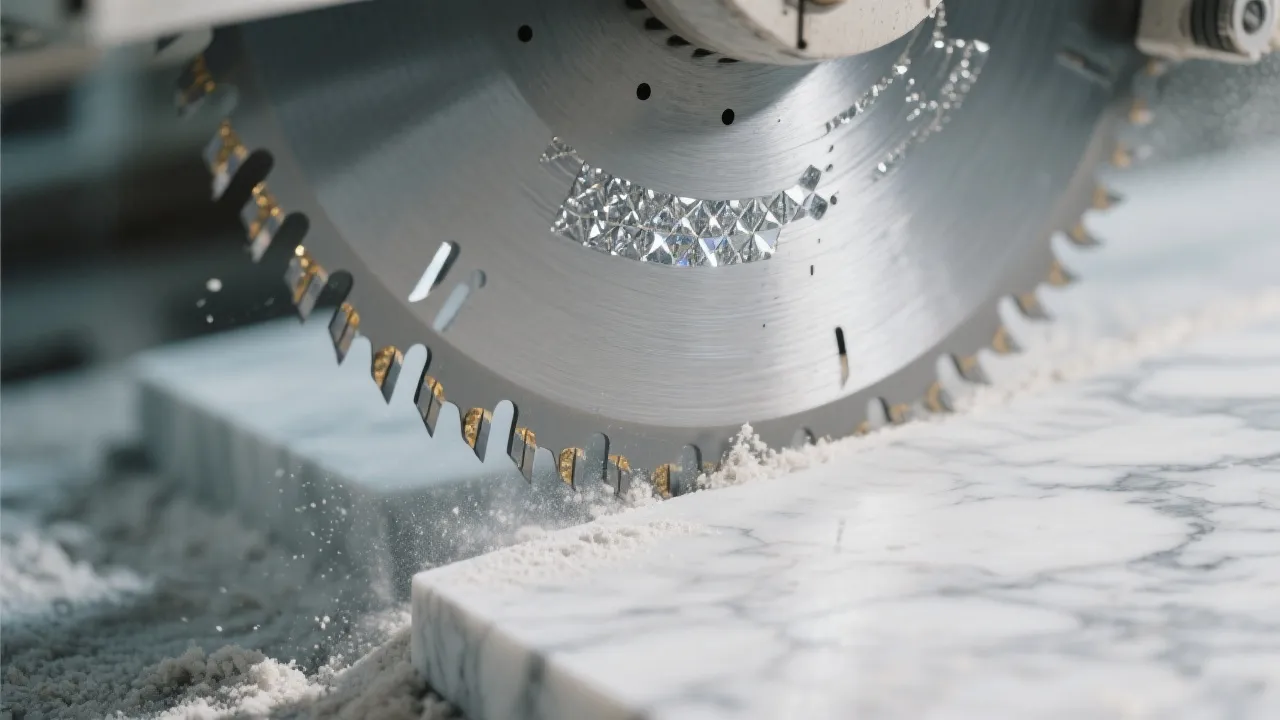
In industrial production, an ultrahard material tool is rarely chosen on a single parameter. What matters is how cutting/grinding performance, wear resistance, tool life, and machining stability work together under your real working conditions—material type, machine rigidity, coolant strategy, and cycle-time targets.
This page outlines a practical way to build tool selection criteria that procurement teams and manufacturing engineers can use as a consistent comparison baseline. It is written by UHD Ultrahard Tools Co., Ltd (UHD), a B2B manufacturer focused on ultrahard tooling solutions for metal and stone processing applications.
“Suitable” in an industrial setting typically means the tool supports stable production with predictable cost per part or cost per meter—without frequent stoppages, rework, or quality drift. To evaluate ultrahard tools objectively, align internal stakeholders on three outcomes:
In ultrahard tools, performance is not only “faster.” It is the combination of material removal efficiency, attainable tolerance, and surface integrity while maintaining controllable heat and force.
Wear resistance affects how quickly the cutting or grinding interface changes. It influences edge retention, grain pull-out, and the risk of glazing—key drivers of quality drift.
Tool life is the practical time window where performance stays within your acceptable band. It must be defined by an end-of-life criterion (e.g., dimensional shift, burn marks, chatter, or unacceptable finish).
Stability is how resistant the process is to variation: machine stiffness differences, operator changes, material lot variation, and small parameter fluctuations.
A reliable selection baseline ties these factors together: higher short-term performance can increase heat and force, which may reduce stability and shorten tool life unless wear mechanisms are well-controlled for the working condition.
When comparing ultrahard material tool options—across different tool types or suppliers—use the same set of evaluation dimensions. The goal is not to “score” tools by marketing claims, but to reduce uncertainty in production.
UHD Ultrahard Tools Co., Ltd focuses on R&D, manufacturing, and B2B supply of ultrahard tooling, including diamond tools, abrasives, and custom brazed diamond abrasives. UHD works with industrial buyers who need tools matched to specific process requirements in metal and stone processing.
UHD maintains close collaboration with academic partners such as Henan University of Technology to support ongoing ultrahard tool research and application understanding.
UHD operates a structured export service workflow and communicates with global buyers through established B2B platforms—supporting cross-market requirements on quality and service expectations.
For an efficient evaluation of ultrahard material tools and working-condition fit, prepare the following inputs. This helps UHD (and your internal team) align on the right comparison baseline and avoid mismatched trials.
If your goal is to establish clear industrial tool selection criteria—balancing performance, wear resistance, tool life, and machining stability—UHD can support technical communication and B2B supply planning based on your working conditions.
.png?x-oss-process=image/resize,h_800,m_lfit/format,webp)

 233
|
233
|
 diamond grinding wheel selection
curved profile grinding wheel
diamond grinding process optimization
gray cast iron grinding tool
stainless steel thin-wall grinding
117
|
UHD Ultrahard Tools Co., Ltd
vacuum brazed diamond cutting abrasives
ultrahard material tools
applications in metalworking and stone processing
definition and application boundaries
392
|
UHD Ultrahard Tools Co., Ltd
vacuum brazed diamond cutting abrasive
superhard tools
definition and applications
industrial tool selection
203
|
UHD Ultrahard Tools Co., Ltd
scenario-based solutions
ultrahard tools
industrial tool procurement
tool specifications
90
|
UHD Ultrahard Tools Co., Ltd
ultrahard material tools
diamond cutting abrasives
brazed diamond tools
industrial processing applications
diamond grinding wheel selection
curved profile grinding wheel
diamond grinding process optimization
gray cast iron grinding tool
stainless steel thin-wall grinding
117
|
UHD Ultrahard Tools Co., Ltd
vacuum brazed diamond cutting abrasives
ultrahard material tools
applications in metalworking and stone processing
definition and application boundaries
392
|
UHD Ultrahard Tools Co., Ltd
vacuum brazed diamond cutting abrasive
superhard tools
definition and applications
industrial tool selection
203
|
UHD Ultrahard Tools Co., Ltd
scenario-based solutions
ultrahard tools
industrial tool procurement
tool specifications
90
|
UHD Ultrahard Tools Co., Ltd
ultrahard material tools
diamond cutting abrasives
brazed diamond tools
industrial processing applications






.png?x-oss-process=image/resize,h_100,m_lfit/format,webp)
.png?x-oss-process=image/resize,h_100,m_lfit/format,webp)
.png?x-oss-process=image/resize,h_100,m_lfit/format,webp)