
Selecting ultrahard tools for metalworking is rarely about choosing the “hardest” option—it’s about matching tool type to process requirements, target surface quality, heat sensitivity, and stability of the setup. This guide from UHD Ultrahard Tools Co., Ltd (UHD) explains practical selection logic for three common families: diamond tools, abrasives & grinding tools, and vacuum brazed diamond abrasives, with clear application boundaries for industrial buyers, engineers, and sourcing teams.
What this page covers: process-based selection logic (not pricing, not single-model specs), typical use cases, and boundaries for using ultrahard tooling in metal processing.
Tool families discussed: diamond tools, abrasives & grinding tools, and vacuum brazed diamond abrasives.
Before selecting an ultrahard tool, define the process goal in operational terms. In metalworking environments, the “right” tool is the one that reliably meets constraints—surface finish, dimensional stability, throughput, and acceptable thermal load—under your specific machine capability and clamping rigidity.
Practical tip: If your requirement is “stable finish with controlled heat” rather than “maximum stock removal,” you’ll likely prioritize abrasive structure and bond behavior over absolute hardness.
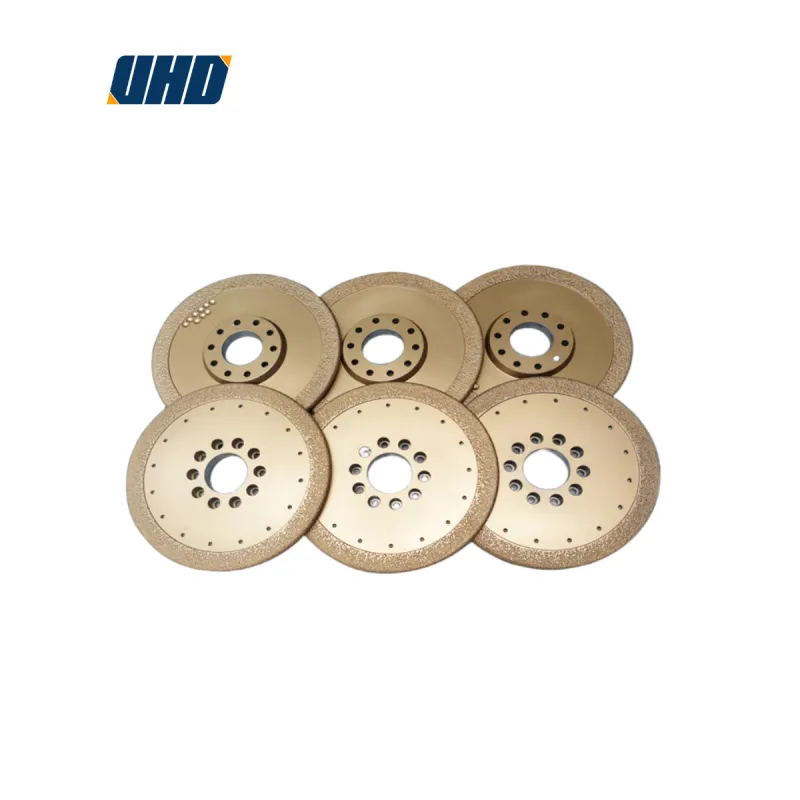
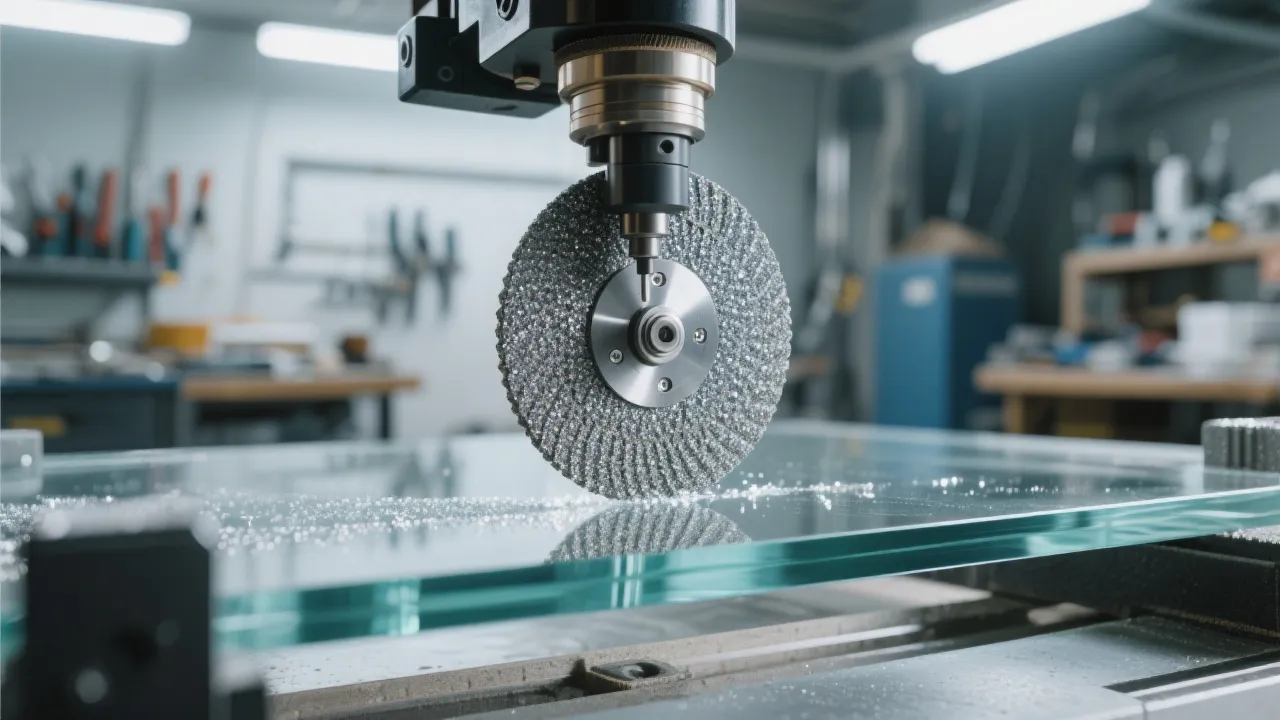
UHD’s product scope includes diamond tools, abrasives & grinding tools, and custom vacuum brazed diamond abrasives. In metalworking, these categories are often evaluated together, but they are chosen for different reasons—cutting action, contact mechanics, and process controllability.
| Tool family | Best suited for | Selection signals | Application boundaries (avoid misuse) |
|---|---|---|---|
| Diamond tools | Operations where a defined cutting/grinding interface is required and you need consistent edge/abrasive performance across runs. | Clear process target (cut, grind, profile), stable setup, and a need to control wear behavior and finish. | If the setup is highly unstable or the process varies widely, tool performance may be hard to reproduce without process control. |
| Abrasives & grinding tools | General grinding, deburring, and surface conditioning where “feel,” compliance, and surface uniformity matter. | You need adaptable material removal, controllable scratch pattern, and compatibility with existing shop practice. | Not ideal when you require highly localized, aggressive cutting without changing the surface texture or when geometry access is limited. |
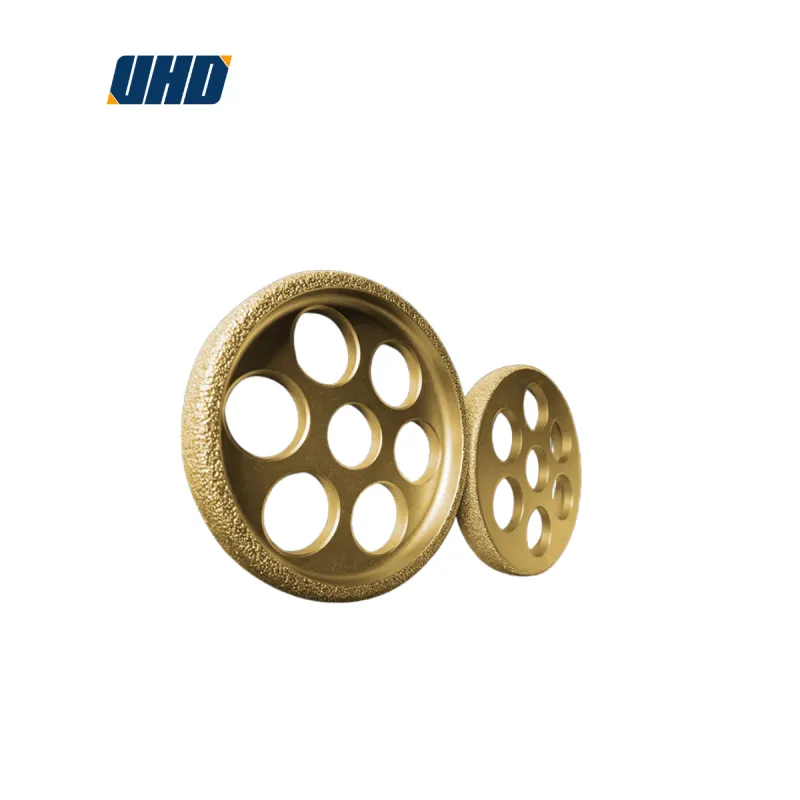
| Vacuum brazed diamond abrasives | Scenarios needing strong grain retention and stable cutting points on custom forms—useful when standard tools don’t match the contact shape. | Complex profiles, edge work, or special access requirements; preference for robust abrasive fixation and consistent engagement. | If the process needs a very soft/forgiving contact or if heat management is critical but cooling is limited, validate suitability through trials and parameters. |
Note: Final suitability depends on the specific metal grade, the machine condition, and the process window. UHD recommends aligning tool choice with defined process inputs (speed, feed/pressure, coolant rules) to maintain repeatability.
Use the following workflow to narrow down tool type without over-specifying. It supports early-stage sourcing and engineering review when you need a rational selection path.
When vacuum brazed diamond abrasives are often considered: when you need a tool shape or engagement that standard abrasives don’t provide, and you want stable abrasive retention on custom forms for consistent process behavior.
The scenarios below illustrate how process requirements guide selection. They are intentionally non-brand-specific in outcome, so teams can use them as a neutral checklist during evaluation.
For B2B evaluation and technical alignment, UHD typically works best when the process context is explicit. Sharing the information below helps determine whether diamond tools, abrasives, or vacuum brazed diamond abrasives are appropriate—and clarifies boundaries early.
UHD (河南优德超硬工具有限公司) operates as a B2B manufacturer focused on R&D-driven ultrahard tooling and offers process-oriented support to help customers align tool choice with real production constraints.
UHD Ultrahard Tools Co., Ltd provides ultrahard tooling solutions across diamond tools, abrasives & grinding tools, and custom vacuum brazed diamond abrasives. Support typically focuses on selecting the appropriate tool family, clarifying applicability boundaries, and aligning with your process requirements.
If you are comparing options for a specific metalworking process, share your process goal, workpiece material, and constraints. UHD can then recommend a direction (diamond tools vs. abrasives vs. vacuum brazed diamond abrasives) consistent with your application boundaries.
.png?x-oss-process=image/resize,h_800,m_lfit/format,webp)

 458
|
458
|
 UHD Ultrahard Tools Co., Ltd
custom brazed diamond tools
industrial application case study
solution matching
application results
233
|
diamond grinding wheel selection
curved profile grinding wheel
diamond grinding process optimization
gray cast iron grinding tool
stainless steel thin-wall grinding
392
|
UHD Ultrahard Tools Co., Ltd
vacuum brazed diamond cutting abrasive
superhard tools
definition and applications
industrial tool selection
182
|
UHD Ultrahard Tools Co., Ltd
vacuum brazed diamond tools
ultrahard material tools
metalworking
stone processing
460
|
gray cast iron grinding wheel selection
vacuum brazed diamond grinding wheel
diamond wheel grit size for cast iron
low dust cast iron grinding
CE compliance grinding tools
UHD Ultrahard Tools Co., Ltd
custom brazed diamond tools
industrial application case study
solution matching
application results
233
|
diamond grinding wheel selection
curved profile grinding wheel
diamond grinding process optimization
gray cast iron grinding tool
stainless steel thin-wall grinding
392
|
UHD Ultrahard Tools Co., Ltd
vacuum brazed diamond cutting abrasive
superhard tools
definition and applications
industrial tool selection
182
|
UHD Ultrahard Tools Co., Ltd
vacuum brazed diamond tools
ultrahard material tools
metalworking
stone processing
460
|
gray cast iron grinding wheel selection
vacuum brazed diamond grinding wheel
diamond wheel grit size for cast iron
low dust cast iron grinding
CE compliance grinding tools





.png?x-oss-process=image/resize,h_100,m_lfit/format,webp)
.png?x-oss-process=image/resize,h_100,m_lfit/format,webp)
.png?x-oss-process=image/resize,h_100,m_lfit/format,webp)