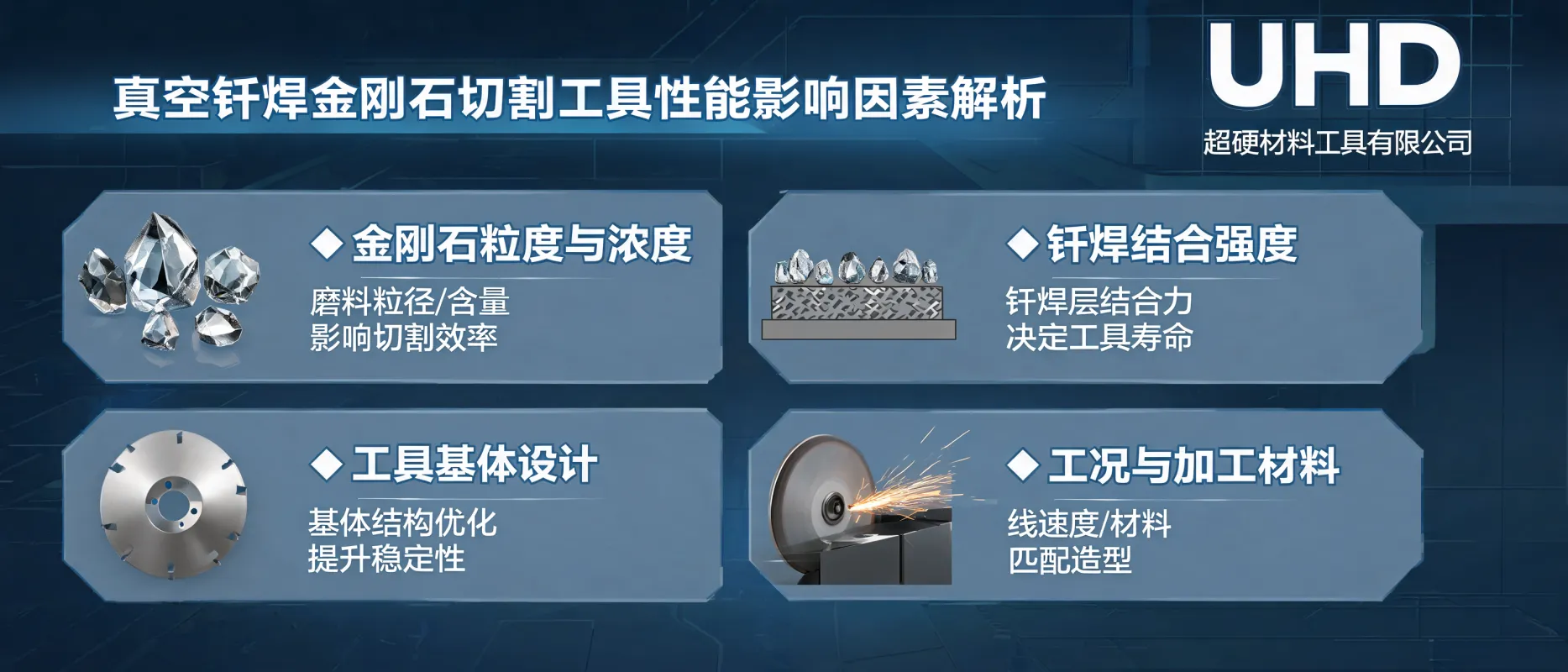
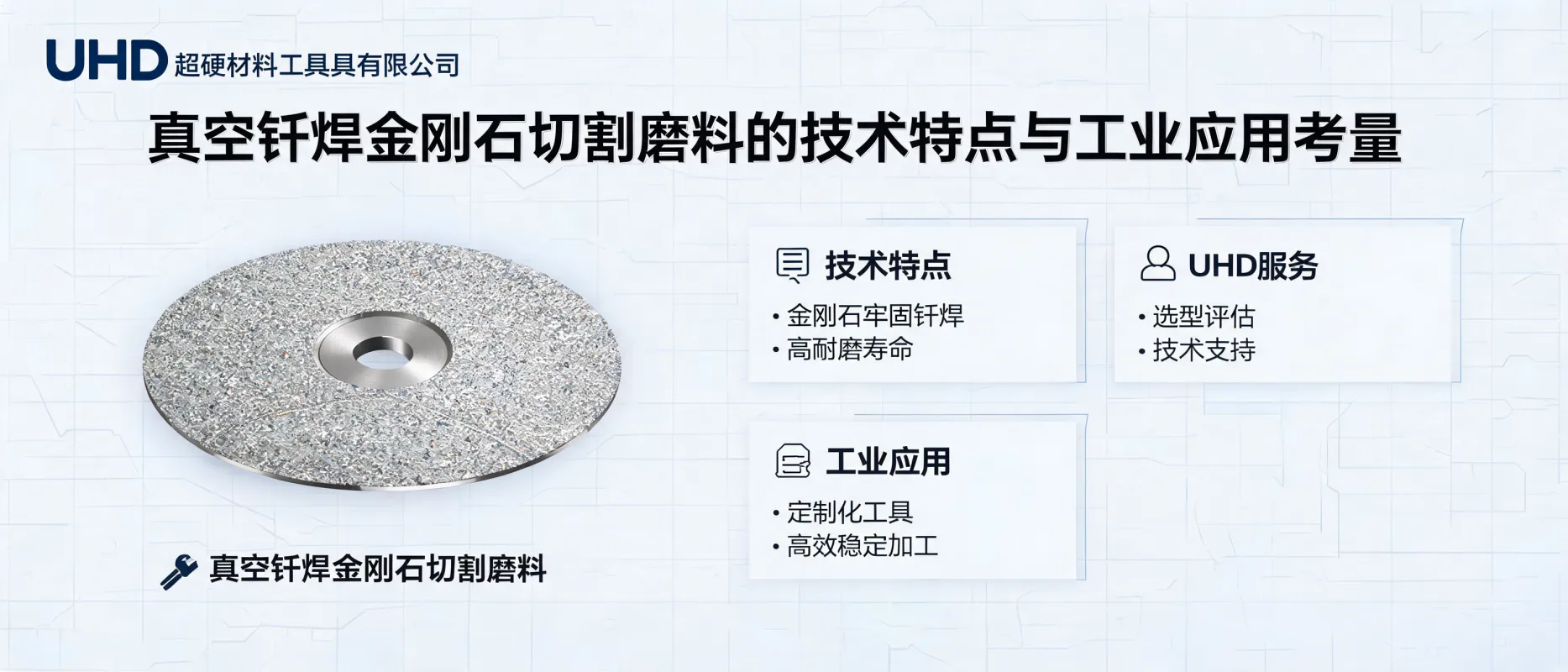
Vacuum brazed diamond cutting abrasives are a class of superhard diamond tools where diamond grits are metallurgically bonded to a steel body through a high-temperature brazing alloy—commonly executed in a vacuum brazing environment. Compared with conventional resin/metal bond abrasives that “hold” grains by a matrix, vacuum brazing forms a strong bond at the grit–bond interface and leaves more grit exposed for aggressive, efficient cutting and grinding.
UHD Ultrahard Tools Co., Ltd develops and manufactures vacuum brazed diamond tools and abrasives, including vacuum brazed diamond grinding wheels engineered for industrial cutting and grinding—especially for demanding materials such as ductile iron (nodular cast iron) and related workpieces.
| Aspect | Vacuum brazed diamond cutting abrasives | Conventional bonded abrasives (typical) |
|---|---|---|
| Bonding mechanism | Metallurgical brazed bond to grit and body | Matrix holds grits (resin/metal/ceramic) |
| Grit exposure | Often higher exposure for aggressive cutting | Often lower exposure, more “supported” by bond |
| Primary strength | High bond strength and cutting efficiency | Stable finishing; behavior depends on bond type |
| Typical outcome | Fast material removal; strong edge bite | Balanced removal/finish; dressing may be required |
For B2B buyers, the key takeaway is that the process is designed to improve bond strength and maintain effective grit exposure, which drives cutting aggressiveness and wear behavior.
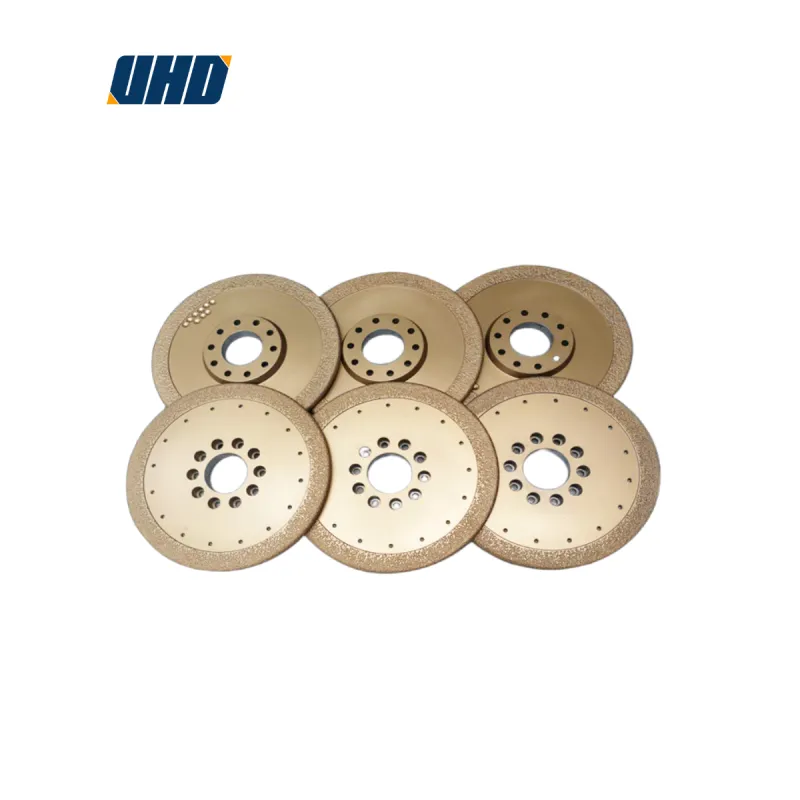
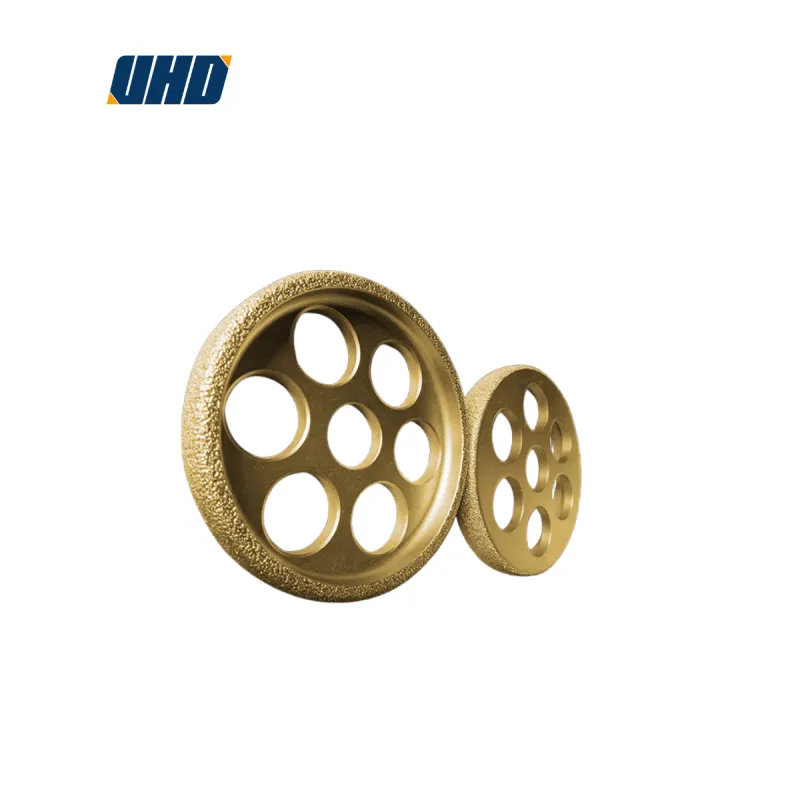
UHD’s vacuum brazed diamond grinding wheel is developed for ductile iron (nodular cast iron) machining and similar material processing tasks that require strong cutting action, high wear resistance, and stable performance. Multiple specifications and customization are available to align with different machines and process goals.
Actual performance depends on the specific stone type, machine power, cooling method, and the target surface/edge requirement.
To judge whether vacuum brazed diamond cutting abrasives fit your process, align the tool specification with three practical dimensions:
Specify material type and hardness range (e.g., ductile iron vs. other alloys; stone category), plus whether the operation is intermittent or continuous.
Clarify the goal: fast stock removal, edge preparation, profile shaping, or surface conditioning—each may imply different wheel geometry and grit setup.
Consider spindle speed, available power, cooling (dry/wet), dust control requirements, and contact conditions—all affect tool choice and stability.
Procurement-ready info to share with UHD: workpiece material, operation type (cutting/grinding), machine model/spindle speed, target outcome, and current pain points (wear, efficiency, dust). This helps UHD propose an appropriate vacuum brazed diamond grinding wheel specification or customization route.
UHD Ultrahard Tools Co., Ltd focuses on delivering practical, process-matched superhard tool solutions—balancing sharpness, wear resistance, bond stability, and manufacturability for industrial buyers.

 194
|
 UHD Ultrahard Tools Co., Ltd ultrahard material tools purchasing procurement mistakes tool life and stability supplier evaluation and customization
172
|
UHD Ultrahard Tools Co., Ltd industrial tool procurement ultrahard material tools supplier selection B2B purchasing decision
199
|
UHD Ultrahard Tools Co., Ltd vacuum brazed diamond cutting abrasives diamond cutting abrasives selection industrial cutting and grinding superhard tools
465
|
UHD Ultrahard Tools Co., Ltd vacuum brazed diamond tools high-load machining performance advantages application limits
391
|
UHD Ultrahard Tools Co., Ltd vacuum brazed diamond diamond cutting abrasive abrasive bonding procurement evaluation