Home > News > Vacuum Brazed Diamond Cutting Abrasives: Structure, Performance & Selection Guide | UHD Ultrahard Tools Co., Ltd

Vacuum Brazed Diamond Cutting Abrasives: Structure, Advantages, and How to Choose

UHD Ultrahard Tools Co., Ltd
2026-08-09
Technical Articles
UHD Ultrahard Tools Co., Ltd explains the structural features of vacuum brazed diamond cutting abrasives, how diamond-to-matrix bonding affects cutting efficiency, durability and process stability, and what to consider when selecting products for metalworking and stone processing.
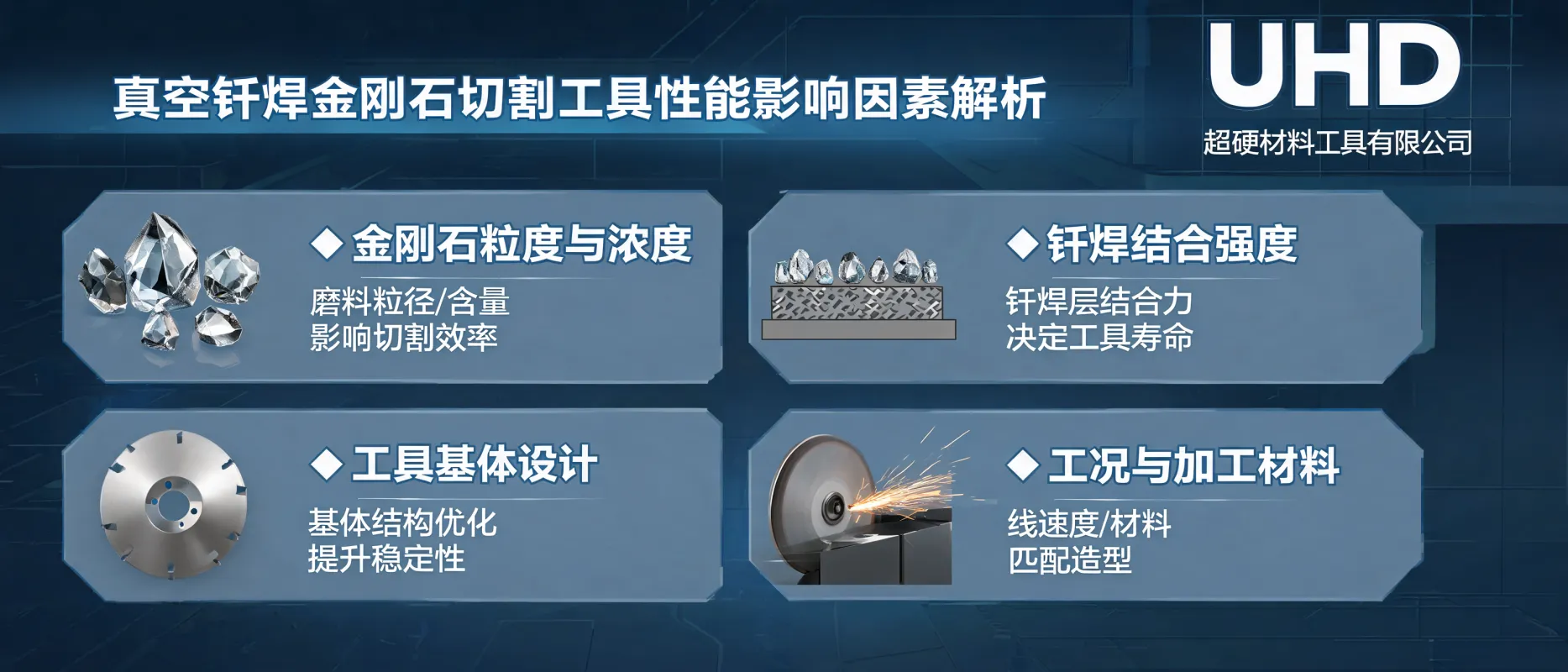
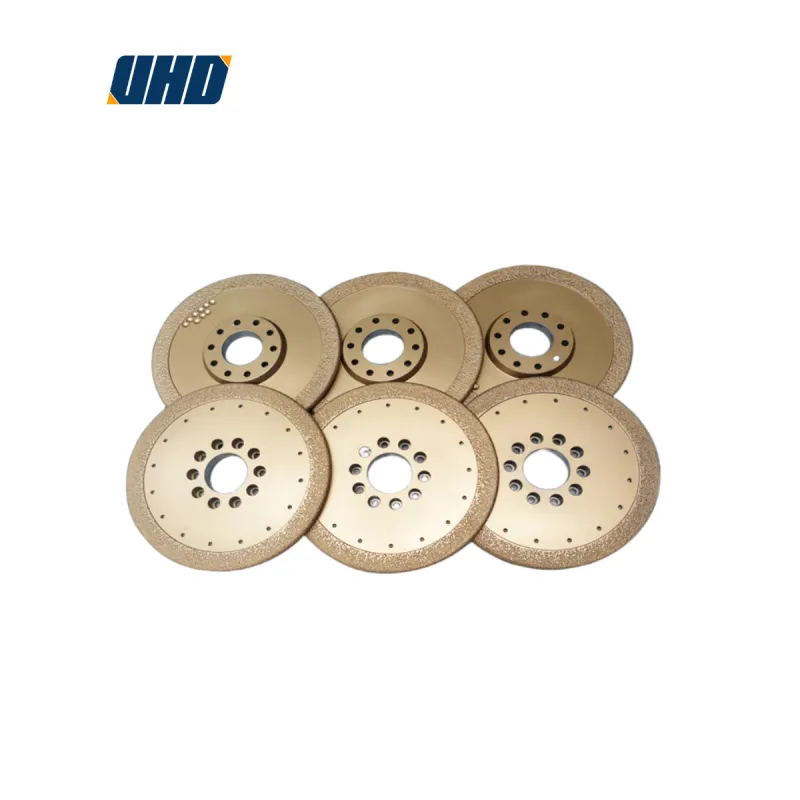
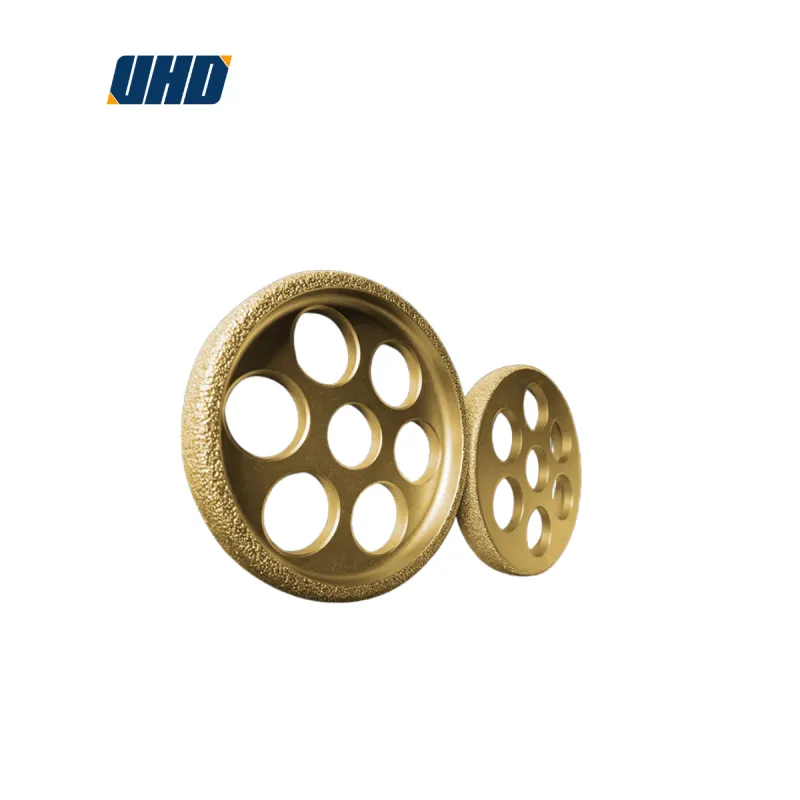
Vacuum brazed diamond cutting abrasives showing brazed diamond grits on a metal substrate for metalworking and stone processing

UHD Ultrahard Tools Co., Ltd focuses on the R&D, manufacturing, and B2B supply of ultrahard tooling for industrial applications. On this page, we provide practical technical guidance on vacuum brazed diamond cutting abrasives—their structure, why bonding matters, and how to evaluate product fit for metalworking and stone processing.

Structure & bonding Cutting efficiency Durability & stability Selection factors

What Are Vacuum Brazed Diamond Cutting Abrasives?

Vacuum brazed diamond cutting abrasives are tools where diamond grits are metallurgically bonded to a metal substrate (or tool body) through a vacuum brazing process. Compared with conventional abrasive structures that rely mainly on resin, vitrified, or electroplated bonding, vacuum brazing is designed to create a strong diamond-to-substrate connection while leaving the cutting edges of the diamond grits sufficiently exposed for effective material removal.

Core structural elements

  • Diamond grit: provides the cutting points that engage the workpiece.
  • Brazed layer (filler alloy interface): anchors diamond grit and transfers cutting loads to the substrate.
  • Metal substrate/tool body: supports the abrasive layer and determines stiffness, heat conduction, and overall integrity.

Why Diamond-to-Substrate Bonding Impacts Performance

For vacuum brazed diamond abrasives, the bonding interface is a primary driver of cutting efficiency, tool durability, and process stability. In practical production, the goal is a balance: secure grit retention under load while maintaining sharp, exposed cutting edges and controlled chip evacuation.

Bonding / structural factor What it influences What buyers & engineers typically evaluate
Grit retention strength Wear rate, risk of premature grit pull-out, usable life in demanding cuts Stability under target feed/speed, consistency across batches, failure mode analysis (pull-out vs. grit fracture)
Grit exposure & distribution Initial sharpness, cutting aggressiveness, chip space, heat generation Surface finish targets, loading/clogging tendency, cutting forces and vibration behavior
Substrate stiffness & heat transfer Dimensional control, chatter, thermal stability Tool deflection limits, thermal management strategy, suitability for wet/dry operation (per process design)
Process stability (bond uniformity) Repeatability of cutting behavior and predictable maintenance intervals Runout sensitivity, edge integrity, inspection criteria and acceptance standards

Engineering note: performance is not determined by diamond alone. In vacuum brazed diamond cutting abrasives, the interface design and bonding quality directly affect how the grit carries load, dissipates heat, and maintains stable cutting across a run.

Key Advantages in Industrial Use

  • Efficient material removal potential: exposed diamond cutting points can support fast stock removal when parameters match the workpiece and machine capability.
  • Durability under load: metallurgical bonding is intended to improve grit holding compared with weaker retention mechanisms in certain demanding cuts.
  • Stable machining behavior: well-designed abrasive layers help reduce sudden performance drops caused by early grit loss.
  • Applicability across scenarios: commonly evaluated for both metalworking and stone processing, depending on the abrasive format and process method.

How to Choose: A Practical Selection Guide

Procurement and process engineers typically select vacuum brazed diamond cutting abrasives by aligning workpiece material, process targets, and tool structure. Use the checklist below to structure internal evaluation and supplier communication.

1) Define the application boundary

  • Workpiece: metal alloy type or stone type, hardness, abrasiveness, and whether the material tends to load/clog.
  • Operation: cutting, grinding, profiling, deburring, or surface conditioning (choose the abrasive format accordingly).
  • Environment: dry vs. wet machining (per your process and safety requirements).

2) Match structure to performance targets

  • Cutting efficiency target: prioritize grit exposure, chip space, and appropriate grit distribution for aggressive cutting.
  • Durability target: focus on bonding quality, substrate integrity, and application-appropriate tool geometry to reduce premature wear.
  • Stability & finish: consider stiffness, vibration sensitivity, and how the abrasive engagement affects surface integrity.

3) Verify machine & process compatibility

  • Machine capability: spindle power, rigidity, speed range, and runout control—key for consistent tool behavior.
  • Fixturing & alignment: stable clamping reduces impact loading that can damage abrasive layers.
  • Parameter plan: establish a trial window for speed/feed and depth of cut; monitor heat, vibration, and wear mode.

4) Quality, consistency & sourcing considerations (B2B)

  • Specification clarity: define critical-to-quality items (bond uniformity expectations, abrasive layer coverage, and tolerance needs).
  • Inspection approach: agree on incoming checks suitable for your use (visual integrity, dimensional checks, and basic functional verification).
  • Communication loop: provide feedback on wear pattern and failure mode to accelerate iteration and stabilize performance.

Typical Use Scenarios: Metalworking & Stone Processing

Metalworking

Metalworking evaluations often prioritize cutting efficiency, heat control, and stable engagement to avoid vibration and inconsistent surface results. Selection typically considers machine rigidity, the likelihood of loading, and how bonding quality supports retention under higher cutting forces.

Stone processing

In stone processing, abrasiveness and dust/chip evacuation are frequent considerations. Vacuum brazed diamond cutting abrasives are commonly assessed for their ability to maintain sharp cutting points and consistent removal as the tool encounters variable density or inclusions.

How UHD Supports Your Evaluation

UHD Ultrahard Tools Co., Ltd develops and supplies ultrahard tooling with a focus on application fit and product consistency. With a technology-driven approach and industry collaboration, we support customers by aligning abrasive structure and bonding characteristics with real process constraints—so your team can evaluate performance with clear criteria rather than assumptions.

Information to prepare for faster selection

  • Workpiece material and hardness/abrasiveness description
  • Process type (cutting/grinding/profiling) and target outcomes (removal rate, finish, stability)
  • Machine model basics: spindle speed range, power, rigidity considerations
  • Preferred operation mode (wet/dry) and any site constraints
  • Current tool issues (loading, premature wear, chipping, vibration) and photos if available

For B2B procurement and engineering discussions, UHD can help clarify structural options and selection factors for vacuum brazed diamond cutting abrasives, supporting a smoother trial-and-validation workflow for both metalworking and stone processing lines.
Name *
Email *
Message*

Recommended Products

Related Reading

How to Choose the Right Diamond Tools for Metalworking and Stone Processing

2026-07-20 | https://shmuker.oss-accelerate.aliyuncs.com/tmp/temporary/60ec5bd7f8d5a86c84ef79f2/60ec5bdcf8d5a86c84ef7a9a/20240305161110/eye.png 413 | https://shmuker.oss-accelerate.aliyuncs.com/tmp/temporary/60ec5bd7f8d5a86c84ef79f2/60ec5bdcf8d5a86c84ef7a9a/20240305160636/lable.png UHD Ultrahard Tools Co., Ltd diamond tool selection metal processing stone processing procurement evaluation

Diamond Tool Selection Guide for Industrial Machining: Materials, Processes, and Use Cases

2026-07-28 | https://shmuker.oss-accelerate.aliyuncs.com/tmp/temporary/60ec5bd7f8d5a86c84ef79f2/60ec5bdcf8d5a86c84ef7a9a/20240305161110/eye.png 207 | https://shmuker.oss-accelerate.aliyuncs.com/tmp/temporary/60ec5bd7f8d5a86c84ef79f2/60ec5bdcf8d5a86c84ef7a9a/20240305160636/lable.png UHD Ultrahard Tools Co., Ltd diamond tool selection industrial machining tools cutting tools grinding tools

Vacuum Brazed Diamond Cutting Abrasive: Structure, Key Features, and Industrial Applications

2026-07-26 | https://shmuker.oss-accelerate.aliyuncs.com/tmp/temporary/60ec5bd7f8d5a86c84ef79f2/60ec5bdcf8d5a86c84ef7a9a/20240305161110/eye.png 378 | https://shmuker.oss-accelerate.aliyuncs.com/tmp/temporary/60ec5bd7f8d5a86c84ef79f2/60ec5bdcf8d5a86c84ef7a9a/20240305160636/lable.png UHD Ultrahard Tools Co., Ltd vacuum brazed diamond abrasive diamond cutting tools superhard material tools brazing bond layer

Superhard Material Tools Explained: Diamond Tools, Abrasives, and Vacuum Brazed Differences

2026-06-24 | https://shmuker.oss-accelerate.aliyuncs.com/tmp/temporary/60ec5bd7f8d5a86c84ef79f2/60ec5bdcf8d5a86c84ef7a9a/20240305161110/eye.png 100 | https://shmuker.oss-accelerate.aliyuncs.com/tmp/temporary/60ec5bd7f8d5a86c84ef79f2/60ec5bdcf8d5a86c84ef7a9a/20240305160636/lable.png UHD Ultrahard Tools Co., Ltd superhard material tools diamond tools abrasives and grinding tools vacuum brazed diamond

How to Use and Maintain Vacuum Brazed Diamond Cutting Abrasives to Avoid Abnormal Wear

2026-08-06 | https://shmuker.oss-accelerate.aliyuncs.com/tmp/temporary/60ec5bd7f8d5a86c84ef79f2/60ec5bdcf8d5a86c84ef7a9a/20240305161110/eye.png 145 | https://shmuker.oss-accelerate.aliyuncs.com/tmp/temporary/60ec5bd7f8d5a86c84ef79f2/60ec5bdcf8d5a86c84ef7a9a/20240305160636/lable.png UHD Ultrahard Tools Co., Ltd vacuum brazed diamond cutting abrasives diamond cutting abrasive use tool maintenance abnormal wear prevention
Popular articles
文章配图_1785028900843.jpg
配图_1781257559177.jpg
文章配图_1784430107944.jpg
文章配图_1784077908484.jpg
文章配图_1784949114179.jpg
Recommended Reading
Contact us
Contact us
https://shmuker.oss-accelerate.aliyuncs.com/tmp/temporary/60ec5bd7f8d5a86c84ef79f2/60ec5bdcf8d5a86c84ef7a9a/thumb-prev.png