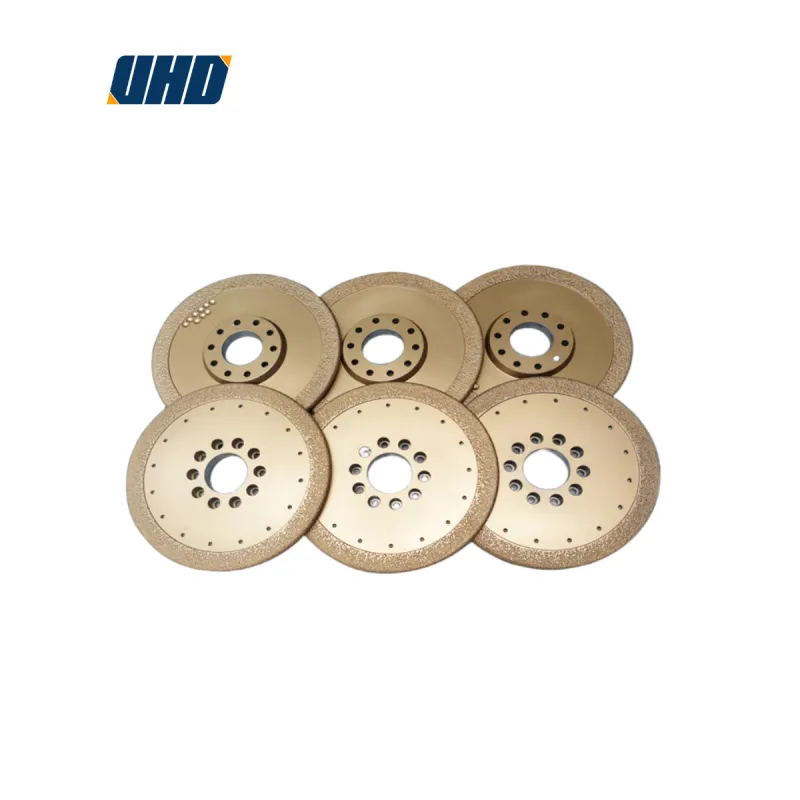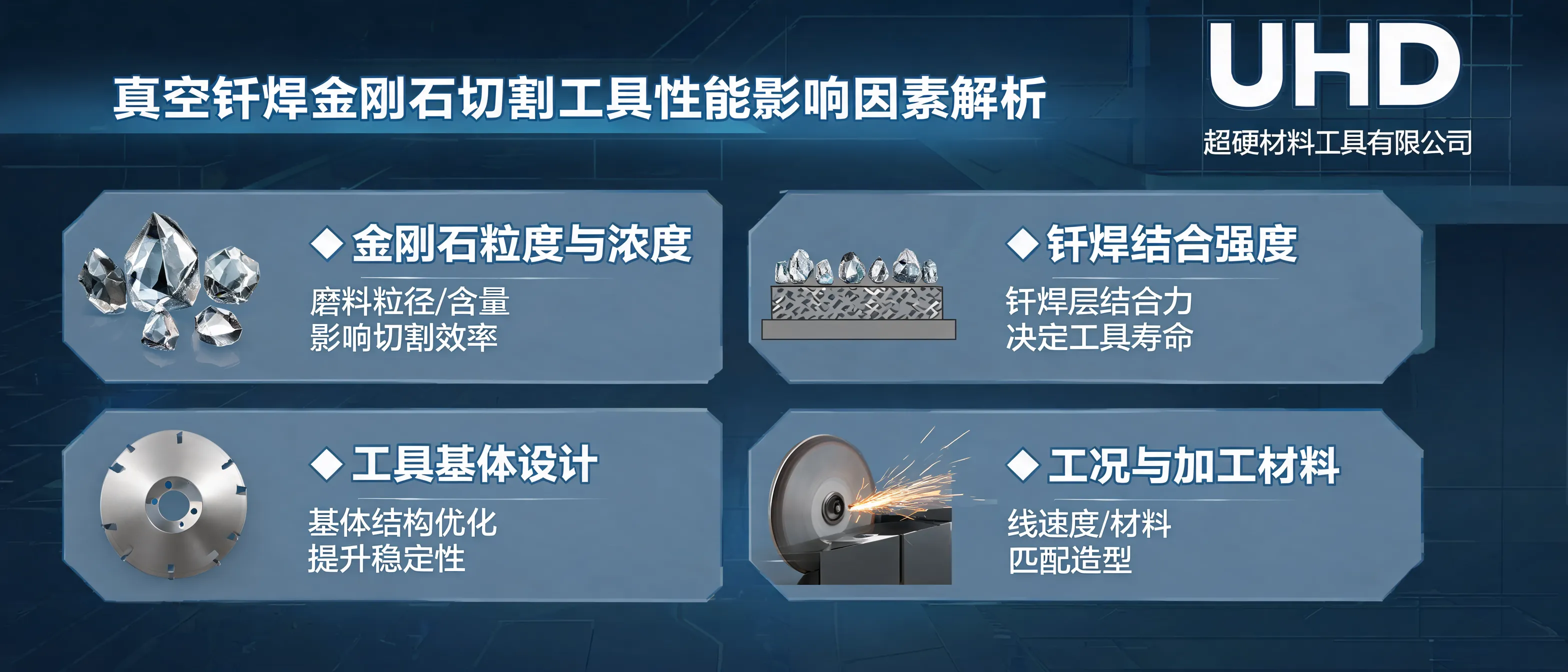
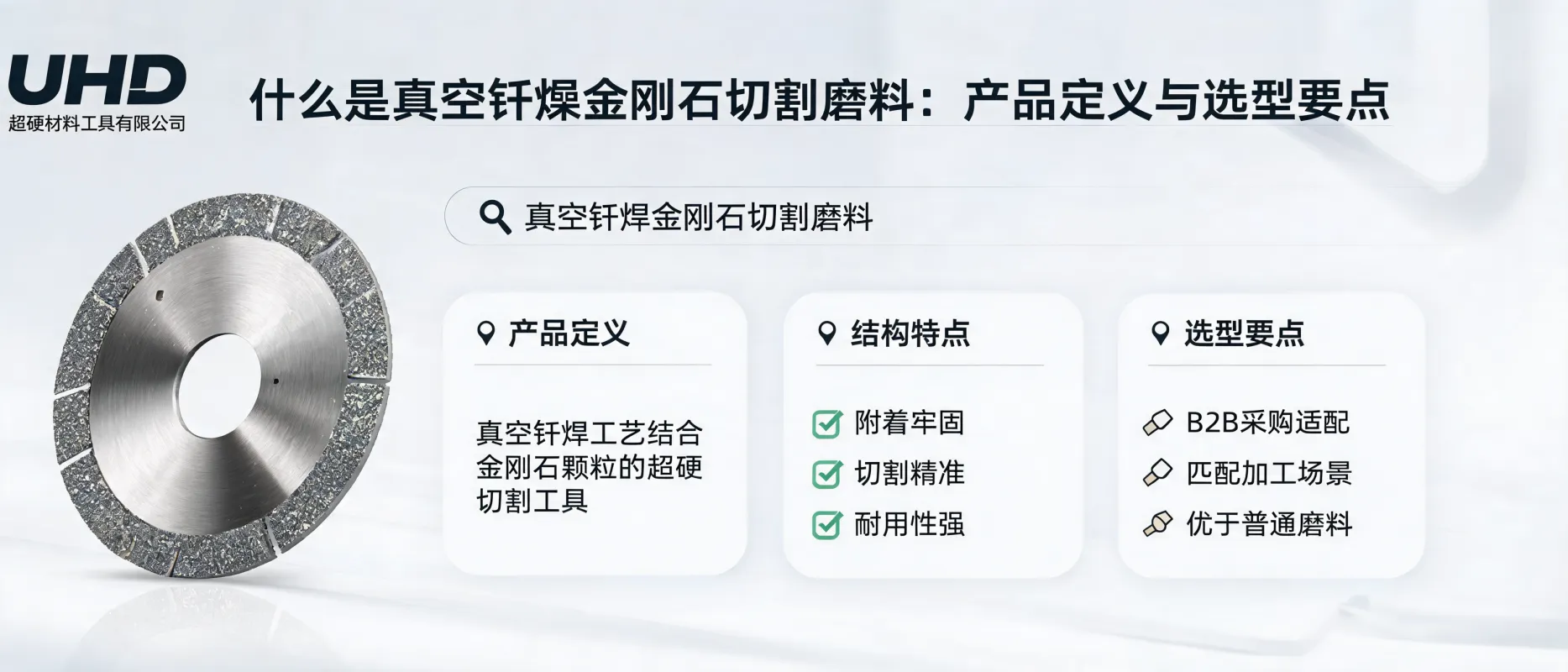
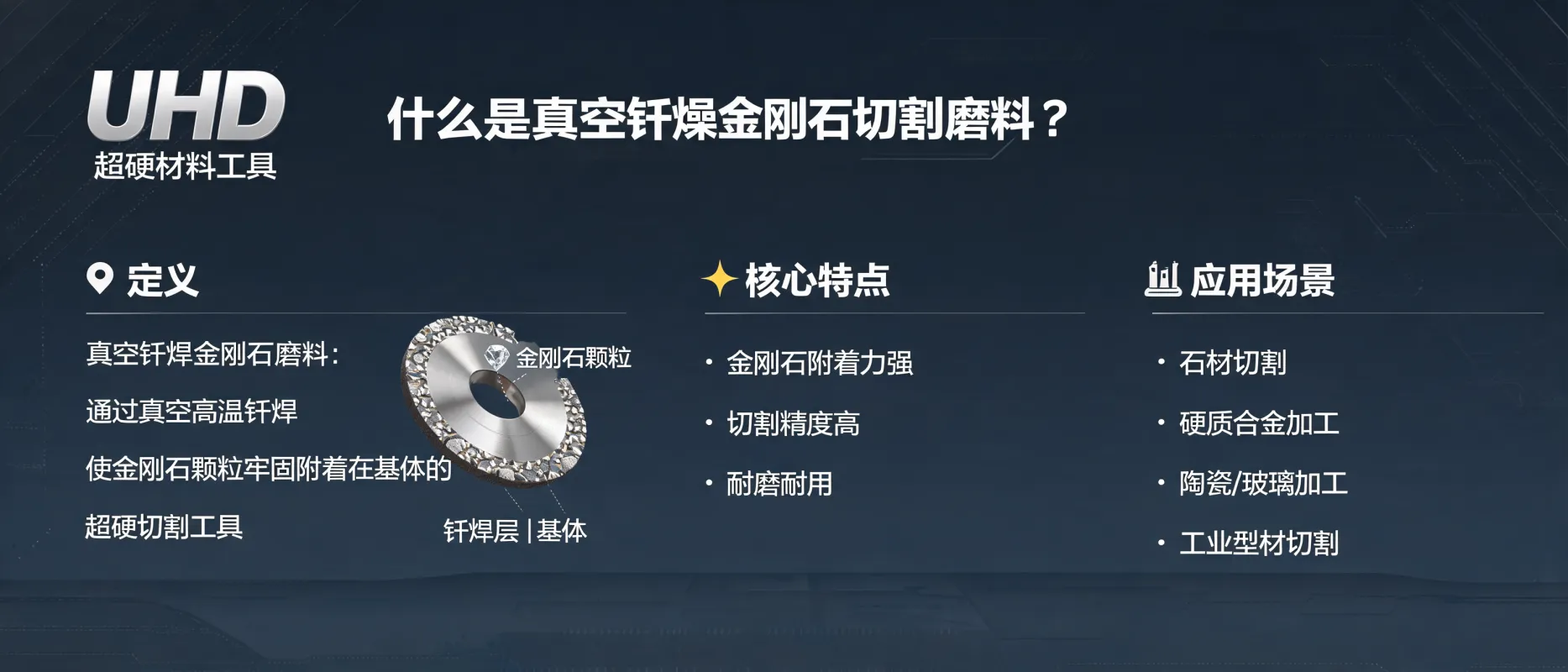
Vacuum brazed diamond cutting tools are widely used in industrial cutting and grinding where fast stock removal, stable edge retention, and predictable wear behavior are required. This page by UHD Ultrahard Tools Co., Ltd explains the core parameters that drive tool performance—diamond grit size and concentration, vacuum-brazing bond strength, tool body (substrate) design, cutting/line speed, and workpiece material characteristics—so engineering and procurement teams can compare specifications and prepare clearer requirements for selection or customization.
In practical production, performance is typically evaluated through a combination of outcomes. For vacuum brazed diamond cutting tools, these outcomes are strongly linked to how the abrasive, brazing layer, and tool body work together under specific operating conditions.
Diamond grit size affects the contact mechanics between abrasive and workpiece, influencing chip formation, surface finish, and cutting aggressiveness. Diamond concentration (how much abrasive is present on the cutting layer) impacts load sharing, heat distribution, and tool “bite.”
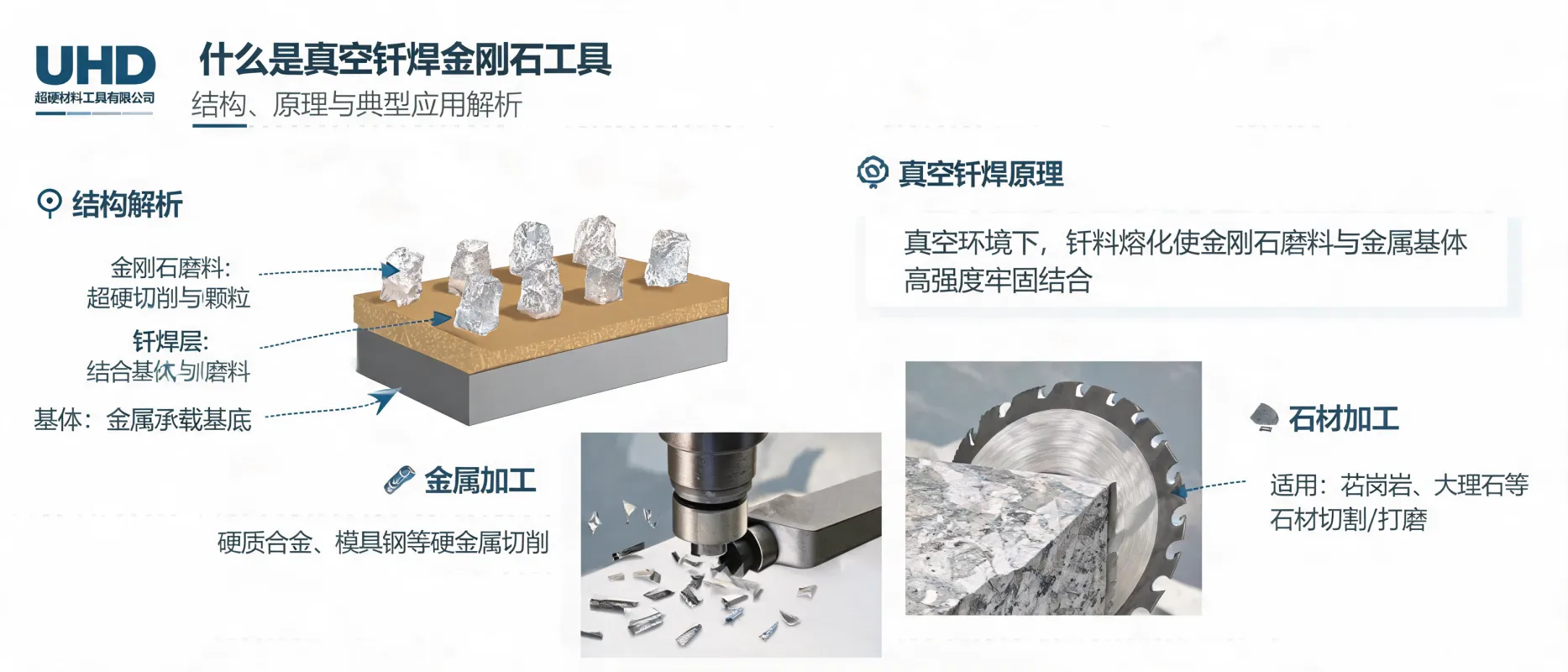
In vacuum brazed diamond tools, the brazed bond is responsible for retaining diamond grits under cutting forces and thermal cycling. Bond strength and wetting behavior influence whether the tool experiences controlled abrasive wear or premature grit pull-out.
Selection implication: When comparing tools, do not evaluate grit size alone—bond integrity is a decisive factor in tool life stability, especially under higher line speeds or harder workpieces.
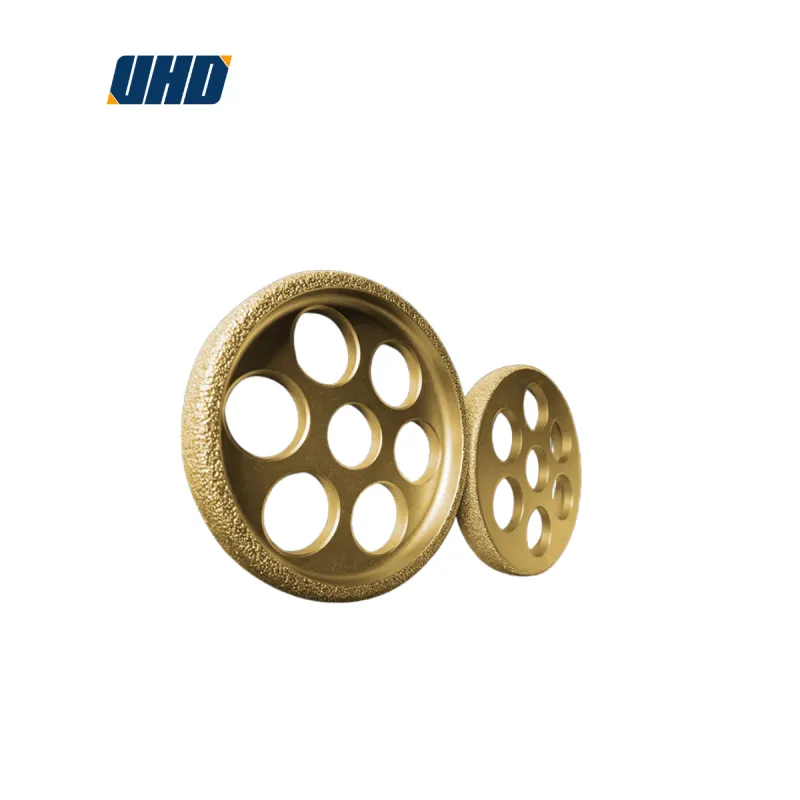
The tool body provides stiffness, heat dissipation paths, and geometric stability. Its structure influences vibration, runout sensitivity, chip evacuation, and thermal management—factors that directly affect cutting consistency and surface outcomes.
Operating parameters determine the stress state on each diamond grit and the brazed interface. Speed, feed, depth of cut, and coolant condition (dry/wet) can shift the dominant wear mode from steady abrasion to thermal damage or grit loss.
Workpiece hardness, abrasiveness, microstructure, and thermal conductivity strongly influence tool selection. Even with the same tool, performance can vary significantly between different materials or between batches with different density and inclusions.
Performance is rarely driven by a single parameter. In vacuum brazed diamond cutting tools, the abrasive specification must be matched with brazing robustness and tool body structure, then validated under the target line speed and the real workpiece material.
For B2B technical communication, clearer inputs help shorten the selection cycle and reduce trial-and-error. UHD typically recommends preparing the following details before discussing vacuum brazed diamond cutting tools:
UHD Ultrahard Tools Co., Ltd focuses on superhard material tooling for industrial users, including vacuum brazed diamond abrasive solutions. With defined requirements, engineering discussions can stay aligned with real cutting conditions and measurable outcomes.
UHD Ultrahard Tools Co., Ltd (河南优德超硬工具有限公司) is a high-tech enterprise focused on R&D, manufacturing, and sales of superhard material tools. UHD’s offerings include diamond tools, abrasives, and custom vacuum brazed diamond abrasives for metalworking and stone processing applications. The company supports B2B technical communication for specification evaluation and customization planning.
If you are comparing vacuum brazed diamond cutting tool specifications, align abrasive parameters, brazing requirements, and tool body design with your operating line speed and workpiece characteristics to improve selection accuracy.
.png?x-oss-process=image/resize,h_800,m_lfit/format,webp)
 122
|
122
|
 UHD Ultrahard Tools Co., Ltd
custom ultrahard tools
vacuum brazed diamond tools
diamond tool case study
tool performance optimization
272
|
UHD Ultrahard Tools Co., Ltd
vacuum brazed diamond cutting abrasives
superhard tools
performance features
industrial cutting and machining applications
117
|
UHD Ultrahard Tools Co., Ltd
vacuum brazed diamond cutting abrasives
ultrahard material tools
applications in metalworking and stone processing
definition and application boundaries
182
|
UHD Ultrahard Tools Co., Ltd
vacuum brazed diamond tools
ultrahard material tools
metalworking
stone processing
467
|
UHD Ultrahard Tools Co., Ltd
superhard material tools
diamond tools
abrasives and grinding tools
vacuum brazed diamond
UHD Ultrahard Tools Co., Ltd
custom ultrahard tools
vacuum brazed diamond tools
diamond tool case study
tool performance optimization
272
|
UHD Ultrahard Tools Co., Ltd
vacuum brazed diamond cutting abrasives
superhard tools
performance features
industrial cutting and machining applications
117
|
UHD Ultrahard Tools Co., Ltd
vacuum brazed diamond cutting abrasives
ultrahard material tools
applications in metalworking and stone processing
definition and application boundaries
182
|
UHD Ultrahard Tools Co., Ltd
vacuum brazed diamond tools
ultrahard material tools
metalworking
stone processing
467
|
UHD Ultrahard Tools Co., Ltd
superhard material tools
diamond tools
abrasives and grinding tools
vacuum brazed diamond




.png?x-oss-process=image/resize,h_100,m_lfit/format,webp)
.png?x-oss-process=image/resize,h_100,m_lfit/format,webp)
.png?x-oss-process=image/resize,h_100,m_lfit/format,webp)