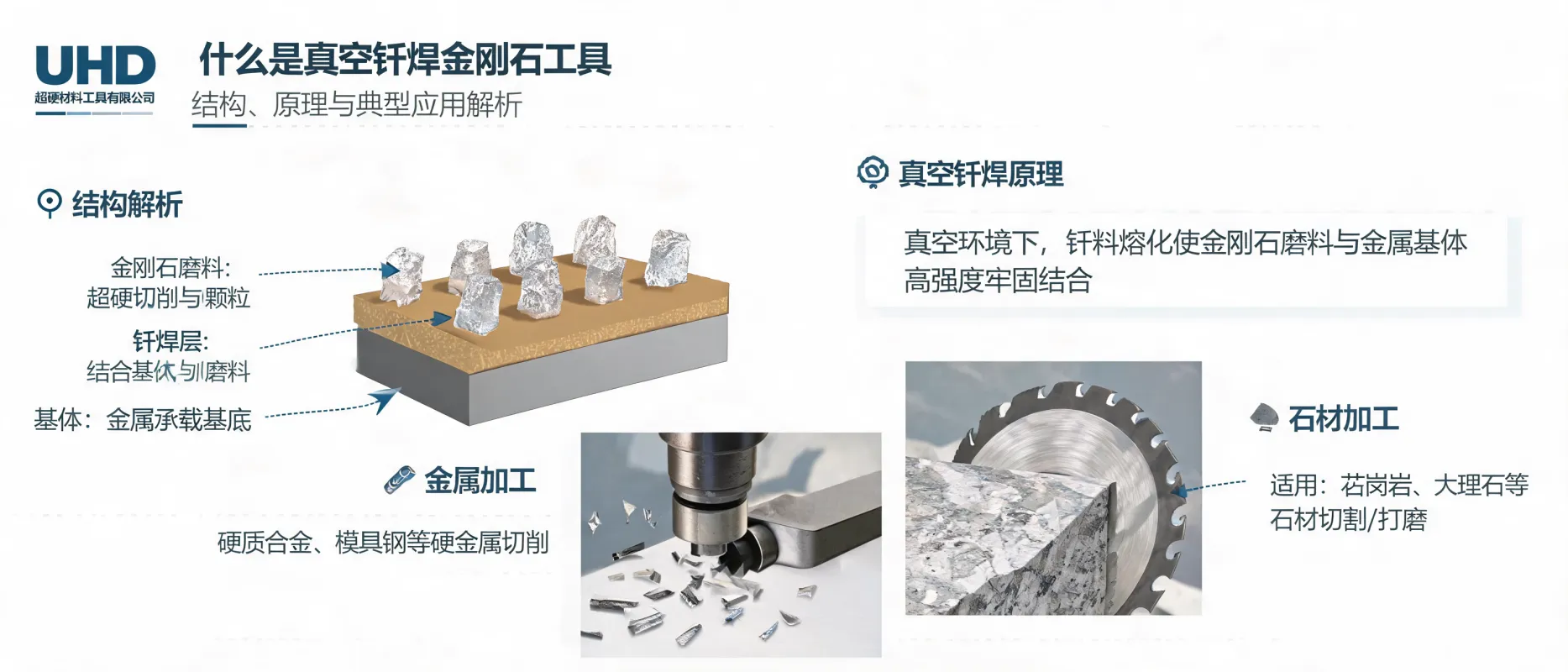
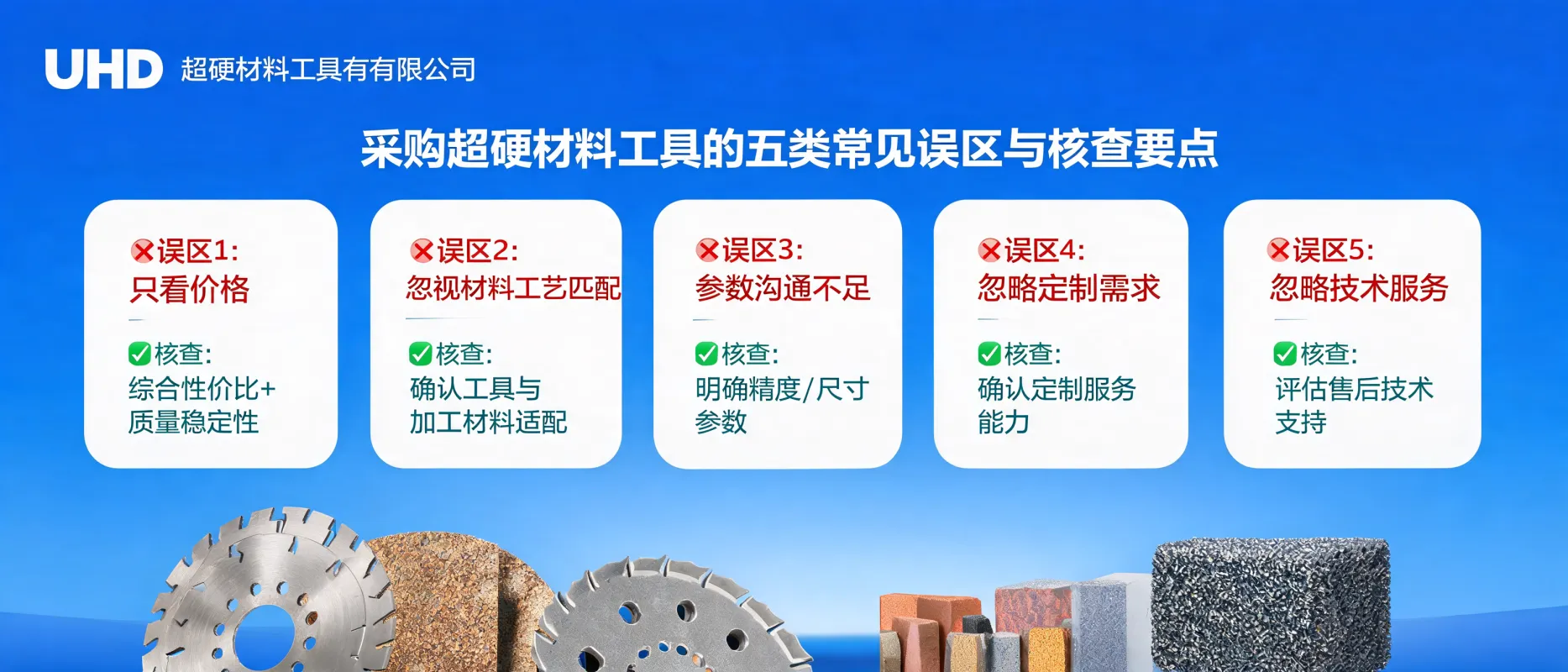
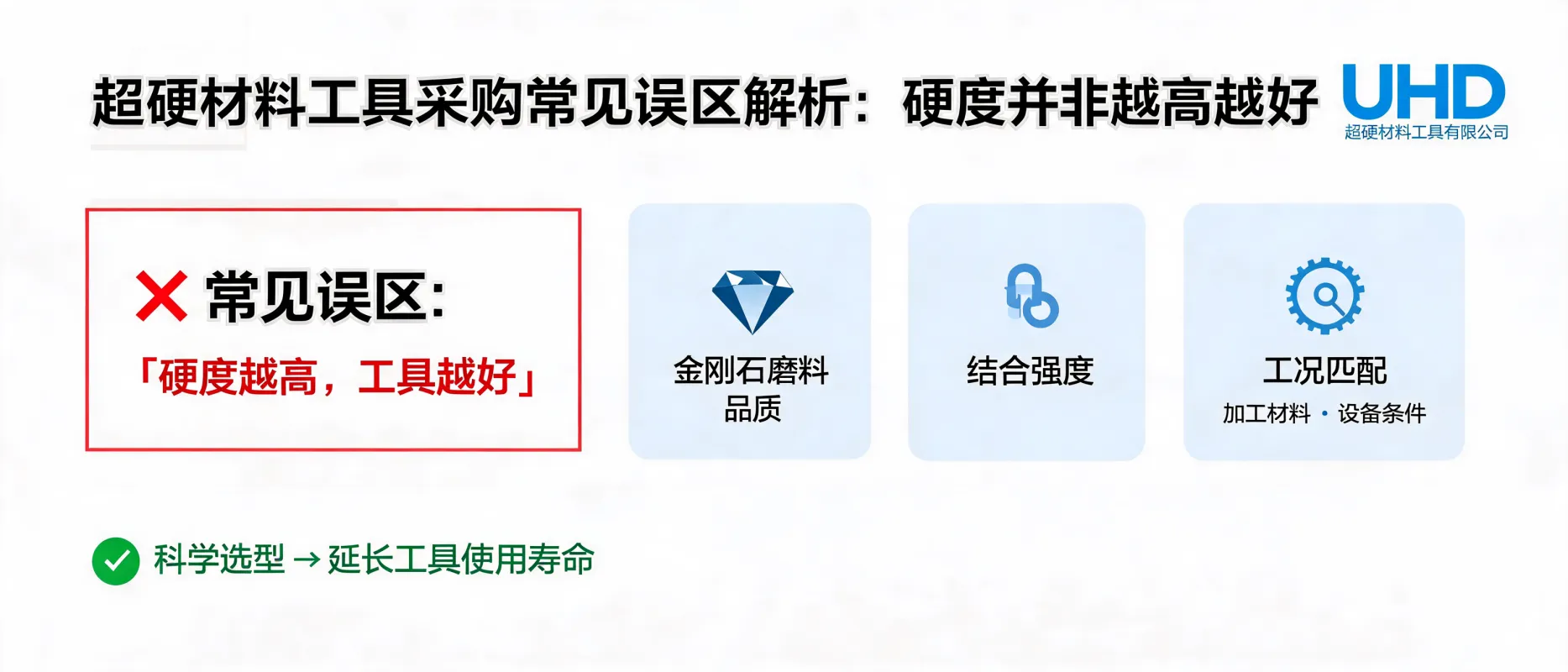
Selecting vacuum brazed diamond tools for industrial processing is not only a product choice—it is a process-fit decision. For procurement teams, production engineers, and OEM buyers, a repeatable evaluation method helps reduce trial-and-error, align customization, and support confident batch purchasing.
This page summarizes a practical workflow recommended by UHD Ultrahard Tools Co., Ltd (UHD) to evaluate vacuum brazed diamond cutting abrasives—from clarifying the application and workpiece to sample testing and supplier support review.
Vacuum brazed diamond tools perform best when the tool design matches the material and the operation. Before comparing suppliers or prices, define the process inputs in a way that engineering and purchasing can both use.
A tool may look similar on paper yet behave differently in production. Confirm that the proposed vacuum brazed diamond cutting abrasive is compatible with your process window—especially speed, feed, and contact mode.
| Evaluation item | What to verify | Why it matters |
|---|---|---|
| Abrasive/grit and layout | Grit size selection, segment/pattern, edge form | Impacts cutting aggressiveness, finish, heat generation, and stability |
| Tool body and mounting | Interface type, runout expectations, balancing approach | Affects vibration, edge chipping risk, and result consistency |
| Operating window | Recommended RPM, feed, depth of cut, pass strategy | Avoids misuse and helps ensure repeatable, comparable trials |
| Cooling & dust control | Dry vs wet suitability, coolant compatibility, extraction requirements | Influences tool life, workpiece integrity, and shop compliance |
| Customization feasibility | Ability to adjust size, grit, bonding area, and geometry | Ensures the tool is built for your part, not a generic substitute |
A reliable evaluation is built on “same machine, same material, same parameters” so the results reflect the tool—not uncontrolled process variation.
Industrial purchasing decisions depend on more than the cutting result. For vacuum brazed diamond tools, upfront technical alignment reduces rework and shortens time-to-qualification.
Sample testing is the most practical way to validate tool performance and process fit. To keep results decision-ready, define measurable indicators and record the same data across candidates.
Once sample testing confirms fit, the next step is to reduce scale-up risk. For industrial procurement, batch readiness usually means: the tool spec is stable, the supplier can repeat it consistently, and support is available for ramp-up.
UHD Ultrahard Tools Co., Ltd focuses on R&D, manufacturing, and B2B supply of ultrahard material tools, including vacuum brazed diamond cutting abrasives. UHD emphasizes application-oriented tool selection—helping customers match tool design to specific process requirements in metal and stone processing contexts.
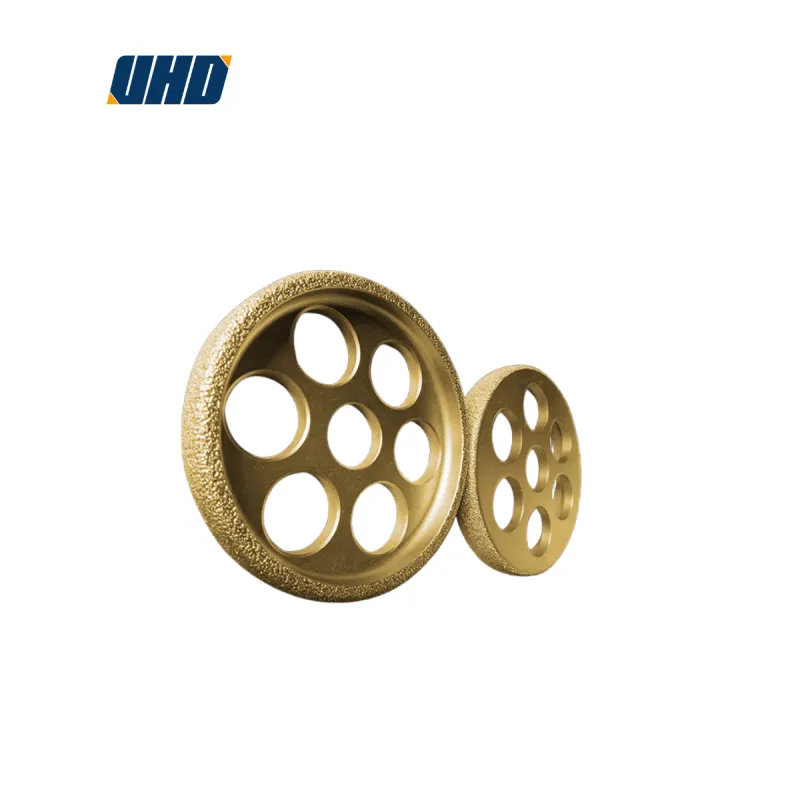
If you are selecting vacuum brazed diamond tools for an industrial line, UHD can align on your application, propose a suitable tool configuration, and support a structured sample testing process with clear evaluation criteria.
Prepare your workpiece material details, operation type, machine constraints, and target quality/throughput requirements to accelerate technical confirmation.

 207
|
 UHD Ultrahard Tools Co., Ltd
diamond tool selection
industrial machining tools
cutting tools
grinding tools
267
|
UHD Ultrahard Tools Co., Ltd
custom brazed diamond abrasives
industrial machining case study
parameter matching
solution design
266
|
UHD Ultrahard Tools Co., Ltd
ultrahard material tools
diamond tools
abrasives and grinding tools
carbide solutions
33
|
UHD Ultrahard Tools Co., Ltd
vacuum brazed diamond abrasive
pre-use inspection
operating tips
installation compatibility
406
|
UHD Ultrahard Tools Co., Ltd
ultrahard material tools
metalworking tool selection guide
wear resistance in cutting tools
industrial procurement decision