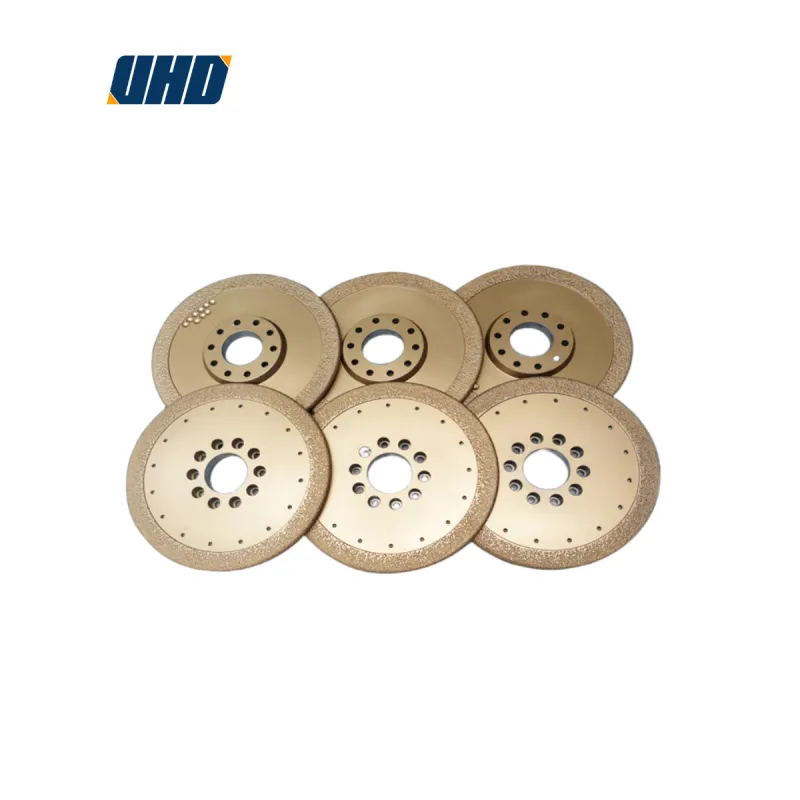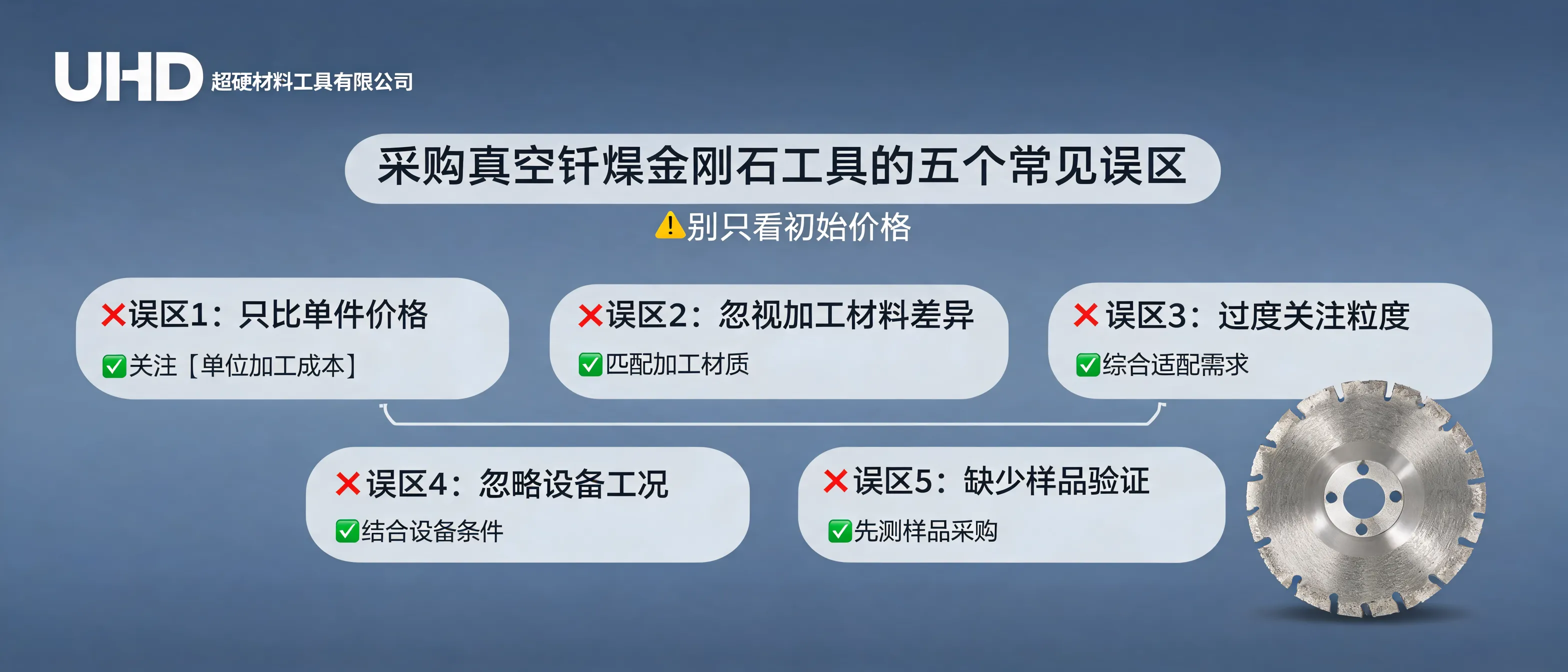
Vacuum brazed diamond tools are often sourced under time pressure and tight budgets—yet the lowest initial unit price can easily turn into higher total cost through unstable performance, premature wear, or mismatched application.
This page from UHD Ultrahard Tools Co., Ltd (UHD) outlines five common procurement mistakes we frequently see in industrial purchasing and engineering reviews, and provides a practical way to evaluate suppliers by cost per processed unit (cost per cut), consistency, expected tool life, delivery capability, and technical support.
Procurement intent: help buying teams compare vacuum brazed diamond tools using application-fit criteria—not only price—so sourcing decisions remain reliable across batches and production conditions.
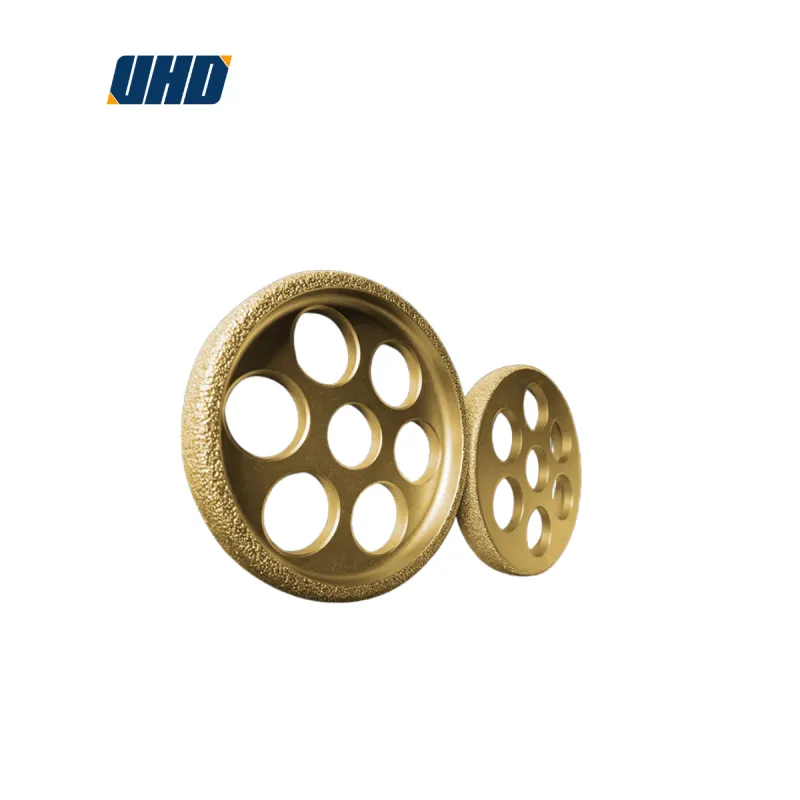
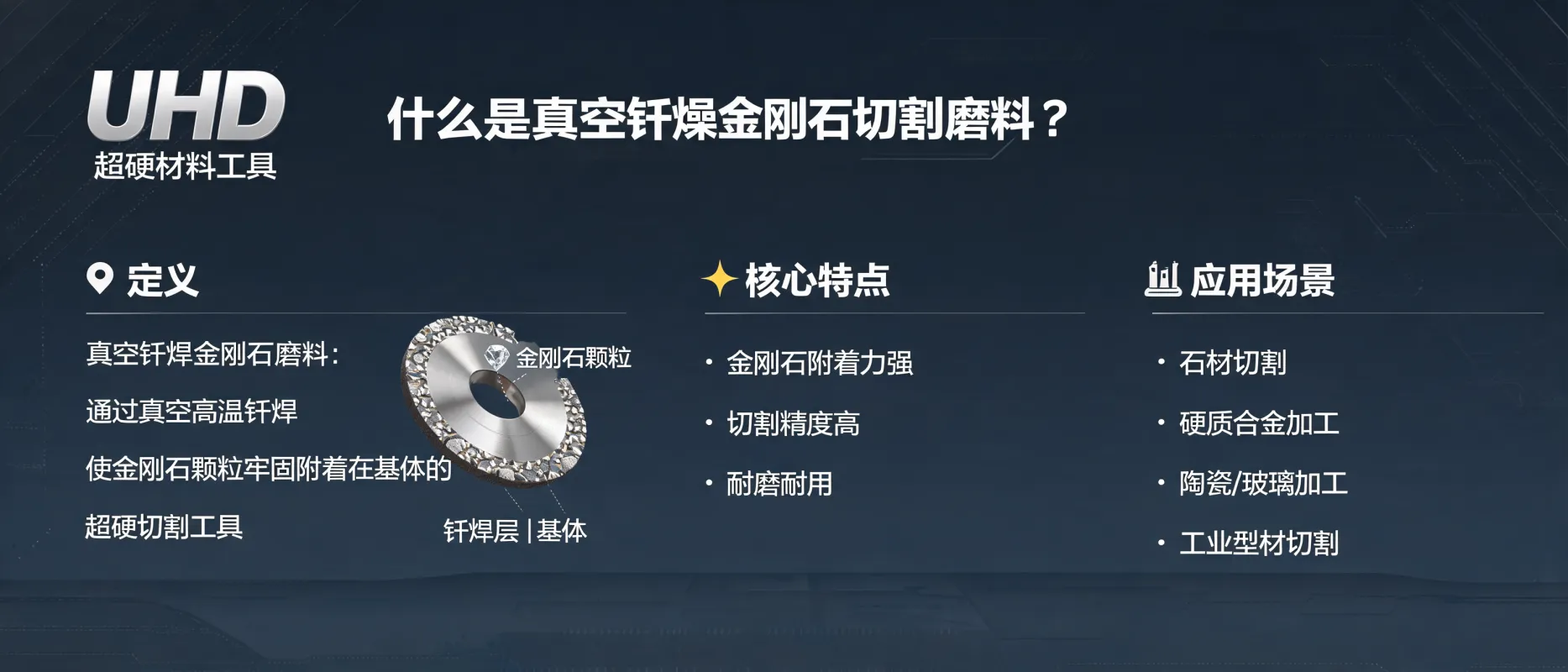
Vacuum brazed tools are diamond tools where diamond particles are joined to the tool body through a brazing process carried out in a vacuum environment. For buyers, the key takeaway is simple: performance depends on the diamond, brazing quality, tool body design, and process stability—so procurement should treat them as an engineered system, not a commodity.
In most production settings, you get closer to the real cost when you compare cost per cut / cost per processed unit, factoring in tool life, scrap risk, rework, changeover time, and stability.
A lower price can look attractive on paper, but if the tool wears faster or behaves inconsistently, total cost rises through frequent replacement, downtime, and unstable output.
What to ask suppliers:
Procurement checkpoint:
Compare offers using a simple internal metric: (tool price + changeover cost + downtime cost) ÷ processed units. Even a rough estimate helps avoid price-only decisions.
The same tool can perform very differently across metals, stone, ceramics, composites, or mixed assemblies. Hardness, abrasiveness, thermal behavior, and surface condition influence wear and cutting stability.
What to provide in your RFQ / inquiry:
Diamond grit size matters, but it is not a standalone proxy for performance. Tool behavior also depends on diamond quality, exposure, brazing integrity, tool geometry, and the intended cutting/grinding mode.
Common pitfall:
Selecting a grit purely for “aggressiveness” without aligning it to machine power and surface-finish targets.
Better approach:
Tool performance is strongly influenced by spindle power, RPM, feed rate, pressure, rigidity, vibration, and operator method. Without aligning the tool specification to these conditions, you may see overheating, glazing, rapid wear, or inconsistent cutting.
Minimum operating info to confirm before purchase:
| Category | Examples to share with supplier |
|---|---|
| Machine | Spindle power, RPM range, tool holder type, rigidity |
| Process parameters | Feed rate, depth of cut, contact area, pressure method |
| Environment | Dry vs wet, coolant type, dust extraction constraints |
| Quality target | Edge condition, surface finish priority, dimensional sensitivity |
Even when specifications look identical, real results can vary due to process and consistency. A small, controlled trial reduces risk—especially for new suppliers, new materials, or a change in machine/parameter settings.
Recommended sample-test checklist:
When purchasing and engineering evaluate together—using the same material, machine, and acceptance criteria—you reduce the likelihood of “cheap tools that become expensive.”
UHD Ultrahard Tools Co., Ltd (河南优德超硬工具有限公司) is a high-tech enterprise focused on R&D, manufacturing, and sales of ultrahard material tools, including vacuum brazed diamond tools and related diamond abrasive solutions for industrial processing applications. UHD emphasizes application-fit product positioning, quality-focused manufacturing, and practical technical service for B2B buyers.
Industrial procurement scenarios where tool performance, consistency, and technical alignment matter—especially when switching suppliers, expanding product lines, or standardizing tooling across sites.
If you are evaluating vacuum brazed diamond tools, prepare your material and operating details and request a sample-based comparison. This enables a more accurate review of tool life, stability, and cost per cut under real production conditions.
.png?x-oss-process=image/resize,h_800,m_lfit/format,webp)
 498
|
498
|
 UHD Ultrahard Tools Co., Ltd
vacuum brazing process
vacuum brazed diamond tools
high-intensity working conditions
diamond grit bonding strength
117
|
UHD Ultrahard Tools Co., Ltd
vacuum brazed diamond cutting abrasives
ultrahard material tools
applications in metalworking and stone processing
definition and application boundaries
102
|
UHD Ultrahard Tools Co., Ltd
ultrahard tool selection guide
diamond tools
abrasives and grinding tools
vacuum brazed diamond
100
|
UHD Ultrahard Tools Co., Ltd
ultrahard material tools
industrial applications
machining stability
tool selection criteria
411
|
UHD Ultrahard Tools Co., Ltd
vacuum brazed diamond cutting abrasive
ultrahard tools
product definition
B2B selection
UHD Ultrahard Tools Co., Ltd
vacuum brazing process
vacuum brazed diamond tools
high-intensity working conditions
diamond grit bonding strength
117
|
UHD Ultrahard Tools Co., Ltd
vacuum brazed diamond cutting abrasives
ultrahard material tools
applications in metalworking and stone processing
definition and application boundaries
102
|
UHD Ultrahard Tools Co., Ltd
ultrahard tool selection guide
diamond tools
abrasives and grinding tools
vacuum brazed diamond
100
|
UHD Ultrahard Tools Co., Ltd
ultrahard material tools
industrial applications
machining stability
tool selection criteria
411
|
UHD Ultrahard Tools Co., Ltd
vacuum brazed diamond cutting abrasive
ultrahard tools
product definition
B2B selection




.png?x-oss-process=image/resize,h_100,m_lfit/format,webp)
.png?x-oss-process=image/resize,h_100,m_lfit/format,webp)
.png?x-oss-process=image/resize,h_100,m_lfit/format,webp)