
In high-intensity working conditions—continuous load, elevated heat, aggressive abrasion, and limited cooling—diamond tools are often judged by one factor: whether the abrasive grits remain securely bonded while cutting performance stays stable.
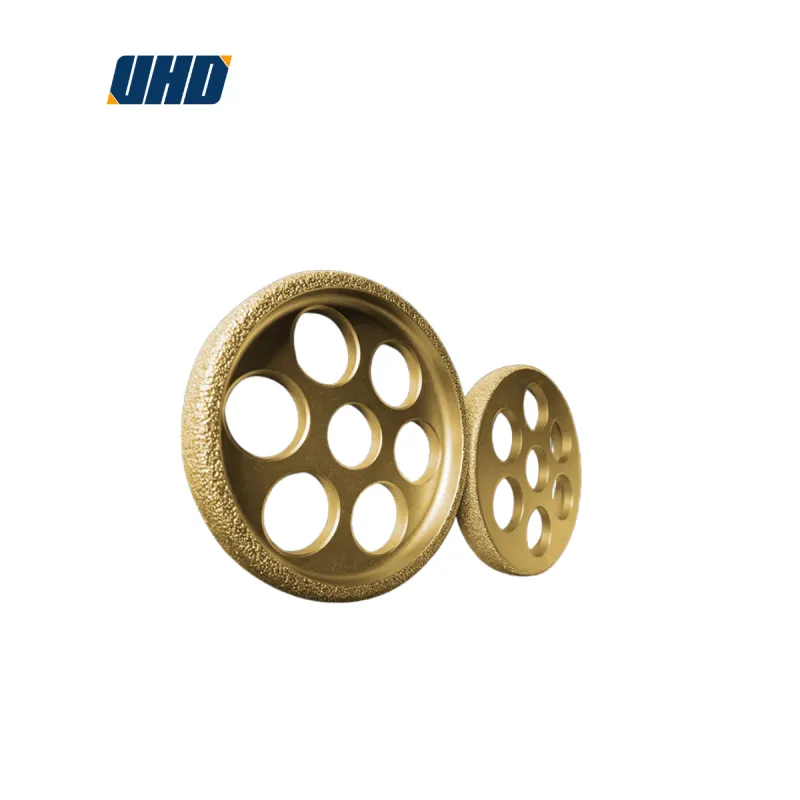
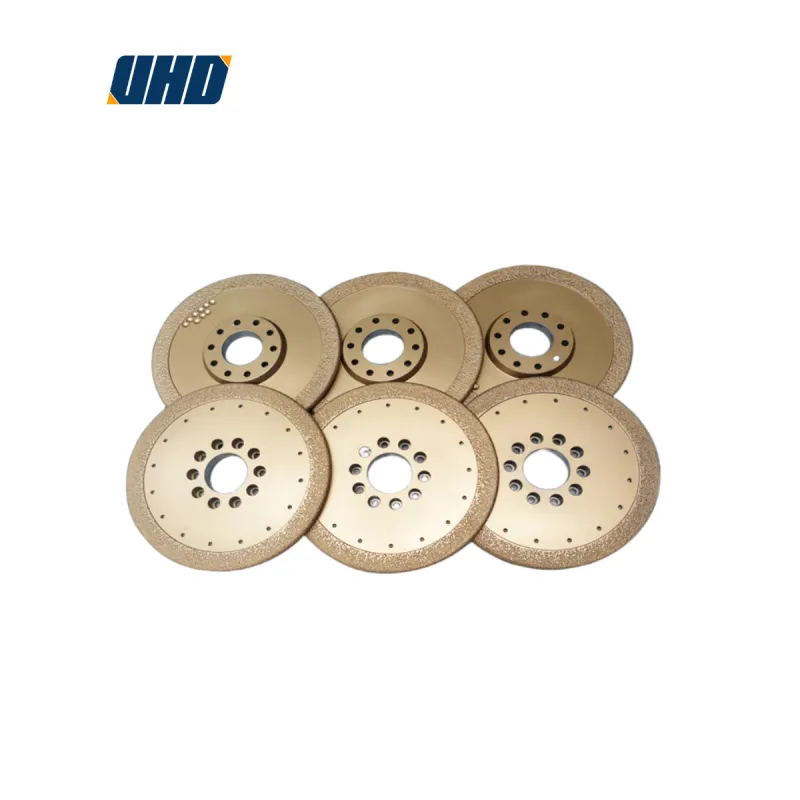
UHD Ultrahard Tools Co., Ltd (UHD) specializes in ultrahard tooling solutions, including vacuum brazed diamond tools. This page explains, in engineering terms, why vacuum brazing can deliver stronger diamond grit bonding strength and how that translates into durability, efficiency, and consistency under demanding workloads.
“High-intensity” is not only about hardness of the workpiece. It typically combines several stressors that can accelerate grit loss, glazing, or instability:
High pressure contact, impact, and vibration increase the chance of grit pull-out and tool edge damage.
Heat buildup plus intermittent cooling can stress the bond layer and reduce retention if bonding is weak.
Hard inclusions or abrasive matrices quickly wear weak bond systems and cause premature dulling.
Extended runtime emphasizes consistency—stable cutting and predictable wear are often more valuable than peak sharpness.
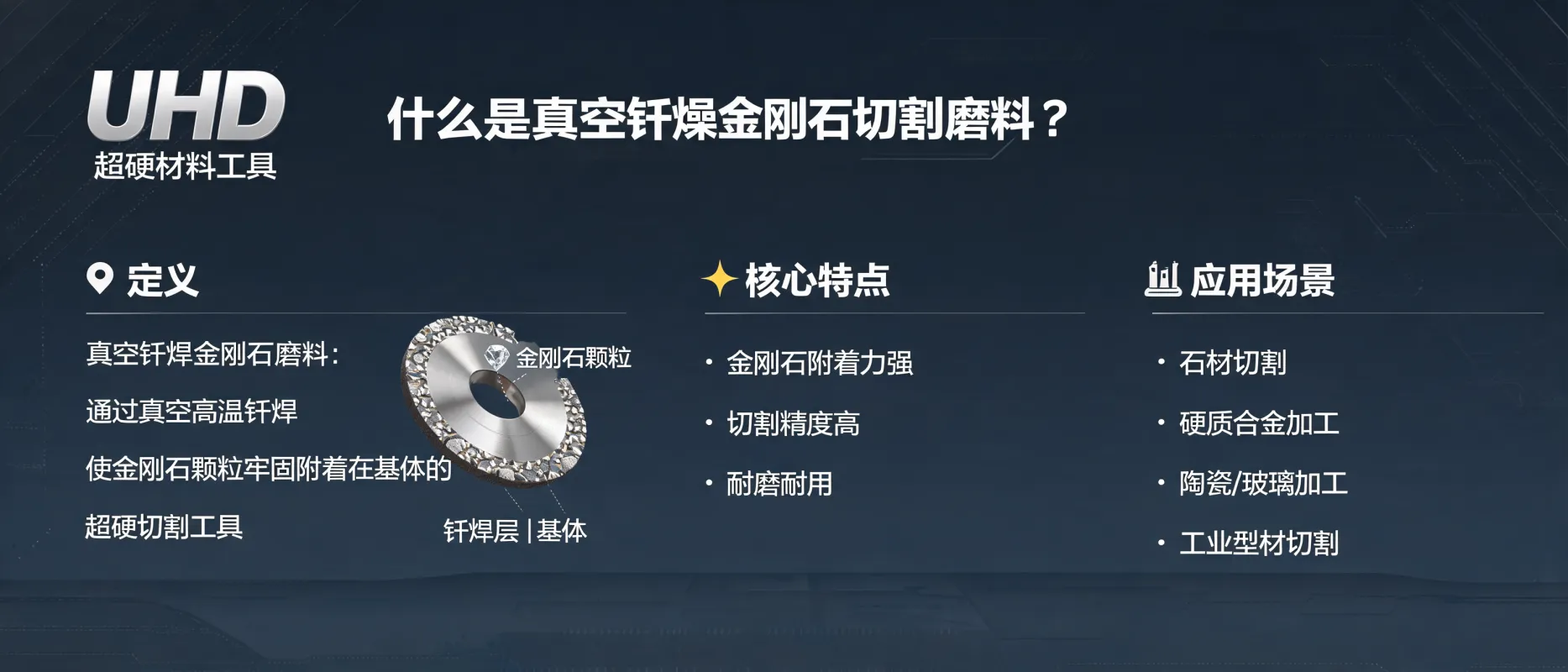
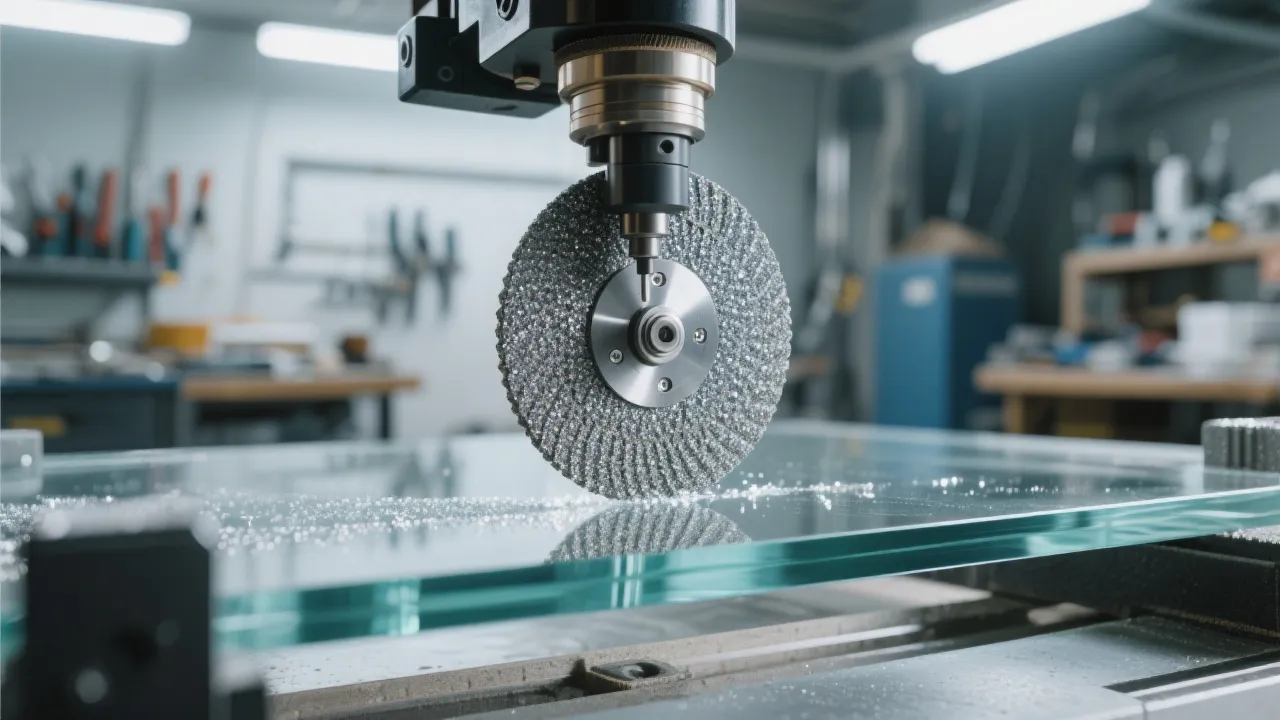
Vacuum brazing is a joining process that bonds diamond grits to a tool body using a brazing alloy under vacuum conditions. The vacuum environment helps minimize oxidation and supports a cleaner, more controlled bonding interface—important for maintaining diamond grit bonding strength during aggressive cutting or grinding.
Reduced oxidation and contaminants can improve wetting and bonding reliability, which helps grits resist pull-out under load.
Stronger retention supports stable cutting action, especially when impact, vibration, or thermal cycling is present.
For engineering teams, consistent bonding behavior makes tool performance easier to test, compare, and qualify for repeat production.
Practical takeaway: In high-intensity working conditions, tool failure often starts at the bond interface. Vacuum brazing is engineered to strengthen that interface so diamonds stay engaged longer and performance remains more stable.
When diamond grit bonding strength is improved, the benefit is not only “longer life.” It also affects cutting mechanics and process control:
Vacuum brazed diamond tools are commonly considered when the operation is sensitive to grit loss and requires reliable performance at higher stress levels. UHD supports application matching based on your workpiece material, machine condition, and required process outcomes.
Note: Actual results depend on operating parameters (speed, feed, pressure), tool geometry, and the specific workpiece. Technical evaluation should be done under your real production conditions.
If you are comparing vacuum brazed diamond tools for demanding workloads, the following checks help connect tool design to measurable shop-floor behavior:
As a high-tech manufacturer focused on ultrahard tooling, UHD develops and supplies diamond tools, abrasives, and customized vacuum brazed diamond abrasive solutions for industrial applications. We work with B2B customers to align tool design with real process constraints and evaluation criteria.
Clear application inputs: material, machine, cooling, and target outcomes for accurate matching.
UHD’s brand positioning emphasizes dependable manufacturing and consistent product performance criteria.
Structured export service and communication for international technical evaluation and sourcing workflows.
With these inputs, UHD can support a more efficient technical discussion around vacuum brazing process suitability and expected diamond grit bonding strength behavior in your high-intensity working conditions.
For demanding operations, the most practical advantage of vacuum brazed diamond tools is the engineered bond interface: when bonding strength holds under stress, durability, machining efficiency, and stability become easier to control and evaluate in production.
.png?x-oss-process=image/resize,h_800,m_lfit/format,webp)

 405
|
405
|
 UHD Ultrahard Tools Co., Ltd
ultrahard material tools
metalworking tool selection guide
wear resistance in cutting tools
industrial procurement decision
102
|
UHD Ultrahard Tools Co., Ltd
ultrahard tool selection guide
diamond tools
abrasives and grinding tools
vacuum brazed diamond
435
|
UHD Ultrahard Tools Co., Ltd
stone processing application case
cutting efficiency improvement
machining consistency
ultrahard material tools
293
|
UHD Ultrahard Tools Co., Ltd
ultrahard material tools procurement
pre-purchase checklist
application condition verification
specification and quality requirements
390
|
UHD Ultrahard Tools Co., Ltd
vacuum brazed diamond cutting abrasive
superhard tools
industrial cutting
metal and stone processing
UHD Ultrahard Tools Co., Ltd
ultrahard material tools
metalworking tool selection guide
wear resistance in cutting tools
industrial procurement decision
102
|
UHD Ultrahard Tools Co., Ltd
ultrahard tool selection guide
diamond tools
abrasives and grinding tools
vacuum brazed diamond
435
|
UHD Ultrahard Tools Co., Ltd
stone processing application case
cutting efficiency improvement
machining consistency
ultrahard material tools
293
|
UHD Ultrahard Tools Co., Ltd
ultrahard material tools procurement
pre-purchase checklist
application condition verification
specification and quality requirements
390
|
UHD Ultrahard Tools Co., Ltd
vacuum brazed diamond cutting abrasive
superhard tools
industrial cutting
metal and stone processing








.png?x-oss-process=image/resize,h_100,m_lfit/format,webp)
.png?x-oss-process=image/resize,h_100,m_lfit/format,webp)
.png?x-oss-process=image/resize,h_100,m_lfit/format,webp)