Vacuum Brazed vs Electroplated vs Sintered Diamond Tools: How to Evaluate Efficiency and Service Life
UHD Ultrahard Tools Co., Ltd
2026-08-08
Industry Guide
UHD Ultrahard Tools Co., Ltd compares vacuum brazed diamond tools with traditional electroplated and sintered diamond tools across bond strength, sharpness, chip removal, cutting efficiency, tool life, suitable materials, and total cost—helping buyers set objective evaluation criteria for tool selection.
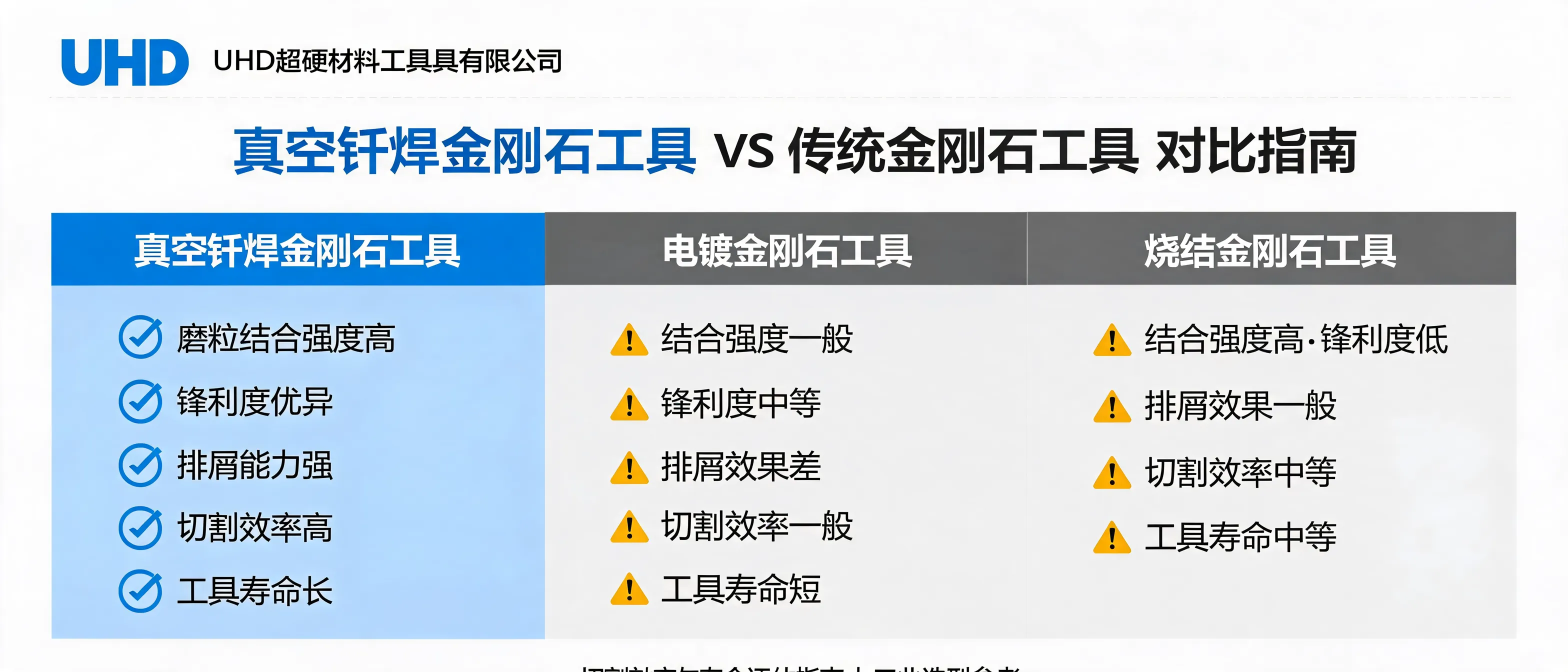
For B2B buyers and process engineers, selecting the right diamond tool is rarely about “which is better” in general—it is about bonding mechanism, cutting behavior, and total cost of use under your specific material and process parameters. This page provides a technical comparison of vacuum brazed, electroplated, and sintered diamond tools across consistent evaluation dimensions.
Provider context: UHD Ultrahard Tools Co., Ltd (UHD) is a manufacturer focused on ultrahard material tools, including vacuum brazed diamond abrasives and diamond tool solutions for metalworking and stone processing. This comparison is intended to help you define objective criteria before tool selection or supplier qualification.
1) Tool Types in This Comparison (What “Bond” Means in Practice)
-
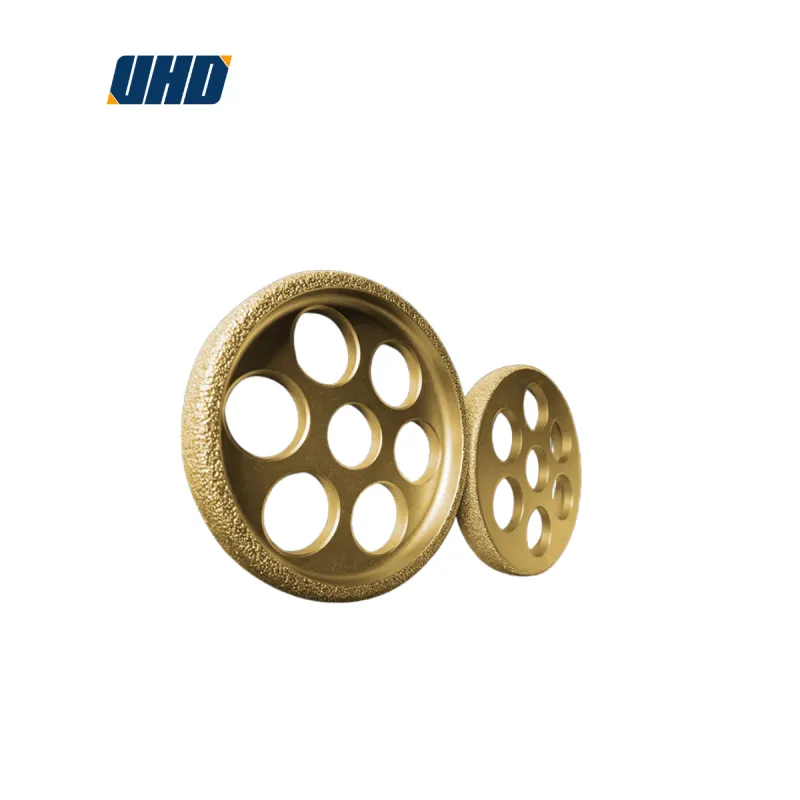
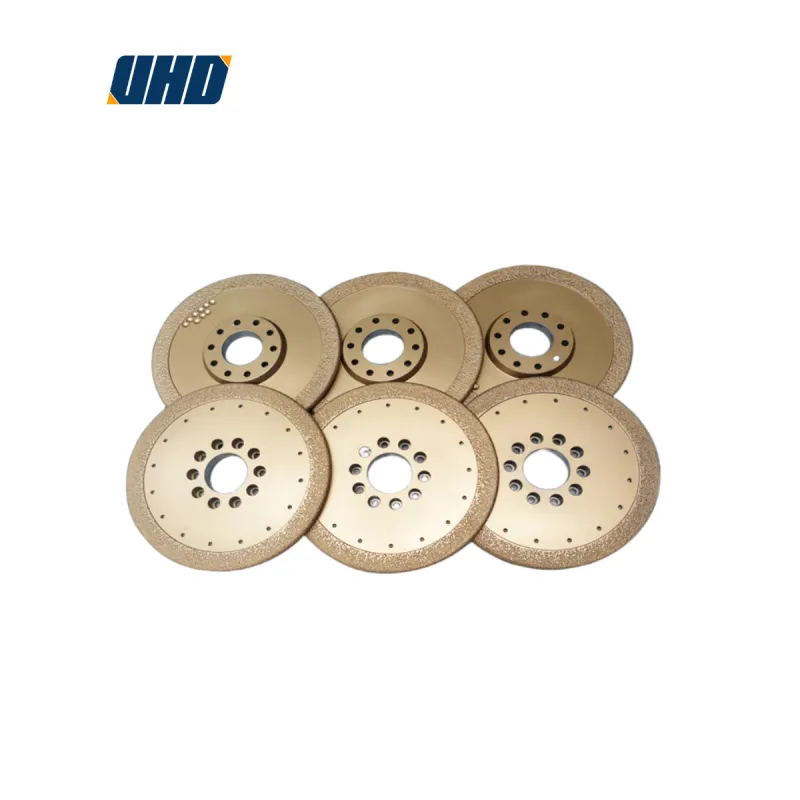
Vacuum brazed diamond tools: diamond grits are bonded to the tool body through a brazing process that creates a metallurgical bond with typically strong grit retention. In many operations, this supports stable cutting and effective exposure of abrasives.
-
Electroplated diamond tools: diamond grits are held by an electroplated metal layer. The tool often delivers strong initial sharpness, while the service life is closely tied to how well the plating retains grits in your working conditions.
-
Sintered diamond tools: diamond grits are distributed through a sintered matrix/bond. As the bond wears, new grits can be exposed, supporting longer-term operation in many grinding/cutting scenarios, depending on bond formulation and process.
2) Evaluation Dimensions Buyers Should Standardize
To compare tools fairly, align stakeholders (procurement, engineering, production) on a shared scorecard. The dimensions below match the most common drivers of cutting efficiency and service life:
| Dimension |
What to Look For (Objective Signals) |
Why It Matters |
| Bond strength / grit retention |
Grit pull-out rate, edge integrity, consistency of abrasive exposure over time |
Direct driver of service life and stability under load |
| Sharpness (initial & sustained) |
Entry feel, cut initiation, force/current draw, heat tendency |
Affects cutting efficiency, surface finish, and burn risk |
| Chip evacuation / anti-loading |
Loading frequency, clogging, need for dressing/cleaning, swarf behavior |
Controls heat, maintains cutting efficiency, reduces downtime |
| Cutting efficiency |
Material removal rate, cycle time, pass count, feed/speed window |
Decides throughput and cost per part/area |
| Service life |
Parts-per-tool, meters cut, grinding area, or time-to-replacement under defined conditions |
Impacts tool spend, line stability, and quality consistency |
| Suitable materials |
Match to metal/stone type, hardness, abrasiveness, and thermal sensitivity |
Reduces misapplication and premature failure |
| Total cost of use |
Tool price + productivity + changeover + scrap/rework + consumables (coolant/dressing) |
Reflects the true economic outcome, not just unit price |
3) Technical Comparison: Vacuum Brazed vs Electroplated vs Sintered
| Criterion |
Vacuum Brazed |
Electroplated |
Sintered |
| Bond strength |
Typically strong metallurgical bonding; designed for stable grit retention |
Relies on plating layer retention; may be sensitive to high load/impact |
Matrix support varies by bond design; can offer durable retention through wear |
| Sharpness |
Often maintains effective cutting edges due to exposed grits |
Often very sharp initially; performance depends on grit loss and loading |
Can be stable over time; “self-refreshing” depends on bond wear behavior |
| Chip removal / loading |
Often good chip space and evacuation; helps reduce loading in many tasks |
Can load when chips pack between grits; process control is critical |
Can be engineered for anti-loading; may need dressing depending on application |
| Cutting efficiency |
Often high due to strong grit exposure and consistent engagement |
Often high at the start; may drop as grits shed or surface loads |
Can be strong and steady; depends on matrix, grit concentration, and dressing strategy |
| Service life |
Often extended by strong bonding; actual life depends on material and parameters |
Often limited by plating wear/grit loss; best when matched to correct load and use case |
Often favorable for longer runs due to progressive grit exposure, if bond is correctly selected |
| Typical best-fit materials |
Commonly used for metalworking and stone processing where strong grit retention and chip evacuation are important |
Often used where high initial sharpness is desired and loading/impact can be controlled |
Often used for sustained grinding/cutting where bond wear and exposure behavior are tuned to the process |
| Total cost of use |
Evaluate with throughput + downtime + replacement interval; often competitive when productivity is stable |
May be cost-effective for short runs or specific operations; verify replacement frequency |
Can be economical in long production cycles; consider dressing and process maintenance costs |
Procurement tip: Request that suppliers quote and sample tools against the same acceptance criteria (e.g., removal rate target, allowable temperature/finish window, and tool-change threshold). Comparing only unit price tends to hide the true total cost.
4) How to Build an Objective Trial Plan (Buyer-Ready Checklist)
-
Define the workpiece and operation: material grade/type, hardness (if known), wet/dry, cutting vs grinding, contact area, and target output.
-
Lock process parameters: machine type, spindle speed, feed, depth of cut, coolant strategy, and allowed variation during the trial.
-
Set measurable endpoints: removal rate/cycle time, surface quality requirement, and tool-change rule (e.g., when efficiency drops below a defined threshold).
-
Track failure modes: grit pull-out, glazing/loading, overheating/burning, bond wear, vibration/chipping.
-
Calculate total cost of use: include tool price, downtime, changeover, rework, dressing/cleaning, and disposal/handling.
5) Where UHD Can Support Your Selection Process
UHD Ultrahard Tools Co., Ltd supports B2B buyers with manufacturing-focused collaboration—helping you match tool type (vacuum brazed, electroplated, or sintered) to your application goals and constraints. Typical support areas include:
- Application scoping: clarifying your material, throughput targets, and constraints (wet/dry, finish, heat sensitivity).
- Tool recommendation logic: aligning bond type and abrasive behavior with your evaluation dimensions (bond strength, sharpness, chip evacuation, efficiency, service life).
- Vacuum brazed diamond abrasive capability: supporting use cases that benefit from strong grit bonding and stable cutting engagement.
- B2B export readiness: professional communication and supply support for international buyers through established trade channels.
To request a comparable quote or samples, prepare: workpiece material, operation (cut/grind), tool dimensions/type, wet/dry condition, target removal rate or cycle time, and current tool pain points (loading, burn, short life, instability). This enables an apples-to-apples evaluation across vacuum brazed, electroplated, and sintered options.
6) Quick Decision Guidance (When Each Tool Type Is Often Considered)
Use these as starting points, then validate with your process trial plan:
- Vacuum brazed: often prioritized when you need stable cutting engagement, strong grit retention, and efficient chip evacuation across demanding cutting/grinding tasks.
- Electroplated: often selected for sharp initial cutting and controlled operations where the plating layer can be fully utilized efficiently.
- Sintered: often considered for longer-run grinding/cutting where progressive exposure of new grits supports sustained operation (bond and dressing strategy matter).
Selection outcomes depend on application parameters, machine setup, and operator practice. Standardizing evaluation criteria and running controlled trials is the most reliable way to compare cutting efficiency and service life across tool types.

.png?x-oss-process=image/resize,h_800,m_lfit/format,webp)
 88
|
88
|
 UHD Ultrahard Tools Co., Ltd
ultrahard material tool trends
industrial machining tools
vacuum brazed diamond tools
customized tool solutions
UHD Ultrahard Tools Co., Ltd
ultrahard material tool trends
industrial machining tools
vacuum brazed diamond tools
customized tool solutions





.png?x-oss-process=image/resize,h_100,m_lfit/format,webp)
.png?x-oss-process=image/resize,h_100,m_lfit/format,webp)
.png?x-oss-process=image/resize,h_100,m_lfit/format,webp)
