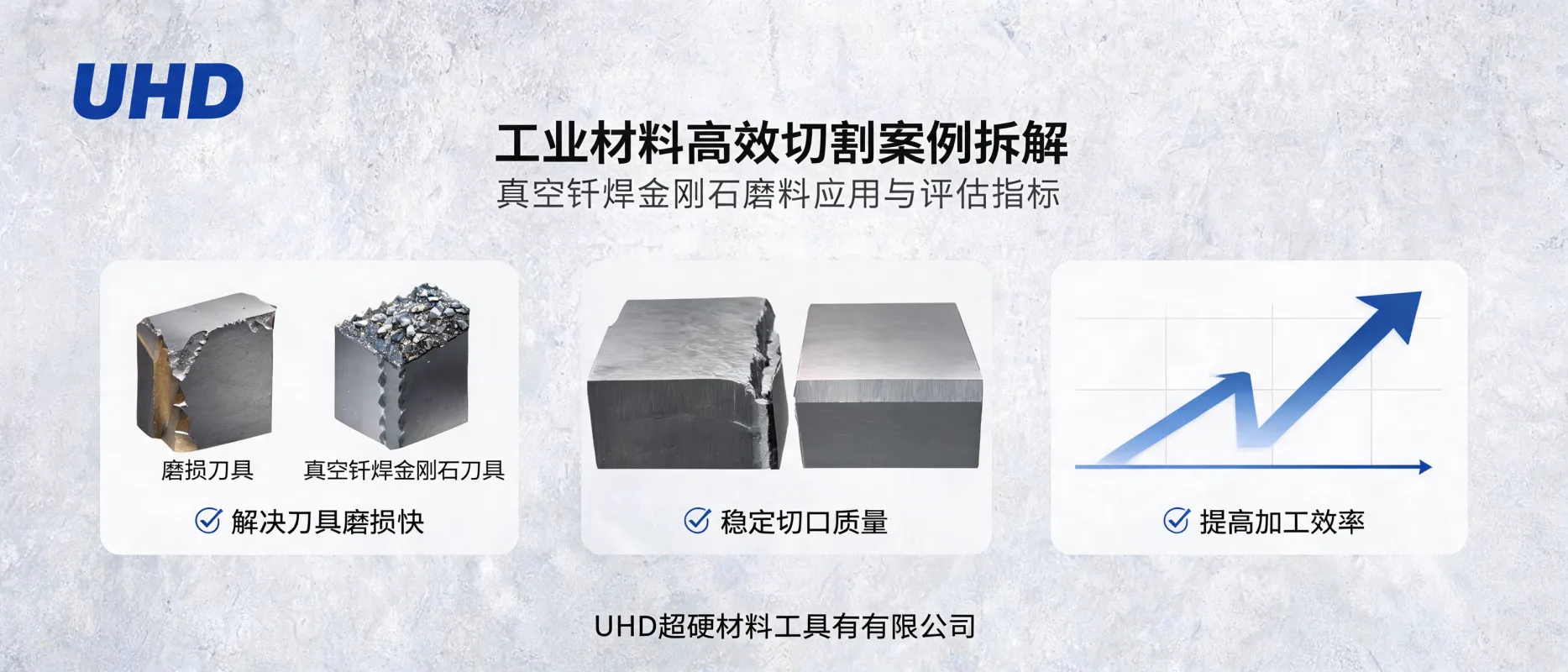
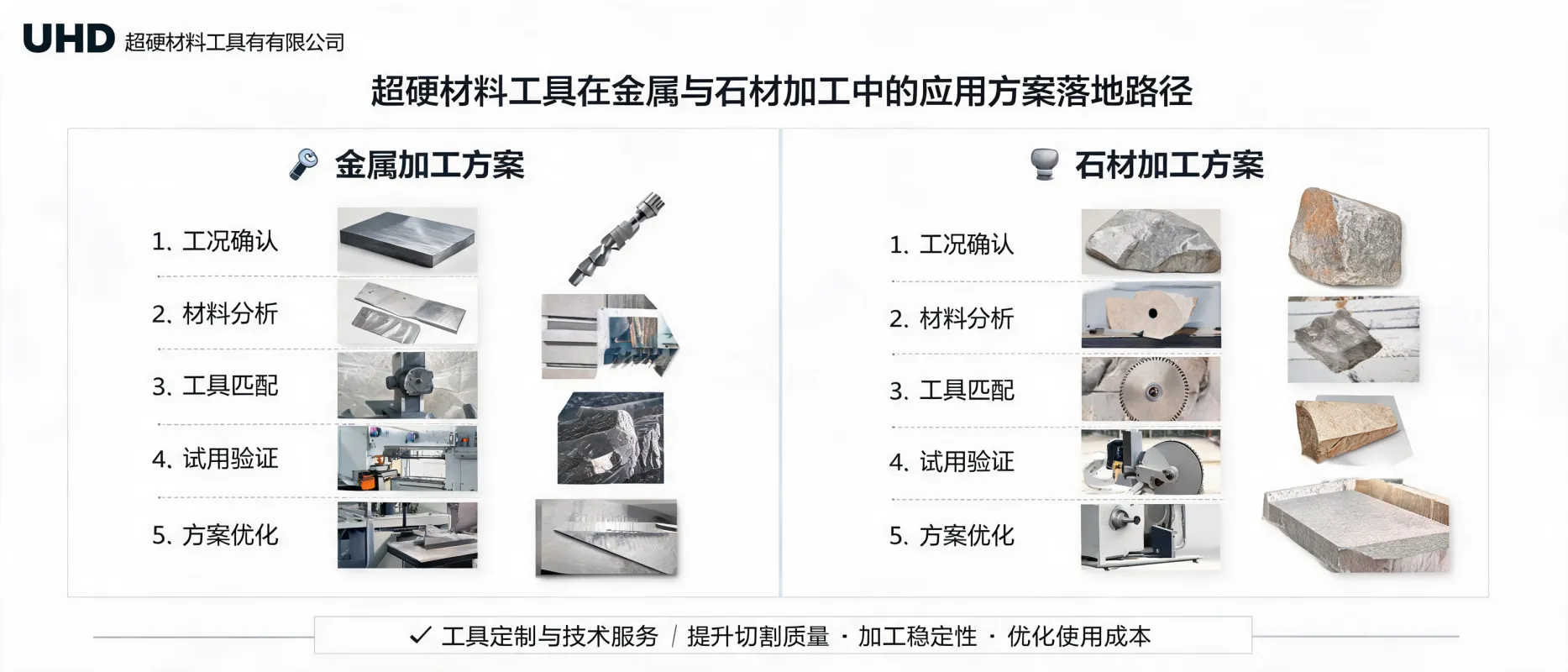
What Are Vacuum Brazed Diamond Cutting Abrasives? Performance Features and Use Cases
UHD Ultrahard Tools Co., Ltd
2026-09-03
Concept Explanation
Learn what vacuum brazed diamond cutting abrasives are and how they work. UHD Ultrahard Tools Co., Ltd explains key performance characteristics, typical metalworking and stone processing applications, and selection factors for matching ultrahard tools to your process.

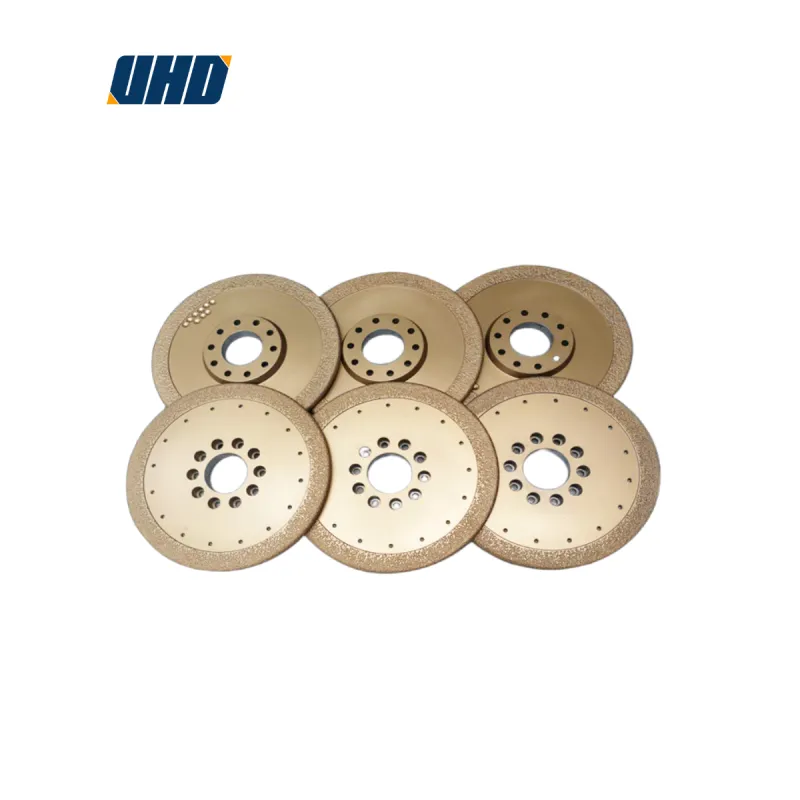
Vacuum brazed diamond cutting abrasives are ultrahard material tools engineered to keep diamond grains firmly bonded under heat and load—supporting stable cutting and grinding in demanding industrial environments. At UHD Ultrahard Tools Co., Ltd, we develop and manufacture vacuum brazed diamond abrasives and related diamond tools to help buyers match tool performance to real processes in metalworking and stone processing.
This page explains: the vacuum brazing principle, core performance traits (bond strength, wear resistance, cutting efficiency), typical use cases, and practical selection factors—so procurement and engineering teams can evaluate fit without over-promising results.
Representative Product
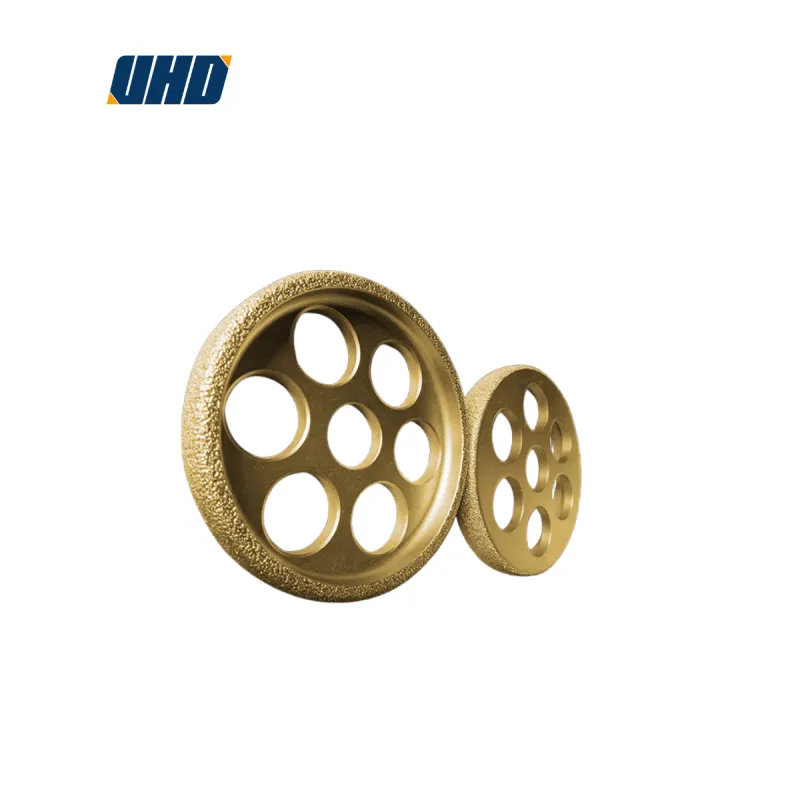
Vacuum-brazed diamond grinding wheel (180 mm) for stainless steel

- Category: Diamond grinding disc
- Keywords: 180mm vacuum brazed diamond wheel, high wear resistance, stainless steel processing
- Build: turned steel body + vacuum brazing for robust structure
What Is a Vacuum Brazed Diamond Cutting Abrasive?
A vacuum brazed diamond abrasive is a tool where diamond grains are joined to a metal body through a brazing alloy in a vacuum environment. The vacuum process helps control oxidation and supports a clean bonding interface, aiming for strong grain retention during cutting or grinding.
How it works (conceptual)
- Diamond abrasive grains are arranged on the working surface based on the tool design (disc, wheel, segment, or custom geometry).
- A brazing filler alloy is applied to bridge the diamond grains and the metal substrate.
- In a vacuum brazing furnace, the alloy wets and bonds, forming a metallurgical connection intended to resist pull-out.
- The resulting abrasive layer supports cutting/grinding with a balance of aggressiveness and durability depending on grain size, pattern, and tool geometry.
Performance Features Buyers Typically Evaluate
Tool performance depends on the full system: workpiece material, machine power, feed/speed, coolant, operator method, and abrasive specification. The points below are evaluation dimensions, not guaranteed outcomes.
| Feature |
What it means in practice |
Common checks |
| Bond strength |
Ability to retain diamond grains under load and heat; supports stable cutting/grinding. |
Grain pull-out tendency, surface integrity after trials, consistency across batches. |
| Wear resistance |
Rate of abrasive layer loss; affects tool life and cost per part. |
Abrasive height change, cutting edge dulling, frequency of tool replacement. |
| Cutting efficiency |
Material removal capability at a given speed/feed; affects throughput. |
Cycle time, operator feel, power draw stability, surface condition. |
| Structural robustness |
Body stiffness and balance influence vibration, stability and safety. |
Body flatness, runout, mounting fit, trial under intended machine conditions. |
Typical Applications in Metalworking and Stone Processing
Metalworking
- Grinding and finishing tasks where diamond abrasives are suitable for the workpiece and process setup.
- Targeted use cases such as stainless steel processing (depending on the required surface and removal rate).
- B2B production lines needing repeatable tool geometry and stable supply.
Stone processing
- Cutting and grinding operations where ultrahard tools are preferred for abrasion resistance.
- Shaping, edge work, and surface preparation tasks—selection depends on stone type and desired finish.
- Situations requiring tool stability and consistent abrasive exposure.
Selection Criteria: How to Match the Abrasive to Your Process
- Workpiece material
Define material type, hardness/abrasiveness, and whether you are cutting, deburring, or surface grinding.
- Process type & equipment
Handheld vs. fixed machine, spindle speed range, power, rigidity, and whether coolant is used.
- Tool geometry & size
Disc/wheel type, diameter, mounting interface, working face design, and clearance requirements.
- Performance-to-cost fit
Balance removal rate, expected tool life, surface requirement, and total cost per part.
Example: 180 mm high wear-resistant vacuum brazed diamond grinding wheel
UHD’s 180 mm vacuum brazed diamond grinding wheel is positioned for stainless steel processing where a robust body and efficient grinding are required. The tool uses a turned substrate combined with vacuum brazing to support structural strength and stable abrasive retention. Its design focus is wear resistance to help extend service life and support cost control in continuous production.
- Strength-focused construction: turned body + vacuum brazed abrasive layer
- Application emphasis: efficient grinding for stainless steel tasks (process-dependent)
- Quality reference: CE and other stated certifications (as applicable per model/batch)
- Support: professional after-sales service from UHD
Why UHD Ultrahard Tools Co., Ltd
- Focused on ultrahard tooling: R&D, manufacturing, and B2B supply for vacuum brazed diamond abrasives and related products.
- Process-oriented product positioning: tools designed to match specific cutting/grinding requirements instead of one-size-fits-all claims.
- R&D collaboration: cooperation with academic institutions (e.g., Henan University of Technology) to support continuous development.
- International B2B service system: structured support for global buyers across common trade platforms and cross-border supply workflows.
Talk to UHD About Your Cutting or Grinding Requirement
For an accurate recommendation, prepare your workpiece details (material and dimensions), process goal (cutting, grinding, finishing), machine parameters (speed/power), and preferred tool size/geometry. UHD can then suggest a vacuum brazed diamond cutting abrasive specification aligned with your production needs.
Brand principle:
Quality builds the brand. UHD aims to provide practical, process-matched ultrahard tool solutions for industrial buyers.


 132
|
 UHD Ultrahard Tools Co., Ltd ultrahard material tools R&D workflow custom tool development sample validation and quality control