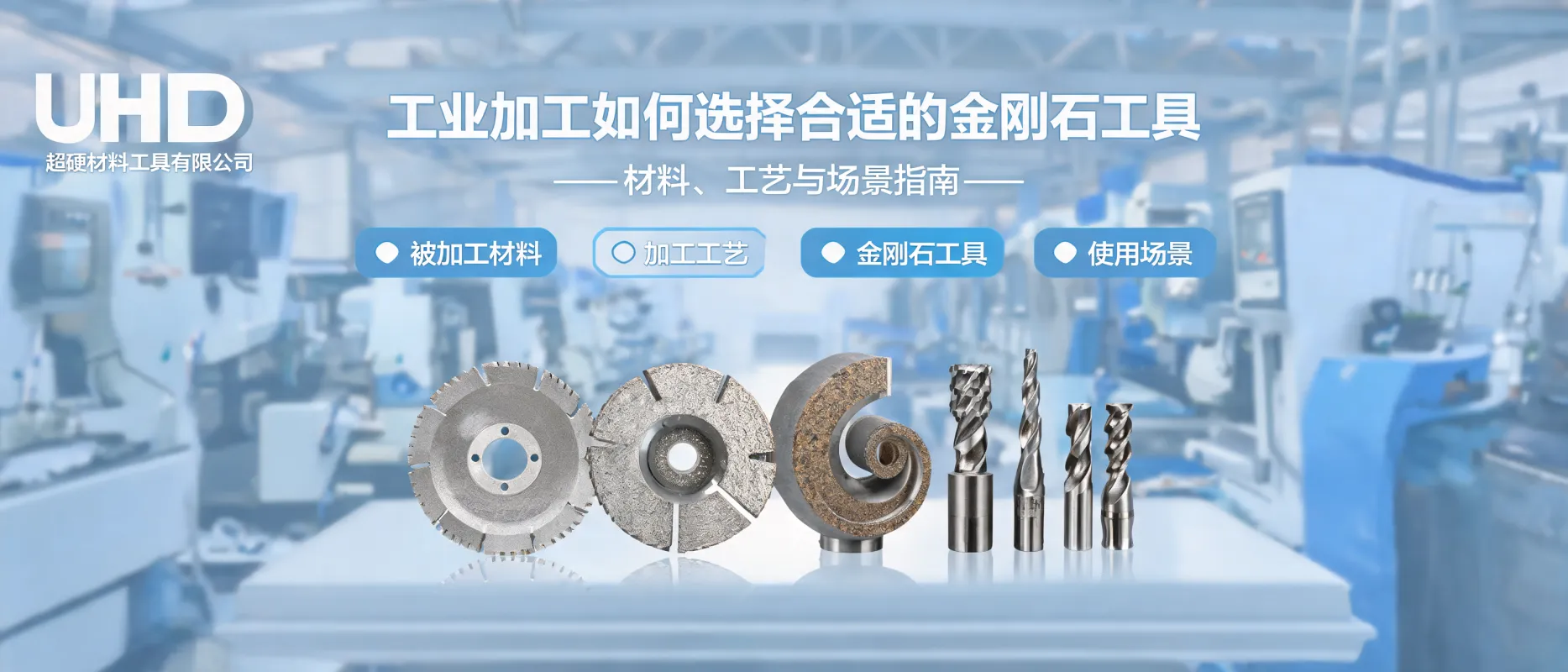
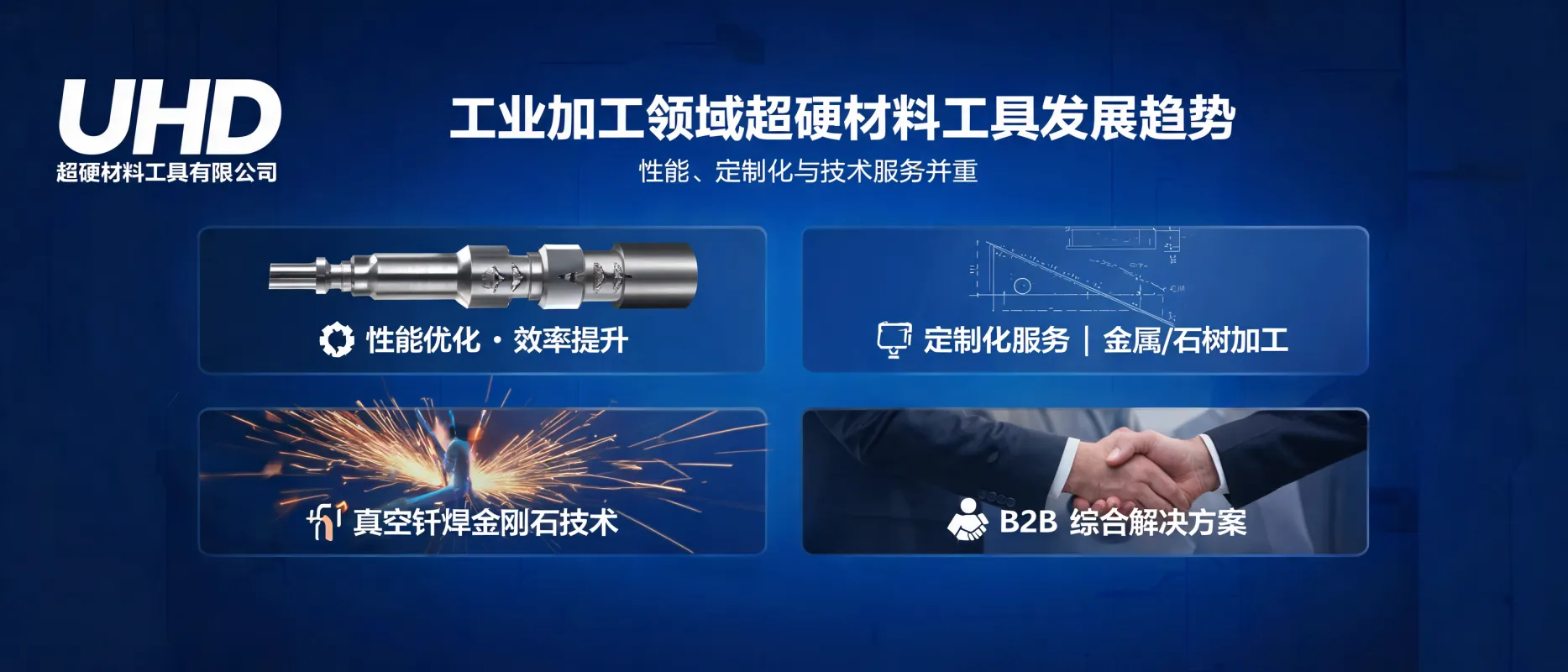
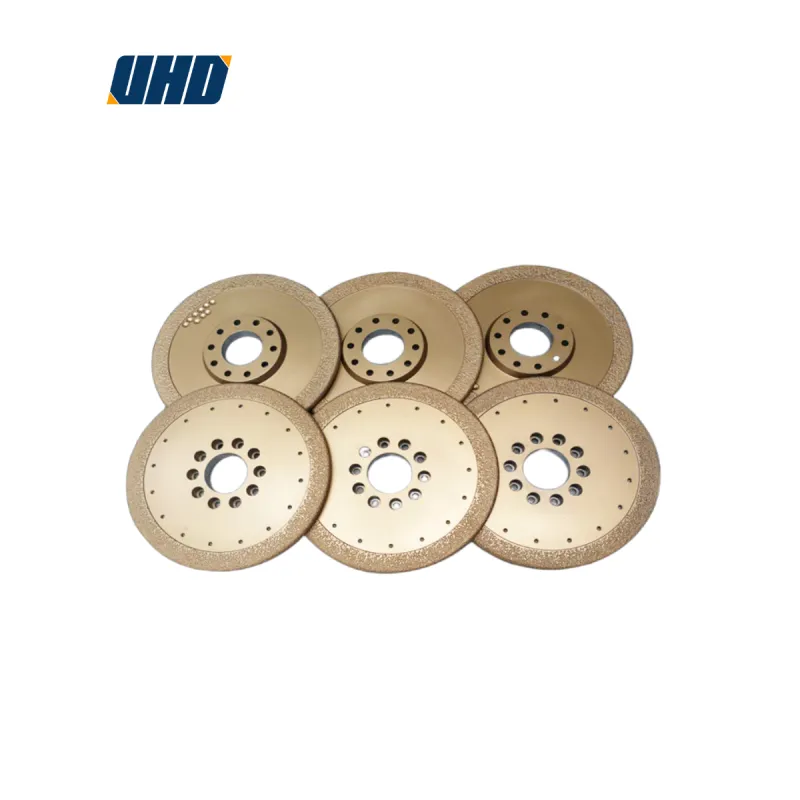
Vacuum brazed diamond cutting abrasives are ultrahard tooling components designed for high-demand cutting, grinding, and material removal tasks where process stability and wear resistance matter. UHD Ultrahard Tools Co., Ltd develops and supplies vacuum brazed diamond cutting abrasives for industrial customers, with support for R&D collaboration, manufacturing, and customization based on specific process requirements.
Page focus: definition and structure, key performance advantages, differences vs. conventional abrasives and carbide tools, and typical industrial applications in metalworking and stone processing.
A vacuum brazed diamond cutting abrasive is a diamond tool or abrasive element in which diamond grains are metallurgically bonded to a tool body using a brazing alloy under vacuum conditions. The vacuum environment helps reduce oxidation during brazing and supports a stable bond between the diamond grains and the substrate.
Vacuum brazing supports controlled bonding conditions for diamond retention. In practice, this is used to improve tool consistency and reduce the risk of weak bonding caused by oxidation or unstable heating environments.
Vacuum brazed diamond cutting abrasives are valued when production teams need higher cutting efficiency, wear resistance, and stable processing—especially on hard, abrasive, or brittle materials.
Note: Actual performance depends on the workpiece material, tool geometry, brazing design, machine rigidity, coolant strategy, and cutting parameters. UHD supports selection and customization based on your process conditions.
| Comparison dimension | Vacuum brazed diamond cutting abrasive | Conventional cutting abrasives (general) | Common carbide tools (general) |
|---|---|---|---|
| Cutting element | Diamond grains brazed to a substrate | Abrasive grains held by resin/metal/other bonds (varies by type) | Cemented carbide cutting edge geometry |
| Grain/edge retention | Metallurgical brazed retention designed for strong holding | Bond-dependent; retention varies by abrasive system | Edge wear typically occurs via abrasion/thermal effects depending on material |
| Typical strengths | High wear resistance, efficient cutting on suitable materials, stable processing | Broad availability, many forms and grit options, adaptable to many finishing tasks | Strong toughness and general-purpose machining in many metalworking operations |
| Best-fit selection logic | When abrasive wear and consistency are primary concerns in cutting/grinding workflows | When standard abrasive systems meet finish/cost/availability needs | When a defined cutting edge is preferred and tool cost/processing strategy aligns |
This comparison is for selection guidance. Final tool choice should be validated against your workpiece material, required finish, machine capability, and production targets.
As a high-tech enterprise specializing in ultrahard material tools, UHD Ultrahard Tools Co., Ltd provides vacuum brazed diamond cutting abrasives with engineering support aligned to your process goals. UHD’s capabilities include product development, manufacturing, and customized tool solutions—built around real application constraints rather than one-size-fits-all selections.
For accurate selection: share your workpiece material, target operation (cutting/grinding), machine type, coolant strategy, and any current pain points (tool wear, efficiency, surface quality, stability). UHD can then recommend a vacuum brazed diamond cutting abrasive configuration aligned to your process.
Vacuum brazed diamond cutting abrasives are one important category within diamond tools and broader ultrahard material tools. When the application calls for strong diamond grain retention, efficient material removal, and consistent processing behavior, vacuum brazing is often considered as a practical manufacturing approach. UHD continues to refine product positioning and tool design so each solution matches a clear process requirement in industrial machining and stone processing.

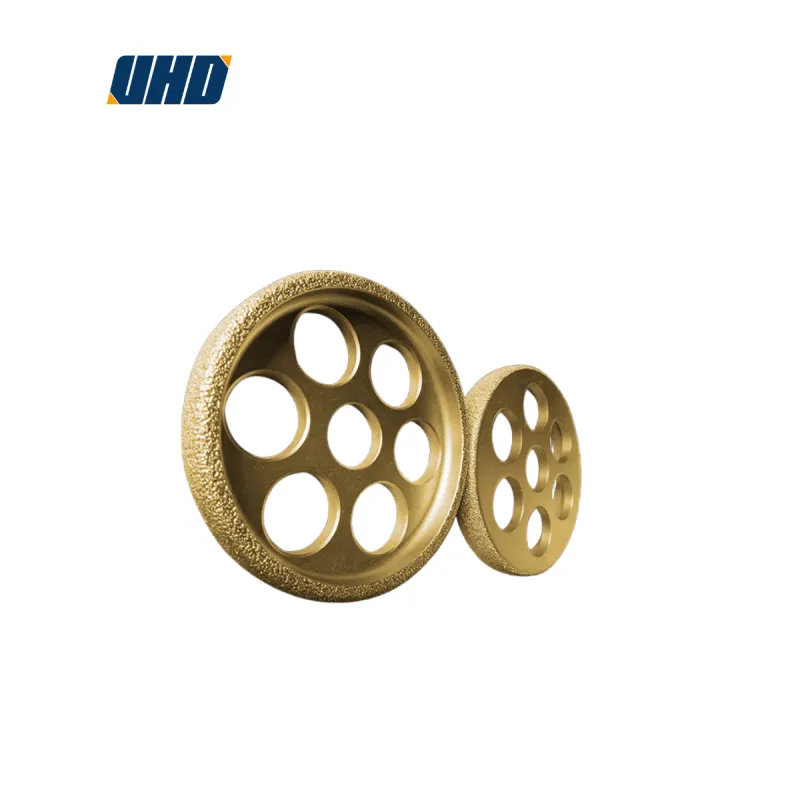
 477
|
 UHD Ultrahard Tools Co., Ltd
vacuum brazed diamond tools comparison
electroplated diamond tools
sintered diamond tools
cutting efficiency and tool life
436
|
UHD Ultrahard Tools Co., Ltd
stone processing application case
cutting efficiency improvement
machining consistency
ultrahard material tools
208
|
UHD Ultrahard Tools Co., Ltd
diamond tool selection
industrial machining tools
cutting tools
grinding tools
407
|
UHD Ultrahard Tools Co., Ltd
ultrahard material tools
metalworking tool selection guide
wear resistance in cutting tools
industrial procurement decision
88
|
UHD Ultrahard Tools Co., Ltd
ultrahard material tool trends
industrial machining tools
vacuum brazed diamond tools
customized tool solutions